

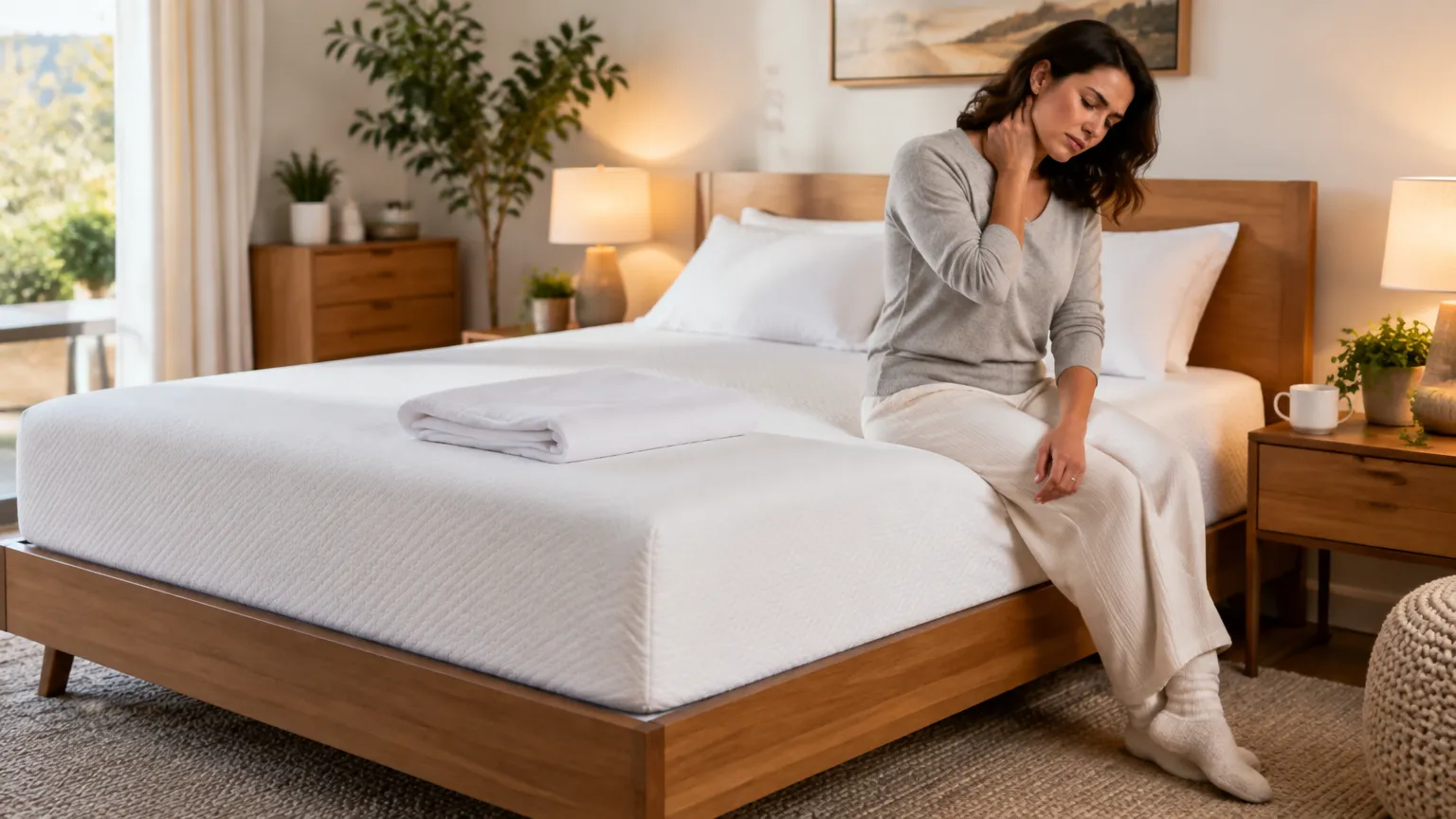
Is Your Mattress Causing Your Fatigue? How to Tell Fast
If you wake up tired every morning, the usual advice is to go to bed earlier or cut back on coffee. Those habits matter, but they can hide the real culprit, which is the mattress under you. Customers who walk into our Anaheim showroom often have adjusted their schedules for months before they ask whether their bed could be the problem. Checking for a mattress causing fatigue in Orange County is worth doing before you spend money on sleep aids or a new routine, because a worn-out surface can keep your body from fully resting even when the clock says you slept enough.
Table of Contents
- Quick Takeaways
- Why a Mattress Can Quietly Drain Your Energy
- Telling Fatigue From Schedule Problems
- Morning Warning Signs in Your Body
- Mattress Age and Wear You Can Check Yourself
- Allergies, Dust, and Night Waking
- Comparing Ways to Pin Down the Cause
- When the Mattress Is Not the Problem
- Replacing Your Mattress Without Overpaying
- Frequently Asked Questions
- References
Quick Takeaways
| Key Insight | Explanation |
|---|---|
| Stiffness in the neck, shoulders, or hips that eases after you get up | Pain that fades within a short time of moving points to the bed holding your body in one position for hours. |
| Better rest in a hotel or guest room | If your routine stays the same and your energy improves elsewhere, the mattress is the likely variable. |
| A visible dip or body impression where you sleep | A dip means the support layer has failed, even if the top looks fine from across the room. |
| A bed that is more than eight years old | WebMD’s guidance says innerspring mattresses last about eight years, and memory foam lasts eight to 10 years if rotated. |
| A steady schedule with persistent exhaustion | Keep a two-week sleep log. Consistent bedtimes plus low morning ratings shift suspicion toward the bed. |
| Congestion or allergy flare-ups that are worst at night | Dust mite waste and other allergens can build up in older beds and disrupt sleep quality. |
| Snoring, gasping, or daytime sleepiness despite enough time in bed | These point to a medical question first, so talk to a doctor before replacing anything. |
Why a Mattress Can Quietly Drain Your Energy
A mattress does its job by keeping your spine in a reasonably neutral line and letting your muscles relax. When the support layer breaks down, your body starts compensating through the night. You may not wake fully, but you shift, tense, and reposition far more than you would on a supportive surface.

That constant adjusting is the part most people miss. Sleep can look complete on paper, with seven or eight hours in bed, but the quality of that time decides how you feel at 7 a.m. A bed that lets your hips sink or presses your shoulder into the surface can keep your body working even while you are asleep.
In practice, we see this most often with older coil mattresses and foam beds that have lost their rebound. The surface still looks fine from across the room, which is why people often blame their job, their kids, or their diet first. The center feels soft, the edges collapse when someone sits down, and the sleeper wakes up feeling like they never fully settled.
A common mistake is assuming that a mattress which feels comfortable when you lie on it is also supportive. Softness and support are different things. A surface can feel plush for the first few minutes and still fail to hold your pelvis and rib cage in a stable position for eight hours.
Your mattress also matters because it is the one piece of sleep equipment you use every night without thinking about it. Blackout curtains and a cooler room help, but they cannot compensate for a sagging deck. If the bed is working against you, every other sleep habit has to work harder to make up the difference.
Telling Fatigue From Schedule Problems
Schedule fatigue and mattress fatigue can feel identical, which is why the two get confused so often. Schedule problems usually show up as tiredness tied to specific causes, such as shift changes, late screens, or a second job. Mattress problems tend to show up as tiredness that is strongest right after you wake and eases once you start moving.
The Hotel Test
The fastest check is to sleep somewhere else for a few nights. If you stay in a hotel, visit family, or sleep in a guest room, and you wake noticeably more rested, your bed deserves a closer look. Your routine stayed the same, so the change in how you feel points to the surface you are lying on.
Be honest about the comparison. A hotel may also offer a quieter room and a cooler temperature, so the difference is not only the mattress. Still, if your rest improves dramatically away from home, the bed becomes a strong suspect.
The Two-Week Sleep Log
Write down your bedtime, the time you tried to fall asleep, how often you woke, and how rested you felt on a scale from one to five when you got up. Do this for two weeks without changing anything. Patterns show up quickly when you read the notes side by side.
If your schedule is stable and your morning ratings stay low, the mattress moves higher on the list. If your log shows late nights, irregular wake times, or heavy weekend catch-up sleep, the schedule is more likely the main driver. Either way, you end up with evidence instead of a guess.
Fatigue that follows you to bed and waits for you in the morning is rarely a willpower problem. It is usually a setup problem, and the bed is the setup you can change fastest.
Morning Warning Signs in Your Body
Your body usually gives clear signals before you seriously consider replacing a bed. The most common one is waking with aches that were not there when you went to sleep. An older mattress can contribute to pain in the neck, shoulders, lower back, and hips, because it no longer supports the spine’s natural curve.
Stiffness That Fades After You Move
Some stiffness is normal after any night of sleep. The warning sign is stiffness that lasts a long stretch after you get up, then fades once you walk around, shower, or stretch. That pattern suggests the bed held your body in one position long enough to leave tissues tight.
Pay attention to the first ten minutes out of bed. If you sit on the edge of the mattress and cannot turn your head without wincing, the problem may start with the surface rather than the joint itself. Note whether the discomfort favors one side, since that often matches the spot where you consistently lie.
Pain Concentrated in One Zone
Pain that stays in one area, such as the lower back or one hip, often lines up with where your body sinks most. Side sleepers tend to notice hip and shoulder pressure first, while back sleepers often feel it in the lower back. Your sleeping position tells you which part of the mattress is losing support.
Pro tip: Lie on the bed in your normal sleeping position and have a partner check the gap between your lower back and the surface. On a worn bed a hand slides underneath easily, and that gap is often the clearest sign that support has collapsed.
Mattress Age and Wear You Can Check Yourself
Age alone does not doom a mattress, but it sets the timeline for how likely the support is to have faded. WebMD’s guidance on replacing a mattress notes that lifespans vary by type. A waterbed can last 12 to 15 years, a latex or gel foam bed usually lasts around 10 to 15 years, and an innerspring mattress lasts about eight years.

How Old Is Too Old
Memory foam is the type that surprises people most. WebMD’s guidance says a memory foam bed can last eight to 10 years if it is properly rotated. If you bought a foam bed years ago and never rotated it, it may be past its useful life even if it still looks presentable.
Check your purchase date, not just the feel. If the bed is past eight years and you see any of the other warning signs in this article, replacement should move from someday to this season. Treat age as a reason to inspect, not as a final verdict.
Sagging and Body Impressions
Look at the surface in daylight with the bedding removed. A visible dip, a lumpy zone, or an outline that remains after you get up points to lost support. WebMD also lists failing foam, shifting layers, and springs poking through as signs that a mattress needs replacing.
Press along the edges and the center. If one side collapses, or you can feel the foundation through the top layers, the structure is no longer doing its job. Coils that poke or clunk are another sign, although a foam bed usually shows the same problem as softness rather than noise.
Pro tip: Rotate the mattress head to foot every few weeks, as our mattress care tips suggest, to spread wear across the surface. Rotation will not repair a collapsed core, but it slows uneven sagging.
Allergies, Dust, and Night Waking
Allergy flare-ups are one of the less obvious ways a mattress can wear you down. WebMD notes that if allergies have gotten worse and it is not allergy season, the mattress could be the cause. Dust mite waste can trigger respiratory problems that worsen allergies and asthma, and older mattresses can hold more of it than most people expect.
Older beds may also harbor mold, bacteria, and other allergens. None of that means you must toss the mattress tomorrow, but a stuffy nose that gets worse at night deserves attention. Waking up congested is a sleep-disrupting problem, and disrupted sleep feels exactly like fatigue.
Nighttime Congestion Versus Daytime Drag
Track whether your symptoms are worst when you lie down. If you sneeze, cough, or feel blocked mainly at night and clear up within an hour of leaving the bedroom, your bedding is a likely contributor. Pollen-driven allergies usually follow a different pattern, with symptoms tied to outdoor exposure rather than bedtime.
Cleaning Habits That Slow the Damage
Vacuuming the top and sides, washing bedding in hot water when the label allows, and using a breathable protector all reduce allergens. These steps do not restore a broken support system. They do keep a healthy bed from becoming a dust reservoir, and they help a replacement last longer when you buy one.
Comparing Ways to Pin Down the Cause
No single check settles the question, so combine them. The table below compares three practical approaches, what each one reveals, and where each one falls short. Start with the cheapest and work toward the most involved.
| Approach | What It Reveals | Where It Falls Short |
|---|---|---|
| Two-week sleep log | Whether fatigue follows a consistent schedule pattern or appears regardless of bedtime | It depends on honest self-ratings and cannot prove the bed is the cause on its own |
| Hotel or guest room test | Whether a different surface restores your energy without changing your routine | A quieter room or cooler temperature can change the result, so the mattress is not the only variable |
| Mattress age and wear inspection | Whether sagging, body impressions, or an age past eight years match your symptoms | Some support loss is hard to see, so a bed that looks clean can still be failing |
In practice, the sleep log and the hotel test together give the strongest signal. If both point toward the bed and the inspection shows sagging, you have enough evidence to start shopping. If the log points to your schedule, the mattress is less likely to be the main issue, even if it is old.
When the Mattress Is Not the Problem
Sometimes the honest answer is that the bed is fine and something else drives the fatigue. If your log shows enough time in bed, your surface still supports you, and you remain deeply exhausted, the next step is a conversation with a doctor. A mattress cannot treat a medical condition, and no amount of spending on a new bed will fix an underlying problem.
Signs That Point Toward a Doctor
Ask a partner whether they hear loud snoring, gasping, or long pauses in your breathing while you sleep. Daytime sleepiness that interferes with driving or work, or fatigue that lasts for weeks despite good habits, deserves a medical evaluation. These symptoms are outside what any mattress store can assess.
Why Shopping First Backfires
A common mistake is buying a new mattress to fix fatigue that was caused by something else. You spend money, wait for delivery, and still wake up exhausted. A short medical check and a two-week log before shopping save both money and frustration.
Replacing Your Mattress Without Overpaying
Once your checks point to the mattress, the next question is what to buy and how to pay for it. Our small showroom at 3030 E La Palma Ave, Anaheim, CA 92806, lets you compare styles in person with no commissioned sales associates and no pressure to buy. Our mattresses are made in the USA, and queen mattress sets start at $149, while King mattresses start at $199 and go up from there.
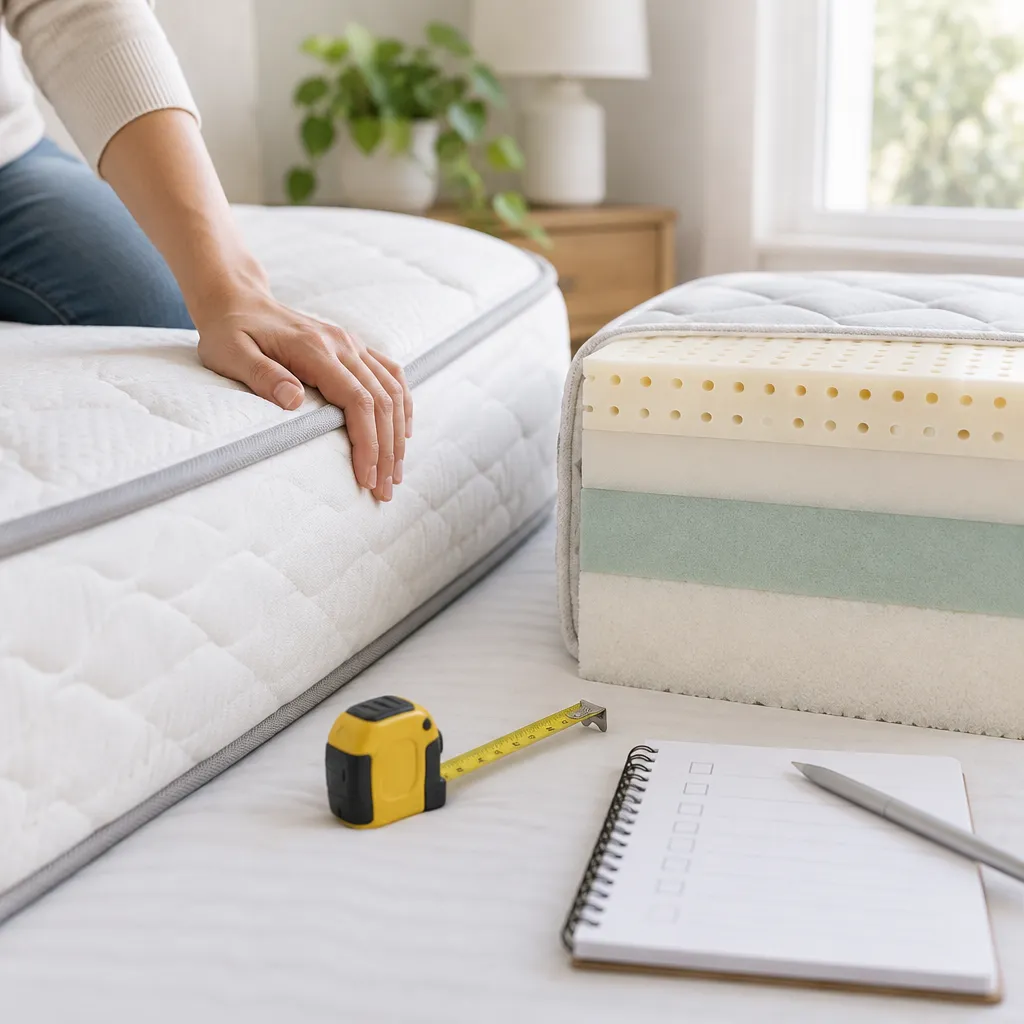
Sizing Before You Pick a Model
Measure your room and your sleeping habits before you choose a size. One major manufacturer’s published dimension chart lists queen at 60 by 79.5 inches for many of its models, and King at 76 by 79.5 inches, while noting that individual sizes may vary by model. Our memory foam mattresses come in Twin, Twin XL, Full, Queen, King, and California King.
Payment Options Without a Credit Check
We offer no-credit-needed payment plans, so a better bed does not depend on your credit history. Our 3-month purchase option is available in California and works the same as cash, while the standard agreement offers 12 months to ownership. To pay off early under the payment plan, call 877-898-1970.
Delivery and Pricing Questions
Delivery is scheduled for an exact day and time, not a four to six hour window, and most items arrive within 24 to 48 hours. We have not missed a delivery in five years. Pricing is not posted online, so call 714-864-0531 or visit the showroom to get current pricing and book a one-on-one mattress appointment.
Pro tip: Bring your sleep log to the appointment. Showing your morning ratings and the spots where you feel pain helps the staff match you to a support level instead of guessing from a sales pitch.
Frequently Asked Questions
How do I know if my mattress is causing my fatigue?
Start with the two-week sleep log and the hotel test. If you wake stiff, feel better after moving, and rest noticeably better somewhere else, the bed is a likely cause.
How long should a mattress last?
WebMD’s guidance lists innerspring mattresses at about eight years, memory foam at eight to 10 years if rotated, and latex or gel foam at around 10 to 15 years. Real lifespan depends on how the bed is used and cared for, so inspect it rather than relying on age alone.
Can an old mattress make allergies worse?
Yes. Older mattresses can hold dust mite waste, mold, and other allergens that may trigger allergies and asthma. If your symptoms are worst at night, the bed is worth inspecting.
Can I replace a mattress without a credit check?
We offer no-credit-needed payment plans, and our 3-month purchase option is available in California and works the same as cash. The standard agreement offers 12 months to ownership. Call 714-864-0531 to talk through the options.
When should I see a doctor instead of replacing my mattress?
See a doctor if you snore loudly, gasp, notice pauses in breathing, or feel sleepy during the day even after adequate time in bed. A new mattress cannot diagnose or treat those problems.
How much do mattresses cost in Orange County?
Queen mattress sets start at $149, and King mattresses start at $199 and go up from there. Pricing is not posted online, so call or visit to confirm current pricing for the model you want.
Tell us in the comments below whether your morning fatigue improved after you changed your mattress, or whether the cause turned out to be something else.
We would love your feedback and any insights you would share with others. What perspective would you add?
References
- WebMD guide to six warning signs that you need a new mattress
- Standard U.S. mattress dimension chart by size and model