

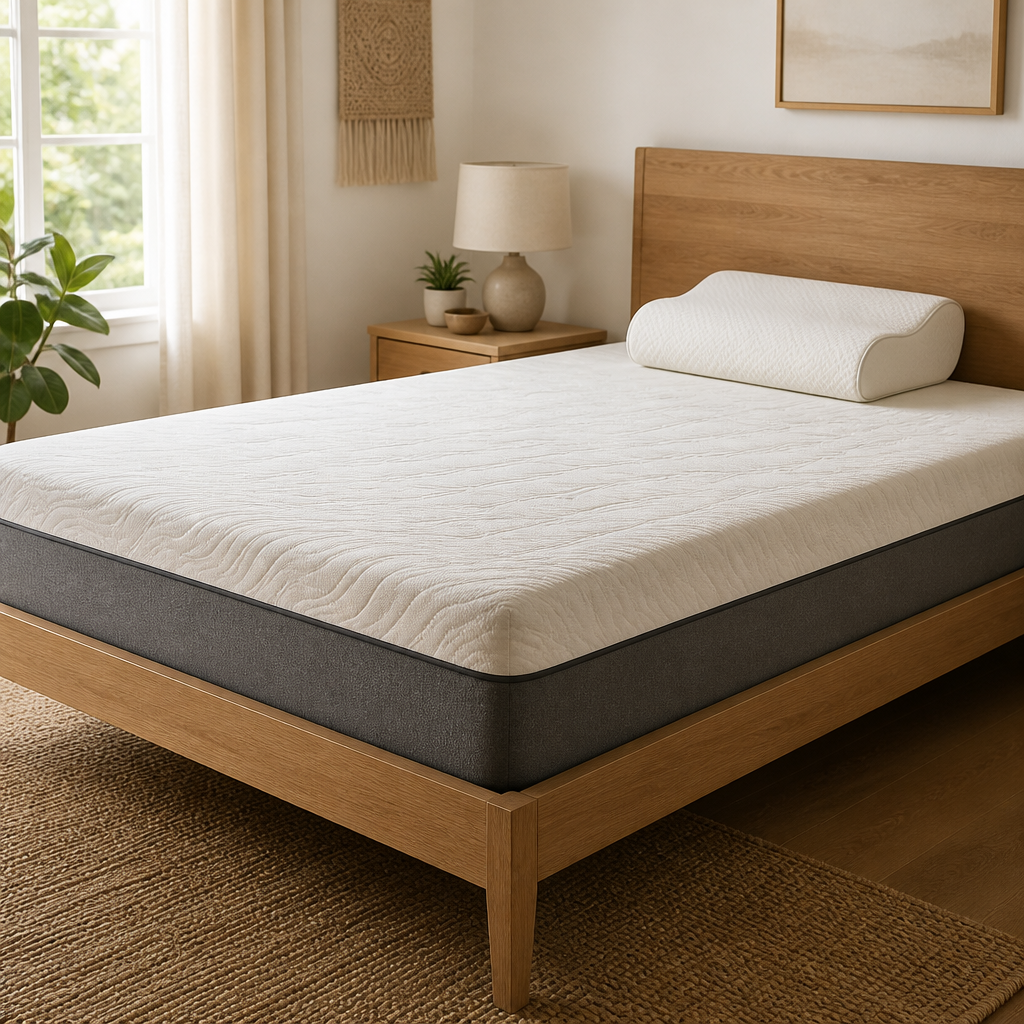
5 Signs Your Old Mattress Causes Neck and Shoulder Pain
If you wake up with a stiff neck or a shoulder that aches until you have had your coffee, your first guess is probably your pillow, your posture, or your age. Your mattress is often the quieter suspect. A bed that has lost its support can tilt your head, press your shoulder into the surface, and hold your upper body in a position it never takes while you are awake. Over time, that pattern shows up as neck and shoulder pain that seems to have no obvious cause. Here are five signs that the bed may be the real source, and what to do about each one.
Table of Contents
- Quick Takeaways
- Sign One: Stiffness That Eases Once You Get Up
- Sign Two: Shoulder Pain on the Side You Sleep On
- Sign Three: Visible Sagging and Body Impressions
- Sign Four: Constant Repositioning Through the Night
- Sign Five: The Mattress Is Older Than Its Comfort
- Mattress Replacement Versus Other Fixes
- Choosing a Replacement Without Overpaying
- Frequently Asked Questions
- References
Quick Takeaways
| Key Insight | Explanation |
|---|---|
| Stiffness that fades after you get up points to the bed | If your neck is tight at waking but loosens within 30 minutes of moving, the mattress let your head and neck settle at an angle overnight. |
| Pain concentrates on the shoulder you sleep on | Side sleepers load one shoulder all night. Pain on that side usually means the surface is too firm or too soft at the joint. |
| Any dip you can see or feel is a warning | Lay a straightedge across the surface. If it rests on the edges but lifts in the middle, the core has lost support and will keep pulling your spine out of line. |
| Frequent tossing means the bed is not settling you | A supportive mattress holds you in a neutral position. Rolling or repositioning every hour suggests the body is searching for pressure relief. |
| Age matters less than condition | Foam softens and springs fatigue gradually. A bed can lose support well before it shows visible wear, so judge it by how it feels. |
| Better sleep away from home is a useful test | If your neck and shoulder feel noticeably better after a few nights on another bed, your own mattress is the likely cause. |
Sign One: Stiffness That Eases Once You Get Up
The most common complaint we hear in our Orange County showroom sounds like this: my neck is fine until I wake up. The stiffness is tight and limited when you first turn your head, then loosens after you have been up for half an hour. That pattern points to what happened overnight, and the mattress controls your position for seven or eight hours straight.
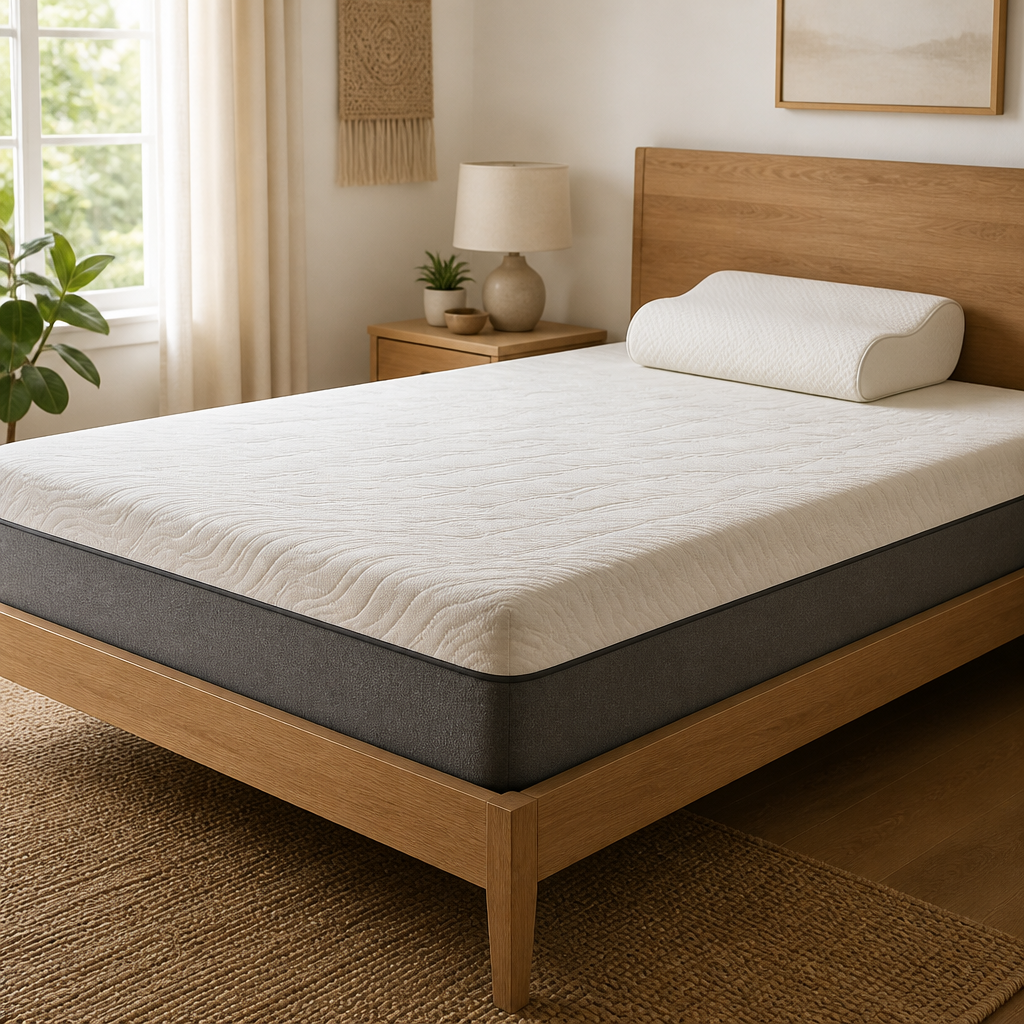
When a mattress has lost its support, your hips and shoulders sink while your head stays higher or lower than the rest of your spine. Your neck then holds that angle for hours. The muscles that keep it there tighten, and the stiffness is worst the moment you wake because you have not moved yet.
Testing Whether the Bed Is the Cause
Try a simple check for one week. Note how your neck feels as soon as you wake, then again after thirty minutes of normal activity. If the stiffness fades quickly and returns every night, the bed is a strong suspect. If it stays the same all day, look at your desk height, your phone habits, or a recent workout before you blame the mattress.
Pro tip: Keep a notebook on your nightstand for seven days. Write down your wake time, rate your neck stiffness from 1 to 10 at waking, and rate it again an hour later. A clear pattern tells you far more than a vague memory of “bad mornings.”
Why Head Position Matters
Your head is heavy, and it needs a surface that holds it level with the rest of your spine. Back sleepers are especially vulnerable when a sagging mattress lets the hips drop while the pillow stays put. The result is a neck pushed upward, which is the same problem a pillow that is too thick creates for side sleepers.
This is why the pillow and the mattress must be judged together. A supportive bed can still leave you with neck pain if the pillow is wrong, and a good pillow cannot rescue a bed that has collapsed. If you replace one, give the other a fair look within a few weeks so you know which change actually helped.
Sign Two: Shoulder Pain on the Side You Sleep On
Side sleepers put most of their body weight on one shoulder and one hip. When that shoulder wakes you, aches through the morning, or goes numb after a few hours, the mattress is usually failing to distribute pressure. Pain that consistently shows up on the same side is one of the clearest patterns we see when people come in looking for a replacement.
Firm Versus Soft: Why Both Can Hurt
A mattress that is too firm pushes all of your weight into the shoulder joint, and that concentrated pressure can make the muscles around it guard and tense. A mattress that is too soft lets the shoulder sink so far that the arm is pulled into an awkward angle and the upper back loses support. Neither is only a comfort problem. Both change how the shoulder is loaded for hours.
The fix is rarely to go as firm as possible. For most side sleepers, the target is a surface that gives under the shoulder and hip while keeping the waist supported. From the side, your spine should look straight, not bent like a hammock.
What Pressure Relief Really Means
Pressure relief is hard to judge from a quick press with your hand. Lie on the mattress in your normal sleep position for at least ten minutes, not two. Check whether your shoulder and hip feel cushioned, and whether your waist still has support. If your hand slides easily under the waist, the bed is probably too soft in the middle.
Memory foam is popular with shoulder pain sufferers for a reason. It contours to the body and reduces the sharp points of pressure that wake side sleepers. The trade-off is that some memory foam sleeps warm, so ask about the cover and comfort layers if you run hot at night.
Pro tip: Bring the pillow you actually sleep on when you test a mattress. A pillow that is too high pushes your neck toward your shoulder all night, and that can make a good mattress feel wrong.
Sign Three: Visible Sagging and Body Impressions
Look at the mattress with the sheets off. A visible dip where your body rests, or a ridge along the edges, means the foam or springs can no longer hold you level. A mattress that has been slept on in the same spot for years will show the shape of its sleeper long before the owner notices a change in comfort.
How to Check for a Dip
Lay a straightedge, such as a long ruler or a yardstick, across the surface from head to foot, then look at the gap under the middle. If the straightedge rests on the sides but lifts away in the center, the middle has sunk. Repeat the check on both halves of the bed, because wear is rarely even.
Press your palm into the surface near the shoulder and hip areas, then lift it. Foam that springs back slowly, or springs that feel tired and uneven, indicate that the support layer is past its useful life.
Why Sagging Changes Your Alignment
A dip at the hips drops the lower body and bends the spine. The upper back and neck then compensate by lifting the head, and the shoulder on your sleep side sinks deeper into the surface. Because the dip sits in the middle of the bed, you may not feel it right away. You feel it as a gradual ache that seems unconnected to any single event.
Sagging does not always mean the mattress is finished. Some beds show a shallow dip and still hold enough support for a light sleeper. The honest test is whether you can see the dip, feel it under your hand, and wake with alignment complaints. When all three are true, replacement is the sensible answer.
Sign Four: Constant Repositioning Through the Night
Everyone shifts position during sleep, and that is normal. The concern is when you are rolling, flipping, or dragging the pillow around every hour because nothing feels right for long.
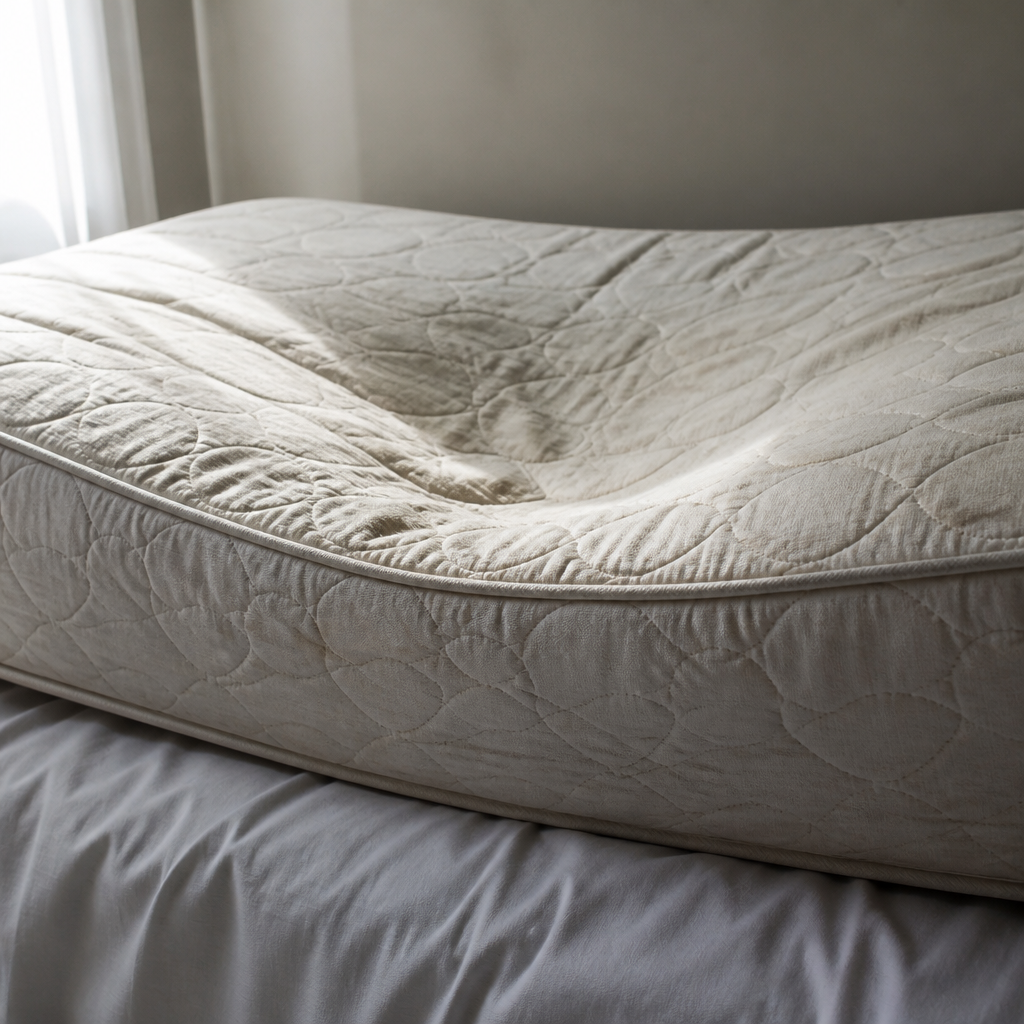
A mattress that is working well holds you in a neutral position and lets you settle quickly after a turn. When it fails, your body keeps searching for a spot that relieves a pressure point, and that search drives the repeated movement. Over time, you may wake up tight in the neck and shoulders from being twisted in several directions during the night.
Why Your Body Keeps Searching for Relief
Pressure builds first at the shoulders, hips, and lower back. If one area does not get relief, you roll onto a different side or onto your back, and the neck follows the shoulder. You may not remember these moves, which is why a sleep partner’s observations can be useful. Ask whether they see you turning, sitting up, or adjusting your pillow.
Partner Movement and Motion Transfer
If your partner’s movement wakes you, the bed may be carrying motion across the surface. This is common with older spring systems and thin foam, and it keeps your body in a light, restless sleep. A mattress with better motion isolation keeps your partner’s turns from reaching your shoulder and neck, which means fewer micro-wakings and fewer corrective shifts in the night.
Sign Five: The Mattress Is Older Than Its Comfort
Age is a weak measure on its own, because a mattress that is kept in good condition can outlast one that is ignored. The better question is whether it still feels supportive when you lie down. Many mattresses lose support well before they show visible wear, which is why people often blame their body when the bed is the problem.
Wear You Cannot See
Foam loses resilience gradually. Springs fatigue. Edge support weakens, so the side of the bed gives way when you sit down to tie your shoes. These changes happen under the surface and show up as neck and shoulder pain rather than as obvious damage.
A mattress does not need to be expensive to be right, but it does need to hold your spine level for the hours you spend on it.
Pain That Improves Away From Home
This is the simplest test in this list. If your neck and shoulder feel better after a few nights in a hotel, a guest room, or a friend’s bed, your own mattress is the likely source. Note how you feel after the first night and again after the third, so you are not judging one unusual night.
If your pain persists even on a new surface, or if you notice numbness, tingling down the arm, or weakness, see a doctor or physical therapist. A mattress can contribute to neck and shoulder pain, but it is not a substitute for a medical evaluation.
Mattress Replacement Versus Other Fixes
Before you spend money, match the fix to the problem. A new mattress is not always the first step, and a topper is not always a cheap substitute for one. The table below compares the three most common options we discuss with customers.
| Option | Best Used When | Main Limitation |
|---|---|---|
| New memory foam mattress | The bed has a visible dip, uneven wear, or pain that appears on the same side every night | Costs more upfront, so compare payment options before you decide |
| Mattress topper | The bed is structurally sound but feels slightly too firm or too soft | Cannot fix a collapsed core. A topper over a dip only hides the problem |
| New pillow | Neck pain is worst on waking, and the mattress still looks and feels supportive | Does nothing for a shoulder pressed into a sagging surface |
The simplest rule is this. If the bed has a dip, a topper will only cover it. If the bed is still structurally sound but a little off in feel, a topper can change the comfort for less money. If the pain is worst on waking and the mattress looks fine, start with the pillow and track the change for two weeks.
Choosing a Replacement Without Overpaying
Once you have confirmed the mattress is the problem, the goal is a replacement that matches your sleep position and your budget. Many shoppers overpay because they compare brand names instead of construction. Focus on the features that affect your neck and shoulders.

Match Firmness to Your Main Sleep Position
Back sleepers usually need enough support to keep the lower back from dipping, plus a little contouring at the shoulders. Side sleepers need more give at the shoulder and hip. Stomach sleepers need a firmer surface to keep the hips from sinking, along with a thinner pillow. Choose the category first, then test the feel.
Why Memory Foam Suits Many Shoulder Sleepers
Memory foam mattresses are a strong fit for people whose main complaint is shoulder pressure. The foam contours and spreads weight, which reduces the hard points that wake side sleepers. Look for a medium-firm feel, and ask about the support core, since the core is what keeps the surface from sagging over time.
Paying Over Time Without Credit Checks
Plenty of people put off a replacement because the upfront cost feels too high, even when their sleep is clearly suffering. Our no-credit-needed payment plans let you spread the cost over time, and a 3-month purchase option is available in California. The goal is to get a supportive bed now, not to wait until pain forces the decision.
Delivery matters too. We offer exact day-and-time delivery windows, and most orders are delivered within 24 to 48 hours, so you are not waiting on a bed you need tonight. If you are furnishing a bedroom, our interior design services can help the new mattress and furniture work together. Visit our Orange County showroom to talk through your pain, your sleep position, and your budget.
Pro tip: Ask for the finished height of the bed with the mattress, pillow top, and foundation in place. A taller setup changes your head angle, which can affect neck comfort as much as firmness does.
Frequently Asked Questions
How do I know if my mattress or my pillow is causing neck pain?
Start with timing. If stiffness is worst when you wake and fades after you move around, the mattress or the pillow is the likely cause. Change one at a time and track your mornings for two weeks, so you can see which change made the difference.
What is the best mattress for neck pain?
There is no single best option for everyone. For most people with neck pain, a supportive memory foam or medium-firm mattress that keeps the spine level and the head properly supported works well. Side sleepers usually need more give at the shoulder, while back sleepers need firm support under the lower back.
Can a mattress topper fix shoulder pain?
A topper can help when the mattress is structurally sound but too firm or too soft for your sleep position. It will not fix a dip or collapsed core, and a topper on a worn bed can hide the problem rather than solve it.
How old is too old for a mattress?
There is no single age that applies to every mattress, because construction and care vary widely. A better guide is how the bed feels and looks. Visible sagging, uneven wear, or pain that eases when you sleep elsewhere are stronger signs than the calendar.
When should I see a doctor instead of replacing my mattress?
See a doctor or physical therapist if neck or shoulder pain lasts more than a couple of weeks, if it continues on a new surface, or if you notice numbness, tingling, or weakness in your arm. A new mattress can help with sleep-related pain, but it does not replace a proper medical evaluation.
Can I pay for a new mattress without a credit check?
Yes. Our payment plans do not require credit, and a 3-month purchase option is available in California. Ask about the options when you visit our Orange County showroom, including for customers in Anaheim.
Tell us what worked for you, whether you replaced a mattress, changed your pillow, or found another cause, by reaching out to our team.
We would love your feedback and any insights you would share with others. What perspective would you add?
References
- Sleep Foundation guide to choosing a mattress for shoulder pain
- Forbes overview of mattress features for shoulder pain relief
- National Council on Aging resource on mattresses for shoulder pain