

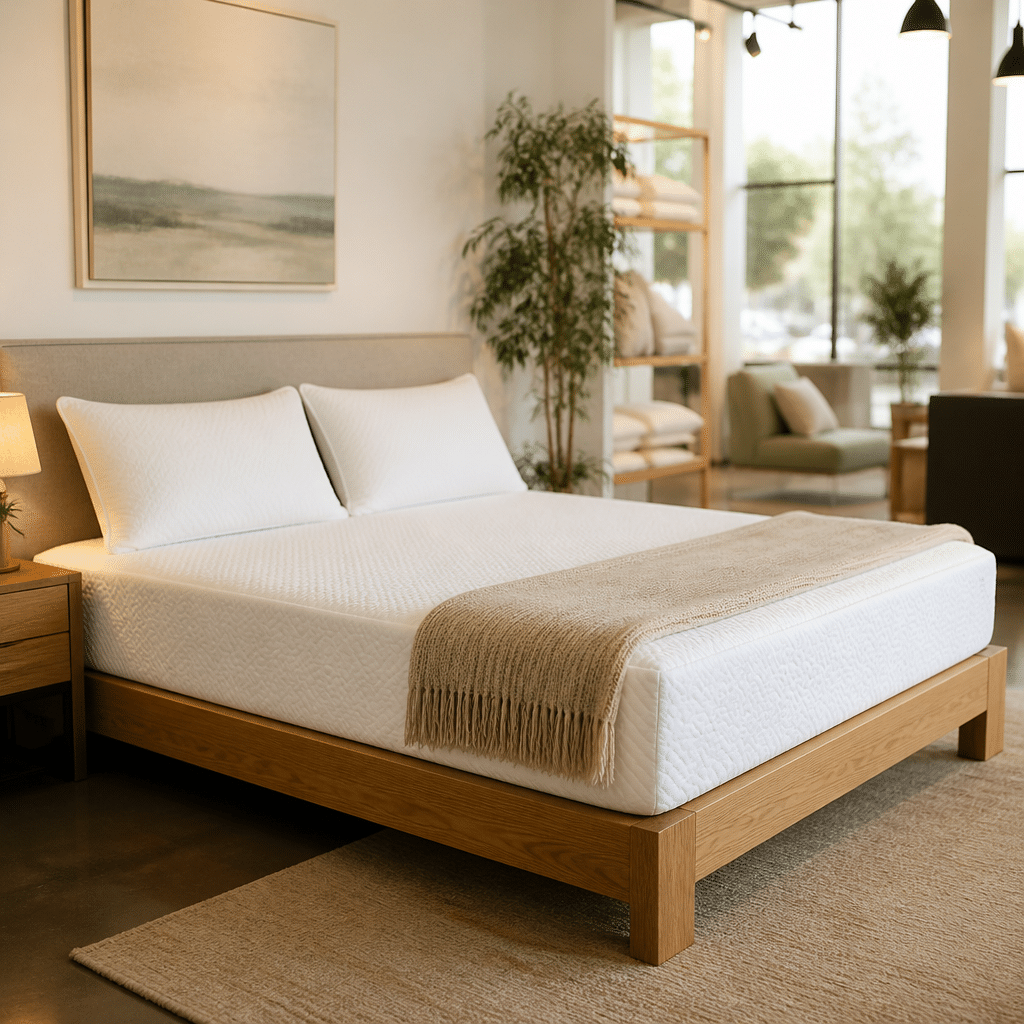
Mattress for Couples: One Bed for Two Different Sleepers
Two people, one mattress, and two completely different nights of sleep. If one of you runs hot, rolls over at 2 a.m., or needs firmer support for a stubborn hip, a single bed can quietly turn into a nightly compromise. A mattress for couples does not have to split the difference. It has to control movement, support two body types, and stay cool under two bodies. Here is how to find that bed, what to test in the showroom, and how to pay for it without credit.
Table of Contents
- Quick Takeaways
- Why One Bed for Two Sleepers Is Harder Than It Looks
- Motion Isolation: What to Test Before You Buy
- Matching Firmness When Your Preferences Split
- Cooling and Latex for Two Bodies
- Edge Support and Size: Queen Versus King
- Comparing Three Setups for Two Sleepers
- Sleep-Testing Together in Our Showroom
- Paying for the Right Bed Without Credit
- Frequently Asked Questions
- References
Quick Takeaways
| Key Insight | Explanation |
|---|---|
| Shop as a pair, not as one person | A bed that feels fine when you lie on it alone can behave very differently once a second person is in it. Always test it with your partner beside you. |
| Motion isolation comes first | If one partner tosses, turns, or gets up at night, the other feels it. Prioritize a bed that absorbs movement rather than passing it across the surface. |
| Medium firmness covers most mixed sleep styles | A medium-firm surface gives side, back, and stomach sleepers a range they can settle into. Only move away from it if one partner has a clear, documented need. |
| Plan for heat from two bodies | Two people generate more heat than one. Look for breathable covers and cooling materials, and be cautious with dense foam that holds warmth. |
| Strong edges make a queen work | Good edge support lets both sleepers use the full width of the bed. A queen with strong edges can feel close to a king for many couples. |
| Sleep on it together before you commit | Lie in your usual positions, take turns moving, and check how the bed feels after about ten minutes. Some problems only show up after the body settles in. |
Why One Bed for Two Sleepers Is Harder Than It Looks
Most couples shop for a mattress as if they were one person. They lie down for a few seconds, agree it feels fine, and move on. That approach may work for a single sleeper, but a shared bed has to handle movement, weight, and heat from two people at the same time.
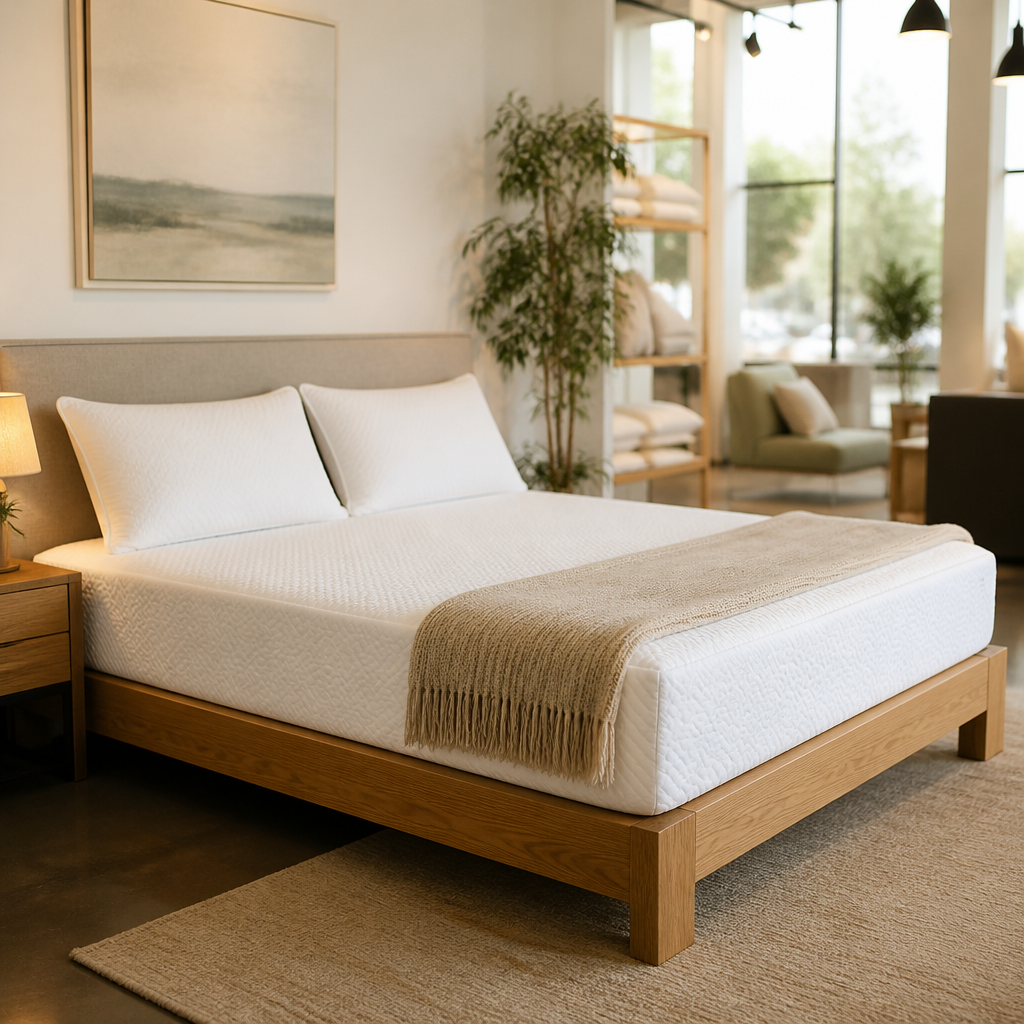
In our showroom, the most common mistake is a couple who chose a bed based on one partner’s preference, usually the person who shopped first. The other partner then spends years adjusting pillows, sleeping near the edge, or waking up when the bed shifts. A good shared mattress is a compromise you can measure, not a guess.
A bed that works for two people is not one that splits the difference. It is one that removes the reasons either person has to get up, shift, or lose sleep.
Testing groups also point in the same direction. Business Insider tested more than 100 mattresses for edge support, comfort, and motion isolation, and NCOA put more than 130 models through a series of 19 lab tests. Both reviews treat couples as a distinct case, because two sleepers create more movement, more heat, and more wear than one.
Motion Isolation: What to Test Before You Buy
Motion isolation is the bed’s ability to absorb movement so it does not travel across the surface. For most couples it is the first feature to prioritize. If you are looking for a motion isolation mattress, this is the spec that decides whether you both sleep through the night.
How to Run the Motion Test Properly
Lie down in your usual sleeping position and have your partner settle in on the other side. Then take turns moving, rolling, sitting up, and getting out of bed and back in. NCOA recommends this same routine, because a bed that feels calm while you lie still can reveal its weak spots once one person shifts.
Pay attention to what you feel, not only what you hear. A bed can look quiet and still send a noticeable ripple across the surface when someone rolls over. In practice, the test is more useful with the lights off, since you notice movement more easily when you are not watching for it.
Pro tip: Test motion with your eyes closed and the lights off. Your partner’s movement is much easier to feel when you are not watching for it.
Why Foam and Coil Builds Behave Differently
Dense foam layers tend to absorb localized pressure well, which is why many couples gravitate toward them. Pocketed coil systems can transmit more movement from one side to the other unless the comfort layers above them are thick enough to damp it. A thin comfort layer over a coil core is the setup we see cause the most complaints about motion.
Memory foam and latex both isolate motion well in many constructions. The difference often comes down to layer thickness and the core underneath, so ask about the full build rather than the top layer alone.
Matching Firmness When Your Preferences Split
Firmness is where couples argue most. One partner wants a surface that cradles, the other wants something solid enough that they do not sink. The trap is assuming the middle option is always safe, because it is not always right for both of you.
Why Medium Works for Most Couples
Medium firmness is a sensible starting point because it suits a wide range of sleep positions. In our experience, medium-firm builds give most combinations of side, back, and stomach sleepers a surface they can settle into without losing alignment. It is the option we recommend first when the couple has not yet identified a specific problem.
When One Partner Needs More Support
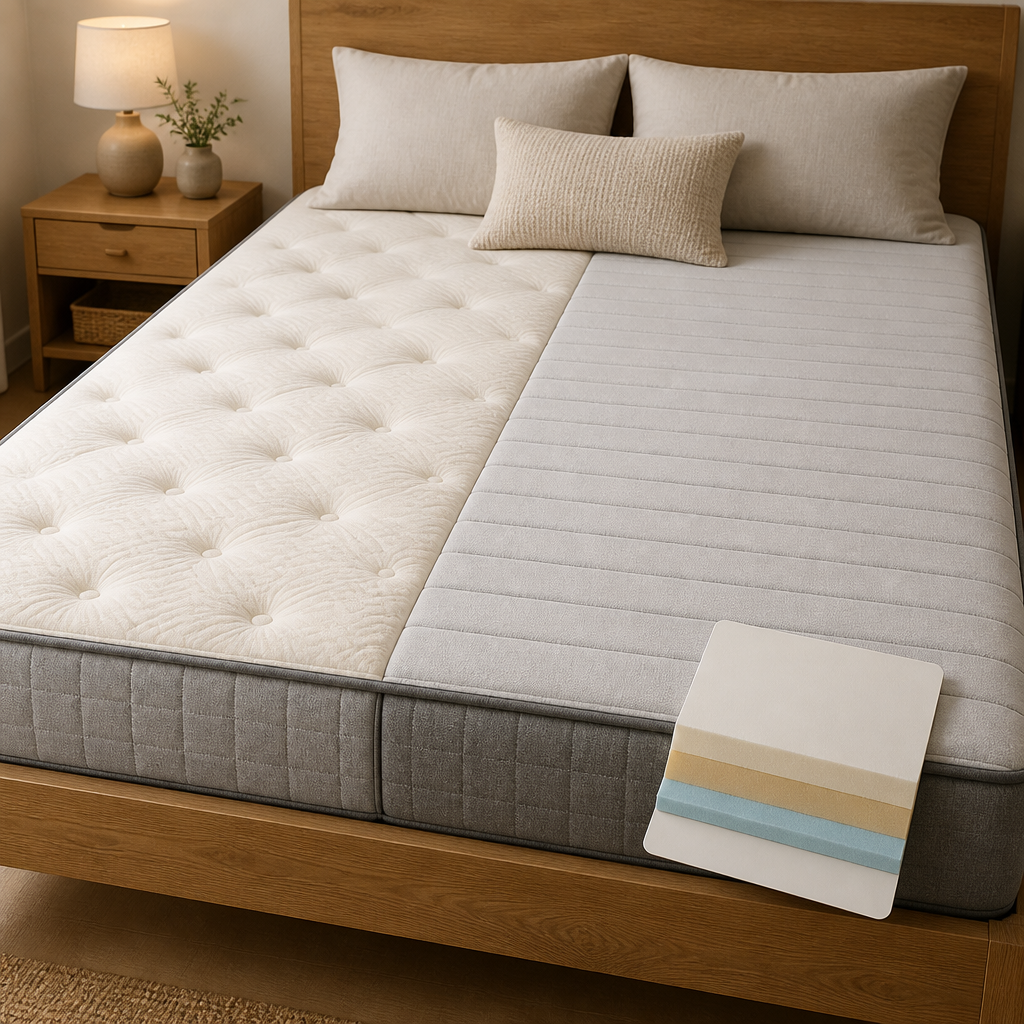
If one partner has lower back pain or hip pain and needs firmer support, a single very firm bed can overshoot for the other. The goal is alignment, not a particular number on a firmness scale. A firmer base with a softer top layer, or a configuration that treats each side differently, can often solve the problem without forcing a compromise.
Pro tip: Lie on the bed in your side position for at least five minutes. Firmness that feels right on your back can feel too hard on your hip after a few minutes of side sleeping.
Keep notes on which positions cause pain or stiffness in the morning. Those notes are more useful to a salesperson than general preferences like “soft” or “firm,” and they help you decide whether the bed needs to change or whether your pillow does.
Cooling and Latex for Two Bodies
Cooling matters more on a shared bed because two bodies tend to create more heat, as NCOA notes in its guidance for couples. If you wake up sweaty while your partner is comfortable, the problem is often the bed’s heat retention, not your sleeping habits.
Latex Versus Memory Foam for Heat
Latex is generally more breathable than many memory foams, which is why it appears so often in searches for sleeping cool and aligning the spine. Natural latex tends to hold less heat in the body zone, and it gives a responsive feel that many couples find easier to move on.
Memory foam is not automatically a hot bed, but dense types with few airflow channels can trap warmth. If you prefer foam, look for open-cell designs or cover fabrics that move air. Ask how the bed handles heat across the full sleep surface, not only at the top.
Bedding Choices That Help Heat Flow
A mattress only controls heat as well as the layers around it. Breathable cover fabrics, lighter duvets, and sheets made from natural fibers make a measurable difference for two people sharing a bed. Heavy comforters on both sides of a queen can add more warmth than most couples expect.
If one partner runs hot and the other runs cold, a shared blanket with separate layers on each side often works better than changing the mattress. That approach keeps the bed you chose and solves the comfort issue directly.
Edge Support and Size: Queen Versus King
Edge support determines how much of the bed you can actually use. NCOA notes that a queen-size mattress with strong edge support can maximize sleeping space almost as much as a king, which matters if your bedroom has limited floor space.
Queen With Strong Edges
A queen with firm, well-built edges gives two people more usable space than many couples expect. You can sleep near the outer edge without feeling that one person might roll off. For many couples in smaller rooms, a queen with good edges is the most practical choice.
When a King Makes Sense
A king suits couples who each want their own space, who keep different hours, or who share the bed with a pet. NCOA points out that a king can be a good choice if you each like your space. The trade-off is room: you need enough clearance on each side to walk around the bed comfortably, and the frame and bedding cost more.
Measure the room before you shop, including door swing and the path from the hallway. A bed that fits on paper but blocks a dresser drawer will get tested less and enjoyed less. Our team can walk through layout options with you during a visit.
Comparing Three Setups for Two Sleepers
There is no single right answer for every couple, but three setups cover most situations we see. The table below compares them by who they suit and what you give up. Start with the one that matches your biggest conflict, whether that is firmness, heat, or movement.
| Setup | Best For | Main Trade-off |
|---|---|---|
| Single medium-firm mattress with strong motion isolation | Couples with similar firmness preferences and mixed sleep positions | Can feel too soft or too firm for one partner who has a specific back or hip need |
| Split or two-sided setup with different firmness on each side | Couples with strong, opposing firmness needs | Higher cost, more complex bedding, and a larger frame in most cases |
| Adjustable base paired with a compatible mattress | Couples who want separate head or leg positions, or who manage joint pain | Requires a compatible base, more setup time, and attention to motion from base movement |
The single medium-firm option is the simplest and often the best value, provided the motion and edge tests pass. The split setup solves real conflicts but adds cost and bedding complexity. An adjustable base can help when the problem is positional rather than firmness, though it needs to be paired with a bed that handles motion well.
Sleep-Testing Together in Our Showroom
Our showroom in Orange County is small and cozy, and that is intentional. You can lie down together on the beds, ask questions one-on-one, and take your time without a sales associate hovering nearby. There is no pressure to buy during the visit.
Our Five-Minute Test Routine
Start by lying in your usual sleeping positions for a few minutes each. Then take turns rolling toward the middle, sitting up, and moving your legs, while the other person stays still and notes what they feel. Finish by checking the edges and the heat after about ten minutes, because body warmth builds slowly.
Repeat the routine on any bed you are seriously considering. A bed that passes the first test can still fail after a longer rest, so the second check matters as much as the first.
What to Bring to the Visit
Bring a list of the pain points that matter most, such as neck stiffness, shoulder pressure, or hip discomfort, along with which sleep positions cause them. Bring the pillow you sleep on, since pillow height changes how the spine lines up on any mattress. Our founders can explain how different builds handle these issues, and they are glad to compare options side by side.
Paying for the Right Bed Without Credit
A shared mattress is a significant purchase, and limited or no credit should not force a couple into a worse bed. We offer payment plans that do not require credit, so the choice can be based on fit and comfort rather than approval.
How No-Credit Payment Plans Work Here
Our no-credit-needed payment plans include a 3-month purchase option available in California. Talk through the plan options before you choose a bed so the monthly commitment fits your budget. Knowing the payment structure early keeps the decision focused on what you will sleep on.
Pro tip: Choose your bed first, then ask about the payment option. Sorting out the fit before the payment keeps you from settling for a mattress that is cheaper but wrong for your sleep.
Delivery Windows and Setup
Deliveries are scheduled in exact day-and-time windows, so you know when someone will arrive. Most orders are typically delivered within 24 to 48 hours. Pick a window when both of you can be home, since a shared bed is easier to set up and test with two people present.
Frequently Asked Questions
What is the best mattress for couples with different sleep styles?
For most couples, the best starting point is a medium-firm mattress with strong motion isolation and reliable edge support. It suits side, back, and stomach sleepers well enough to avoid the most common conflicts. If one partner has a specific pain issue, consider a split or adjustable setup rather than forcing one firmness on both.
How do you test motion isolation in a showroom?
Lie in your usual sleeping position while your partner settles in on the other side. Then take turns rolling, sitting up, and getting out of bed. Pay attention to whether you feel a ripple across the surface, and repeat the test after several minutes because body settling can change the result.
Is a king or a queen better for couples?
A queen with strong edge support works well for many couples and fits smaller bedrooms. A king makes more sense if you each want your own space, keep different schedules, or share the bed with a pet. Measure the room and check clearance on both sides before you decide.
Does latex sleep cooler than memory foam for two people?
Latex is generally more breathable than many memory foams, so it often feels cooler for two sleepers. Dense memory foam with few airflow channels can hold more heat. The cover fabric and bedding also affect how warm the bed feels, so check the full build rather than the top layer alone.
Yes. Our payment plans do not require credit, and we offer a 3-month purchase option available in California. Talk through the plan options before you choose a bed so the monthly payment fits your budget.
Should a couple buy two different mattresses instead?
Two separate beds can be a good solution when firmness needs are far apart, but they require a bedroom layout that accommodates two frames. Most couples can solve the problem with one well-chosen bed or a split configuration, so test those options first before moving to two beds.
Tell us how you and your partner settled on your bed, and what you would test differently next time.
References
- Business Insider guide on testing mattresses for edge support and motion isolation for couples
- NCOA guidance on sleep-testing a shared mattress and prioritizing motion, cooling, and edge support
- Sleep Foundation expert review of motion isolation and edge support for couples
- NapLab testing approach for finding a mattress that suits two sleepers