

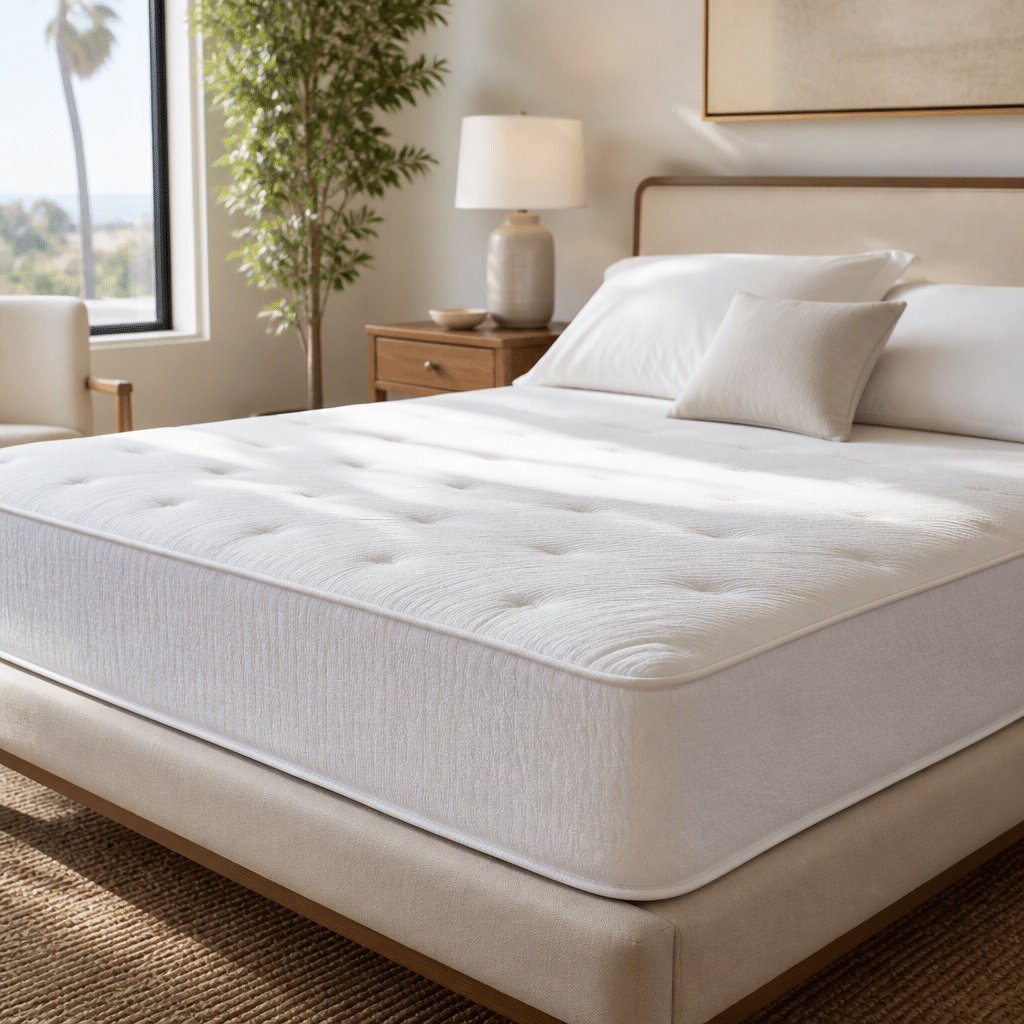
Mattress for Back Pain: How the Right Bed Eases Pain
Lying awake at 3 a.m. with a stiff lower back is a problem a new mattress can often address, but only if the bed matches your spine and your pain pattern. Many people spend real money on a mattress that feels wonderful in a showroom, then wake up sore after the first week. In our Orange County showroom, we hear the same story again and again: the bed was comfortable for ten minutes but not for ten nights. This guide explains how a mattress for back pain should support your spine while you sleep, what to look for in firmness and materials, and how to shop without overspending.
Table of Contents
- Quick Takeaways
- Why Firmness Matters for Back Pain
- Spine Alignment: What Good Support Looks Like
- Memory Foam, Latex, and Hybrid Options
- Matching Mattress Feel to Your Pain Pattern
- Sleeping Cool Without Losing Support
- Buying Without Overspending in Orange County
- Setting Up Your Bedroom for Back Pain Recovery
- Frequently Asked Questions
- References
Quick Takeaways
| Key Insight | Explanation |
|---|---|
| Firm does not mean hard | Support should follow the natural curve of your spine. A surface that forces your body flat can create new pressure points. |
| Sagging is the main culprit | When the torso sinks into a soft bed, the discs and muscles of the lower back hold a strained position for hours. |
| Your sleep position sets the firmness | Side sleepers usually need more give at the shoulder and hip. Back sleepers need steady lumbar support. |
| Judge the bed over several weeks | A new mattress often feels different after your body adjusts. Keep it if the feel improves, but return it if pain worsens each morning. |
| Heat can undo good alignment | Overheating causes frequent wake-ups, which break up the deep sleep your back needs for recovery. |
| Budget for the right bed, not the brand name | Low-overhead pricing and no-credit-needed payment plans, including a 3-month purchase option in California, let you buy proper support now. |
Why Firmness Matters for Back Pain
Firmness controls how your body weight spreads across the mattress. When the surface is too soft, your hips and torso sink lower than the rest of your body, which bends the spine out of its natural line. That sag is the core problem behind most mattress-related back pain.
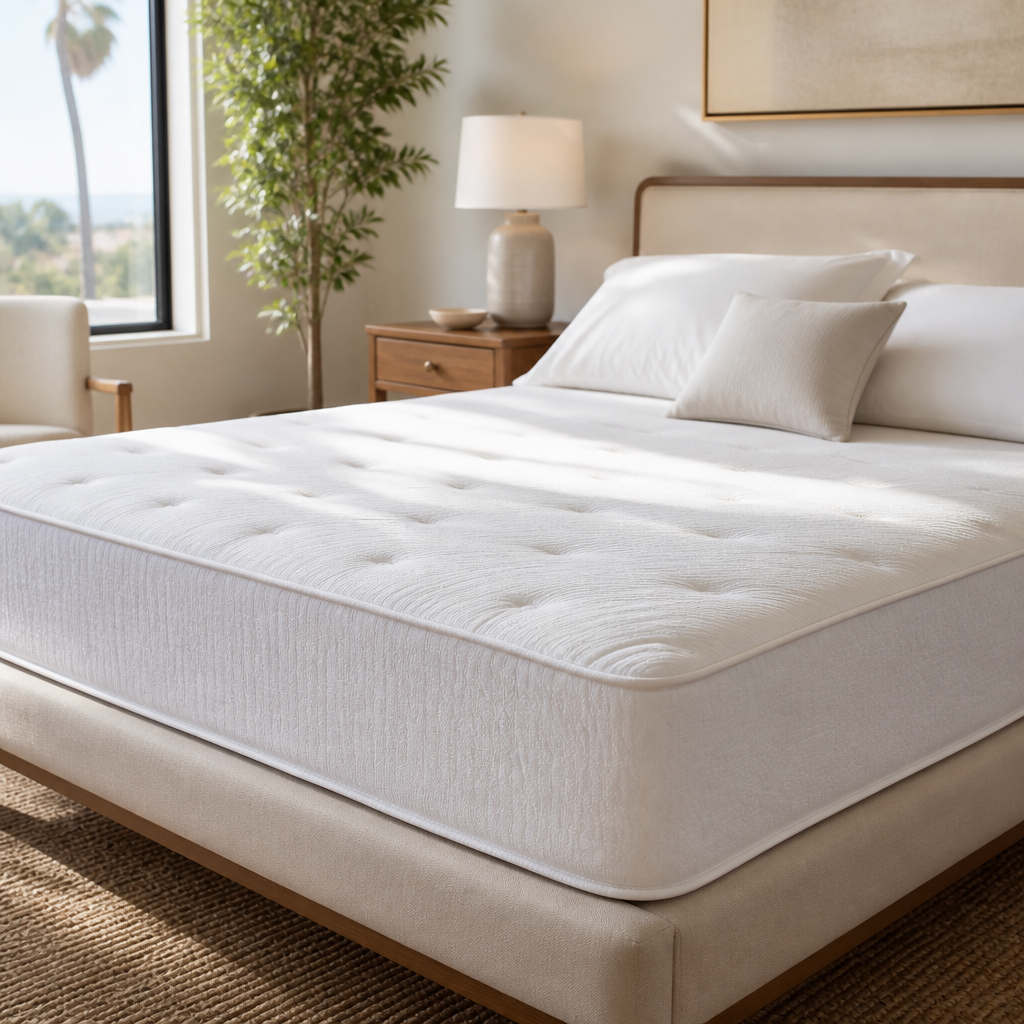
The Hammock Effect and Your Lower Back
The sagging pattern is often called the hammock effect, and it is the most common complaint we hear from customers who bought a bed that felt plush in the showroom. Over a full night, the discs and muscles of the lower back hold a position they were never meant to hold. Many people wake up stiff, loosen up during the day, and blame their work or their age.
The fix is not to buy the hardest bed on the floor. A surface that is too firm leaves the pelvis and shoulders with nowhere to go, which can push the lower back into an arch. You want support that keeps the torso level while letting the shoulders and hips settle just enough.
Firm Does Not Mean Hard
Many shoppers confuse firm with uncomfortable, then switch to a soft pillow top and end up back where they started. A well-built firm mattress uses layers that compress under pressure points and push back under the core. The feeling you want is supported, not stiff.
Pro tip: Lie on your back and then on your side for at least ten minutes each. If your lower back lifts away from the surface, the bed may be too firm. If your hip sinks well below your shoulder, the bed is too soft.
Spine Alignment: What Good Support Looks Like
Spine alignment is simpler than the sales floor makes it sound. Your spine has three natural curves, and a supportive mattress keeps them close to the shape they hold when you stand relaxed with weight evenly distributed. If you can picture a straight line from the back of your head to your tailbone, that is the line the bed should protect.
Alignment changes with how you sleep. A bed that supports one position well can strain another, so the first question is always which position you spend most of the night in. Most people never think about this until they wake up with a sore neck.
Side Sleepers and the Shoulder-to-Hip Line
Side sleepers need enough give at the shoulder and hip to let those points sink slightly while the waist stays lifted. If the mattress is too firm, the shoulder jams into the surface and the top arm pulls the neck out of line. If it is too soft, the hip drops and the spine twists.
In practice, a side sleeper who wakes with a sore shoulder usually needs a softer comfort layer on top of a firmer base, not a firmer top. That combination is one of the most common fixes we suggest when customers come in with the same complaint.
Back Sleepers and the Lumbar Curve
Back sleepers have the most straightforward alignment problem. The lower back needs gentle support so the lumbar curve does not flatten or arch. A mattress that is too soft lets the pelvis sink and tilts the spine. A mattress that is too hard leaves a gap under the lower back that can feel just as uncomfortable.
The best mattress keeps your spine in the position it holds when you are relaxed on your feet, not the position that feels best during the first five minutes of lying down.
Stomach sleepers face a harder problem, because lying face down flattens the lumbar curve and turns the neck to one side for hours. If you cannot break the habit, choose a firmer surface with a thin comfort layer and use the lowest pillow you can tolerate.
Memory Foam, Latex, and Hybrid Options
Material affects how a mattress feels on the body and how it responds when you move. Each type has a different strength for back pain, and none is automatically the right answer. Knowing how they behave helps you match a bed to your pain rather than to a sales pitch.
Memory Foam That Contours Without Trapping Heat
Memory foam mattresses cradle pressure points, which is why many people with lower back or hip pain find them easier on the body than a basic innerspring. The foam returns slowly to shape after you move, which helps the spine settle into a neutral position overnight. This is a real advantage for side sleepers.
The trade-off is heat and sink. Dense foam can hold warmth and can feel slow to respond for people who change position often. A good memory foam bed should hug the body without letting the hips drop out of line, so test it in your usual sleep position before you commit.
Latex and Hybrid Designs for Support and Airflow
Latex is often described as more responsive and cooler than memory foam, with a bouncier feel that makes repositioning easier. For people whose back pain worsens when they stay still too long, that responsiveness can matter. Compare firmness closely, because the feel of latex varies from one model to another.
Hybrid designs combine a supportive coil base with foam or latex comfort layers. They tend to suit mixed sleepers and couples because they balance support with airflow. The catch is that build quality varies, so check the thickness of the base and the comfort layer rather than relying on the label.
| Material Type | Back Pain Strength | Watch Out For |
|---|---|---|
| Memory foam | Contours to pressure points and keeps the spine settled, especially for side sleepers | Can trap heat and feel slow for frequent position changes |
| Latex | Responsive support that makes it easier to shift position while keeping the spine level | Feel varies widely between models, so test in your usual position |
| Hybrid | Coil base gives firm support, with comfort layers for pressure relief | Build quality varies, so check base and comfort layer thickness |
Treat this comparison as a starting point, not a verdict. Your body weight, sleep position, and pain location will decide which material earns a place in your bedroom.
Matching Mattress Feel to Your Pain Pattern
Back pain rarely comes from one place, so a mattress for back pain should be chosen around where your pain shows up. Lower back pain, neck and shoulder pain, and hip pain each respond to different levels of pressure relief and support. A bed that fixes one often leaves another untouched.
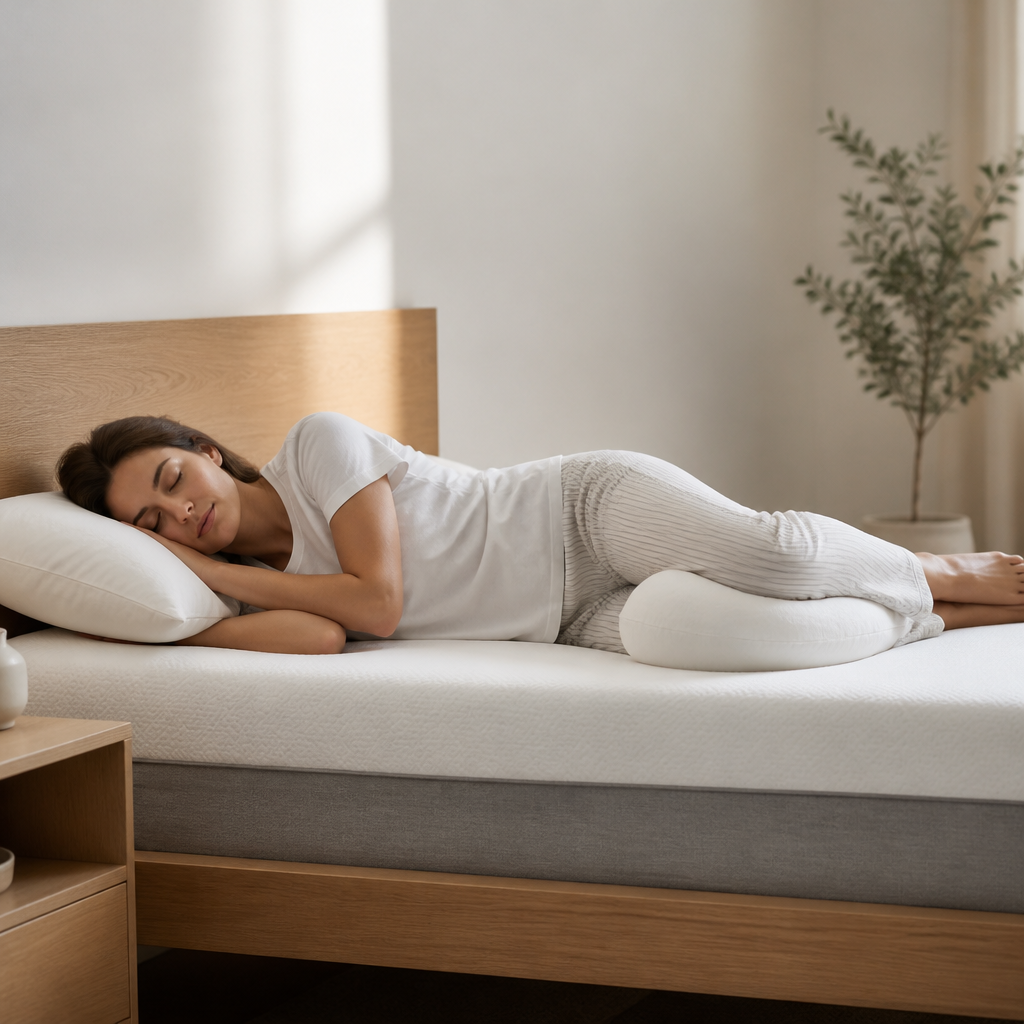
Lower Back Pain
For lower back pain, the priority is keeping the pelvis level and the lumbar curve supported all night. Most people with this complaint do better on a medium-firm to firm surface than on a plush one. Look for a base that holds weight evenly rather than one that dips in the middle after a few months.
Neck and Shoulder Pain
Neck and shoulder pain usually comes from pressure at the shoulder combined with a head that tips out of line. You need a comfort layer soft enough to let the shoulder sink, paired with a pillow that keeps the neck in line with the spine. Many customers find that changing the pillow solves more than they expected, but the mattress still has to let the shoulder settle.
Hip Pain
Hip pain tends to flare when the mattress presses hard on the bony points of the hip and thigh, especially for side sleepers. Pressure relief matters more here than raw firmness. A layer that cushions the hip without letting it drop below the shoulder usually feels better in the morning.
Sleeping Cool Without Losing Support
Heat is an overlooked back pain problem. People who sleep hot tend to wake more often, shift position constantly, and carry tension into the morning. Cooler sleep does not replace good alignment, but it helps you stay in one supported position long enough for the spine to rest.
Why Heat Wakes Back Pain Sufferers
When you overheat, your body moves more and wakes more often, which breaks up the sleep your back needs for recovery. Many people blame the mattress when the real issue is a bed that traps heat under a heavy comforter. The fix is often a combination of materials and bedding.
In practice, memory foam beds with dense comfort layers are the ones most likely to feel warm. Latex and hybrid designs with open air channels usually feel cooler, though results vary by model and room temperature.
Cover, Foundation, and Airflow
The cover matters more than most shoppers expect. A breathable fabric with some moisture control helps move heat away from the body. Pair the mattress with a foundation that allows air to circulate underneath, and avoid stacking thick toppers unless the bed is clearly too firm.
Pro tip: If you sleep hot, note how many times you wake up over the first few nights. If the wake-ups drop after you switch to a cooler cover or a lighter comforter, heat was part of the problem, and you may not need a new mattress at all.
Buying Without Overspending in Orange County
Price should never push you toward the wrong bed. Many shoppers in Orange County and Anaheim pay for a showroom, a brand name, and a commission that does nothing for their spine. Our business runs on low overhead and has no commissioned sales associates, so you get personal attention and a fair price on the same top-selling styles.
Checking Returns, Delivery, and Warranty Before You Pay
Ask every seller what happens if the mattress does not work for your back. Get the return terms, warranty, and delivery window in writing before you pay. Our deliveries come with exact day-and-time windows, and most orders typically arrive within 24 to 48 hours, which matters when you are stuck on an old bed that hurts.
Payment Plans Without a Credit Check
Limited or no credit should not keep you on a bad mattress. We offer no-credit-needed payment plans, including a 3-month purchase option available in California, so you can get proper support now instead of waiting months to save. Read the terms carefully and confirm that the payment amount fits your budget before you sign.
Setting Up Your Bedroom for Back Pain Recovery
A new mattress is only part of the setup. The foundation, bed frame, and pillows all change how the spine sits through the night. Getting these pieces right is often what turns a good purchase into a bed that helps you wake up without pain.
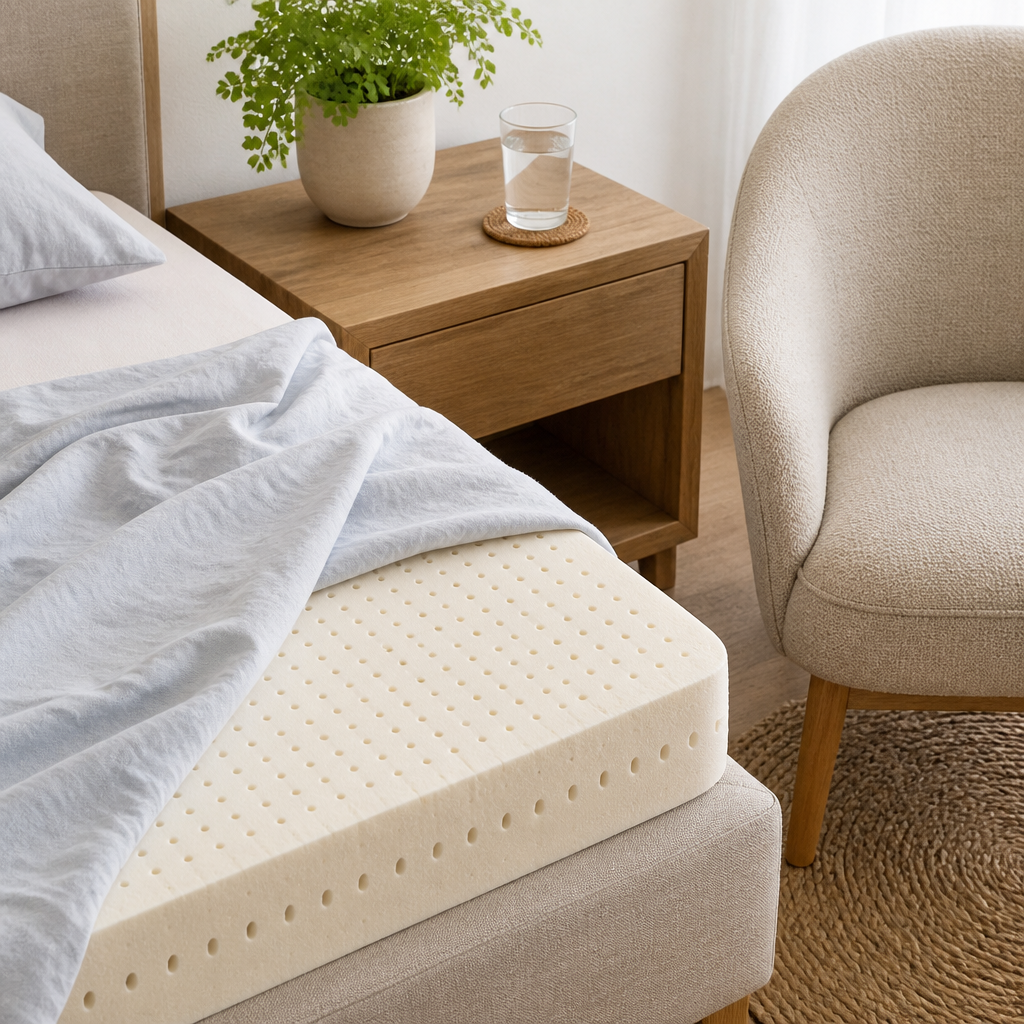
Foundation and Bed Frame Choices
A sagging foundation can undo the support of a good mattress. Make sure the base is firm and even, and that it matches the support the mattress needs. Slats should be close enough that the mattress does not bounce or bow between them.
Pillows That Match Your Sleep Position
Side sleepers usually need a pillow that fills the gap between the ear and the mattress, so the neck stays level with the spine. Back sleepers often do better with a thinner pillow and a small support under the knees. Stomach sleepers should use the flattest pillow they can tolerate.
Room Layout and Interior Design
Bedroom layout affects how you move in and out of bed, which matters if you have stiff hips or a sore lower back. Leave enough room on both sides to sit on the edge without twisting. Our interior design service can help you plan a layout that fits a smaller Orange County bedroom without crowding the path to the bed.
Pro tip: Practice getting up from the bed on purpose. If you need to roll onto your side and push up with your arms, your bed height or your room layout may be working against your back.
Frequently Asked Questions
What is the best mattress for back pain?
No single model works for everyone. The best mattress for back pain keeps your spine level in your usual sleep position, relieves pressure at the shoulders and hips, and does not sag over time. Start with your sleep position and pain location, then compare firmness and materials.
Is a firm mattress always better for back pain?
Not always. Firm support helps many people, but a surface that is too hard can leave gaps under the lower back and cause pressure at the hips and shoulders. Aim for supportive rather than rigid, and test the bed in your usual position.
How long should I sleep on a new mattress before judging it?
Give it several weeks. Your body needs time to adjust, so a bed that feels odd on the first night can become comfortable later. If it causes new pain every morning, though, do not keep it out of loyalty.
Can a mattress reduce chronic back pain?
A mattress can reduce pain caused by poor alignment or pressure, and many people notice fewer stiff mornings after an upgrade. It will not treat every cause of chronic back pain, so keep your doctor or physical therapist involved if pain continues.
Do no-credit payment plans cost more than paying upfront?
They can carry terms you need to review, so compare the total cost, not just the monthly payment. Ask about the 3-month purchase option available in California and confirm every fee before you sign.
Do I need an interior designer to set up a bedroom for back pain?
You do not need one, but layout matters. A short planning session can help you fit a bed with room to move, and our team can help with that for homes in Orange County and Anaheim.
Tell us in the comments what change made the biggest difference to your back pain after a mattress switch, or what held you back from making the change.
We would love your feedback and any insights you would share with others. What perspective would you add?
References
- AARP guide to mattresses for back pain
- Article on balancing firmness and comfort for low back pain
- Sleep Foundation guide to mattresses for back pain
- Objective mattress testing methods for back pain