

Pain-Free Sleep Mattress Orange County: Position Guide
If you are searching for a pain free sleep mattress Orange County residents can rely on, the answer starts with how you sleep. Many people wake up with a stiff neck, a sore hip, or a shoulder that will not stop aching, and they blame age or a bad week. More often, the cause is the surface holding them for eight hours a night. Your mattress and your sleep position work as a pair. A good match supports you all night, and a bad one fights your body from the first hour. This guide explains how to pair the two, what to avoid, and how to shop in Anaheim without pressure.
Table of Contents
- Quick Takeaways
- Why Your Sleep Position Decides What Your Mattress Must Do
- How a Mattress Changes Spine Alignment Overnight
- Matching Your Mattress to Neck, Shoulder, and Hip Pain
- Comparing Mattress Types by Sleep Position
- Latex and Memory Foam: Cooling and Support Trade-offs
- Buying in Orange County Without the Pressure
- Common Mistakes That Undo a Good Mattress
- Frequently Asked Questions
- References
Quick Takeaways
| Key Insight | Explanation |
|---|---|
| Pick the mattress for the position you use most | Most people sleep on their side or back for the majority of the night. Shop for that position first, then check how the bed handles the others. |
| Side sleepers need pressure relief at the shoulder and hip | A surface that is too firm pushes the shoulder up toward the ear, and one that is too soft lets the hip sink and twist the spine. |
| Back sleepers need a supported lumbar curve | If the midsection sags, the lower back arches all night. Look for a surface that holds the hips level with the shoulders. |
| Pillow height is part of the mattress decision | A pillow that is too high or too low moves the neck off the spine line, even on a good bed. |
| Test in your real sleep position for 10 minutes | Lying flat on your back in a showroom tells you very little about how you will sleep on your side at 3 a.m. |
| Replace the bed when mornings get worse, not only when it looks worn | A mattress can lose support long before the surface shows wear. Waking stiffer each week is a useful signal. |
Why Your Sleep Position Decides What Your Mattress Must Do
Your body does not stay still for eight hours. It shifts between positions, and each one puts pressure on different points. A bed that feels perfect on the first night can feel wrong by the third if it does not match how you actually sleep. That is why we start with position, not brand names or box dimensions.
Think of the mattress as a support system that has to handle your weight distribution. Your shoulders, hips, and head carry most of the load in a side position, while your shoulder blades, lower back, and tailbone do the work on your back. Each area needs a different amount of give.
Side sleepers and the shoulder and hip problem
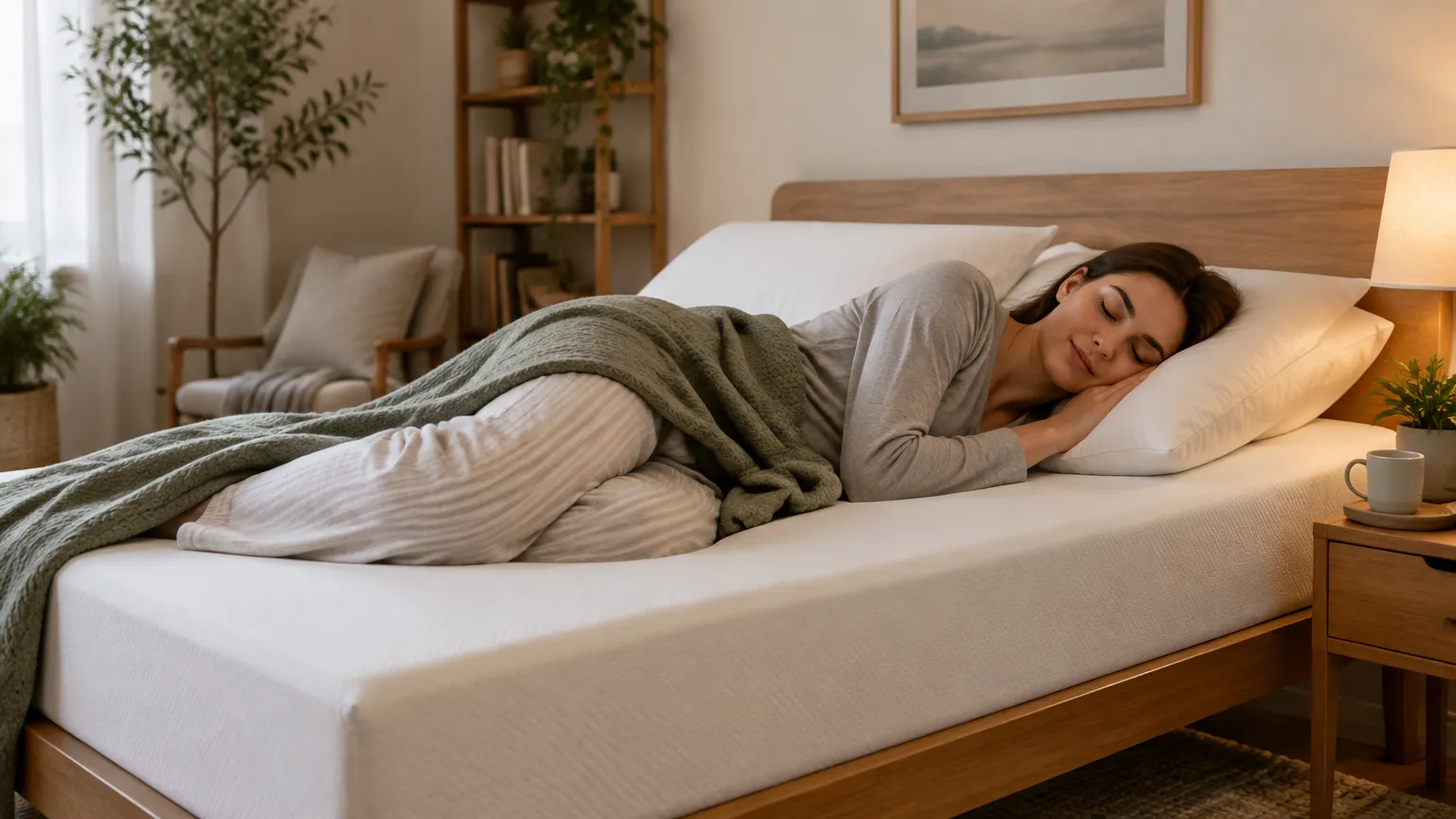
Side sleepers carry most of their weight on one shoulder and one hip. If the mattress is too firm, the shoulder cannot sink in, and the upper arm and neck take the strain. Many side sleepers describe waking with a numb arm or a tight neck, and that pattern usually traces back to a surface that will not let the shoulder settle.
When the mattress is too soft, the opposite happens. The hip drops below the line of the shoulder, the lower spine bends sideways, and the lower back complains by morning. The goal is a surface that cushions the shoulder and hip while keeping the spine straight from the neck to the pelvis.
Back and stomach sleepers and the lumbar curve
Back sleepers have a different problem. Their weight spreads across the shoulder blades, lower back, and tailbone, and the natural curve of the lower back needs gentle support. A bed that lets the midsection sag makes the lower back arch all night, which is one of the most common reasons back sleepers wake up sore.
Stomach sleepers face the most strain on the neck and lower back. Lying face down pulls the head to one side and pushes the pelvis toward the mattress. If you sleep this way, a firmer surface usually keeps the hips from sinking, and a thinner pillow keeps the neck from twisting.
How a Mattress Changes Spine Alignment Overnight
Spine alignment is the simplest test of whether a mattress is working. When you lie in your normal position, your spine should hold a relaxed, natural line rather than bending sharply at the hips or neck. A mattress cannot force perfect alignment, but it can either support that line or quietly undo it.
A spine health resource on sleep and the spine notes that when the spine is not properly aligned or supported during sleep, it can contribute to muscle tension and stiffness. That is the pattern we see in customers who describe morning pain that eases after a few hours of movement. The bed is not the only cause, but it is often the one thing they can change quickly.
Why too-soft surfaces let the hips sink
A mattress that feels luxurious when you sit on the edge can be a problem once you lie down. A surface that is too soft lets the heaviest parts of the body sink deeper than the rest, which bends the spine out of line. In practice, the hips and shoulders end up in a shallow valley while the waist stays higher.
This is why a soft top layer should not be the only thing you judge. Press your hand under your waist while lying on your side. If there is a large gap, the bed is letting you sink too far.
A mattress that feels wonderful for five minutes can still leave you sore by morning. Judge it by how you wake up, not by how it feels when you first sit down on it.
What medium-firm means in practice
Medium-firm is one of the most searched terms in this category, and it is also one of the most misunderstood. A 2021 review of mattress research, indexed in PubMed Central, found that medium-firm surfaces may effectively reduce pain for many people, while noting that firmness is one factor among several. In practice, medium-firm means the surface gives enough at the shoulder and hip but still pushes back enough to keep the spine level.
Pro tip: Lie on the bed in your usual sleep position for at least 10 minutes with your head on the pillow you actually use at home. Ask yourself whether your neck and lower back feel neutral, not whether the bed feels soft.
Matching Your Mattress to Neck, Shoulder, and Hip Pain
Pain location is a useful clue, but it is not a diagnosis. A sore neck may come from the pillow, the mattress, or the position you hold all night. The fastest way to narrow it down is to notice where you feel pain first thing in the morning and whether it fades within an hour.
In our showroom conversations, the most common complaints fall into three groups: neck and shoulder pain, hip pain on the side you favor, and lower back pain that appears after a few nights on a new bed. Each group points to a different adjustment. If you have been dealing with pain in one specific joint, our guide on knee pain at night and sleep position fixes covers a related set of adjustments.

Neck pain and pillow height
The neck is where mattress and pillow choices collide. A pillow that is too high pushes the head up and forward for side sleepers, which pulls the neck away from the spine line. A pillow that is too low lets the head drop, which strains the neck from the other direction.
A practical check is to lie on your side and have someone look at whether your nose points straight ahead, without tilting up or down. If the head sits high above the mattress, the pillow is too thick. If the head sits lower than the shoulder, the pillow is too thin or the mattress is sinking too much.
Hip pressure and the mattress edge
Hip pain on a side sleeper often comes from a surface that cannot cushion the bony point of the hip. The hip should sink enough to feel relieved, but not so much that the pelvis drops out of line with the rest of the spine. Customers who sleep on the same side every night often notice this more than people who switch positions.
Edge support matters too. If the bed collapses at the side, you may roll toward the edge in the night and wake up with pressure on the outside of the hip. Test the edge by sitting near it and lying close to it before you commit to a bed.
Comparing Mattress Types by Sleep Position
No single mattress type suits every sleeper, and anyone who tells you otherwise is selling something. The table below compares three common approaches by how they handle the positions we covered above. Use it as a starting point, then test the bed in your own position before deciding.
| Mattress Type | Best Fit by Sleep Position | Where It Often Falls Short |
|---|---|---|
| Memory foam | Side sleepers who want the shoulder and hip to sink in and cushion pressure points | Can feel too soft for back sleepers who need firm lumbar support, and some sleepers find it holds more heat |
| Latex | Back and combination sleepers who want responsive support that pushes back as they move | Feel varies by density and layering, so a bed can seem firm to one sleeper and soft to another |
| Orthopedic coil system with a comfort layer | Back sleepers who need a stable base, and side sleepers who want a firmer core with a softer top layer | A thin comfort layer on a very firm core can leave side sleepers feeling pressure at the shoulder |
Where memory foam earns its place
Memory foam works well when you need the body to sink in at the shoulder and hip without a hard edge. For many side sleepers, that contouring reduces the pressure points that wake them up. The trade-off is that a soft foam layer needs a solid base, or the bed will lose its shape over time.
We carry memory foam mattresses in Twin, Twin XL, Full, Queen, King, and California King sizes. Choose the size that fits your bedroom and your sleep habits, not just the one that fits the frame you already own.
Where latex and coil systems differ
Latex tends to feel more responsive than memory foam, which means it pushes back as you move. Back sleepers often prefer that lift because it helps keep the hips from sinking. Coil systems add a firm, stable base, and they can work well when paired with a comfort layer that is thick enough for side sleepers.
Pro tip: Ask for the mattress to be tested with a pillow you use every night. A bed that feels right without a pillow can feel wrong once your head is raised or lowered.
Latex and Memory Foam: Cooling and Support Trade-offs
Support is only half of a good night. Many sleepers who finally find a comfortable firmness still wake up hot, restless, or sweaty, and that heat can break sleep into short pieces. A bed that supports your spine but traps warmth can undo the benefits of the right firmness.
Our latex mattress guide goes deeper into spine alignment and cool sleep, and it is worth reading if heat is part of your complaint. The short version is that airflow through the materials, the cover, and the layers beneath all affect how warm you feel by 3 a.m.
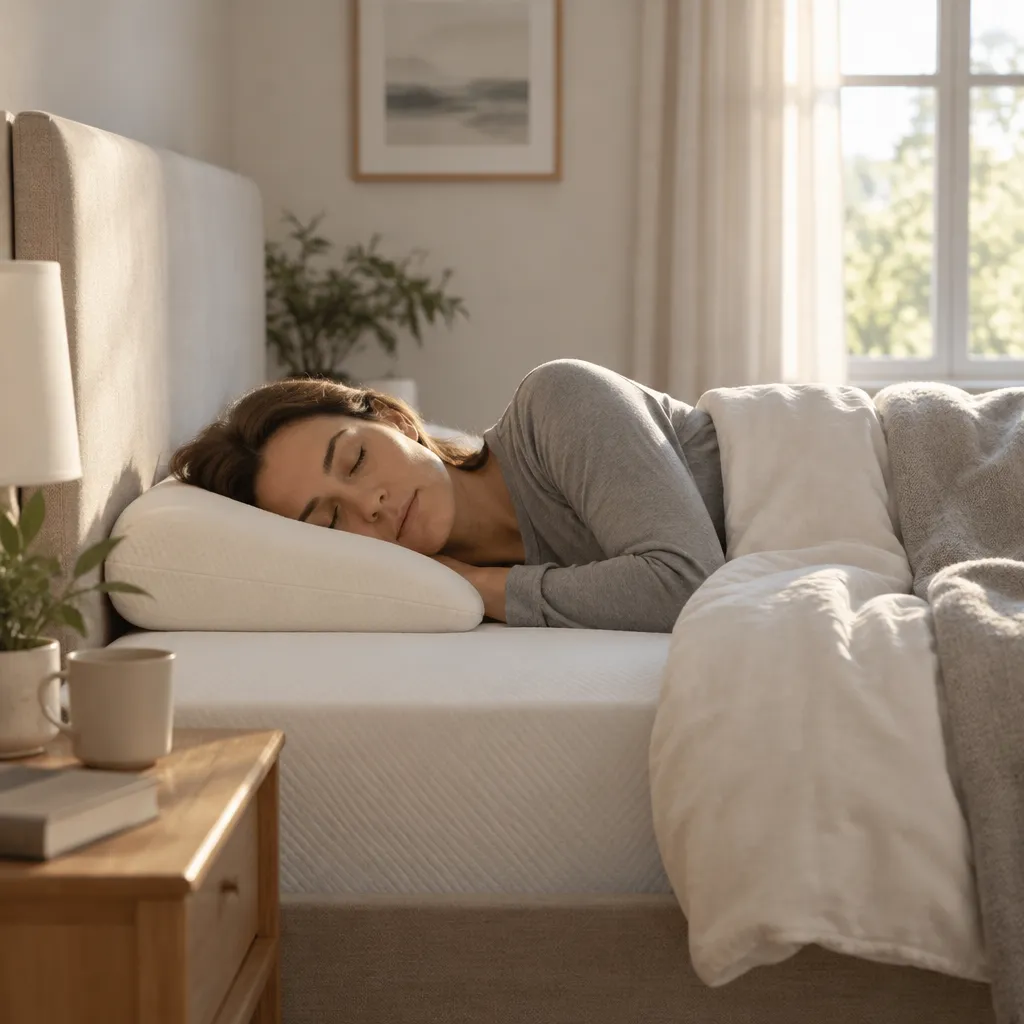
Heat rarely gets the blame for morning pain, but it does affect how deeply you sleep. When you wake up warm, you shift more often, and each shift changes how the spine is held. Sleepers who run hot often describe a restless night followed by a stiff morning.
If you tend to overheat, look for breathable covers, open-cell materials, and layers that let air move through the bed. Keep the bedroom cool, and avoid heavy bedding that traps warmth around the shoulders and hips.
Choosing a support layer you can live with
A support layer should be firm enough to keep your spine level, but comfortable enough that you do not wake up to adjust. In practice, that means matching the layer to your weight and your usual position. A layer that feels soft at the store can feel different after two weeks, so give your body time before you judge.
Buying in Orange County Without the Pressure
Choosing a mattress should not feel like a high-pressure sale. We work as a husband-and-wife team with a small, cozy showroom in Anaheim, and we do not use commissioned sales associates. You get one-on-one attention, and you can take your time comparing firmness and layers in the bed you are considering.
You can visit the showroom at 3030 E La Palma Ave, Anaheim, CA 92806, or call 714-864-0531 to schedule a one-on-one mattress appointment. Pricing is not shown on the website because of our agreements with major manufacturers, so the quickest way to get exact numbers is to visit or call.
Pricing, payment plans, and no-credit options
Our prices are built on a tiny profit margin and low overhead. Queen mattress sets start at $149, and King mattresses start at $199 and go up from there. Queen bedroom furniture sets start at $495, and sofas start at $189.
If a full payment is not practical right now, we offer a No Credit Needed payment plan. Customers in California can also choose a 3-month purchase option, which is the same as cash. The standard agreement offers 12 months to ownership. To pay off a plan early, call 877-898-1970.
Delivery timing and one-on-one fittings
Delivery is scheduled to an exact day and time, not a four to six hour window. Most items arrive within 24 to 48 hours. We have not missed a delivery in five years, which matters when you are replacing a bed that is already hurting your back.
Hours are not listed on the website, and the contact page points to Yelp for updated hours, so call ahead before you drive in. A call also lets you book the one-on-one time you need to test a few beds in your sleep position.
Common Mistakes That Undo a Good Mattress
Even a well-matched bed can lose its benefit if the setup around it is wrong. The mistakes below come up again and again, and most of them are cheap to fix. Start with the ones that affect your neck and lower back first.
Many of these problems look like bad luck. In reality, they are predictable, and you can avoid most of them with a few changes to your routine and your bedroom setup.
Keeping an old mattress past its useful life
A mattress does not need a visible tear to stop working. Over time, the middle sags, the edges soften, and the support you bought starts to disappear. If you are waking stiffer than you used to, especially after weeks rather than a single bad night, the bed may be the cause.
Our guide to mattress care tips for healthier, deeper sleep covers the habits that extend a bed’s life, including rotation, cleaning, and using a suitable base.
Choosing for the showroom feel instead of your position
The most common mistake is buying the bed that feels best for ninety seconds. Customers lie on their backs, decide the bed is comfortable, and then discover that their side position puts pressure on the shoulder. Always test the bed in the position you use for most of the night.
Pro tip: Bring the pillow you use at home to your fitting, and lie down on your usual side for a full 10 minutes. If your shoulder or hip starts to ache during the test, the bed is not the right match for you, no matter how it looks.
Pain-free mornings are built from many small decisions, and the mattress is the one that touches your body for the longest time. Match the bed to the position you use most, check the pillow, and give your body a fair test before you buy.
Frequently Asked Questions
What type of mattress is best for side sleepers with shoulder pain?
Side sleepers with shoulder pain usually need a surface that lets the shoulder settle without letting the hip sink too far. Medium-firm foam or a comfort layer over a supportive core often works well. Test the bed on your side for at least 10 minutes before you decide.
Is a firm mattress always better for back pain?
No. A surface that is too firm can keep the back from relaxing, and it can leave the hips and shoulders under pressure. Most back sleepers do best with a supportive surface that keeps the spine level, which often means medium-firm rather than the hardest option.
Can the wrong pillow cause neck pain even on a good mattress?
Yes. A pillow that is too high or too low moves the neck off the spine line, even when the mattress is supporting the body well. Check that your nose points straight ahead when you lie on your side.
How do I know if my mattress is causing my morning pain?
If your pain is worst when you wake up and eases within an hour of moving, the bed is a likely contributor. Pay attention to whether the pain changes when you sleep elsewhere, such as a hotel or a guest room, and whether it returns when you go back to your own bed.
Do you offer payment plans for customers with limited credit?
Yes. We offer a No Credit Needed payment plan, and customers in California can choose a 3-month purchase option that is the same as cash. The standard agreement offers 12 months to ownership. Call 714-864-0531 to talk through the options before you choose.
How quickly can a new mattress be delivered in Anaheim?
Most items are delivered within 24 to 48 hours, and delivery is scheduled to an exact day and time rather than a broad window. Call 714-864-0531 to confirm availability for your area of Orange County.
Tell us in the comments or by phone at 714-864-0531 which sleep position gives you the most trouble, and whether a change in mattress or pillow has helped your mornings.
We would love your feedback and any insights you would share with others. What perspective would you add?
References
- Expert review of mattresses chosen for back pain relief and spine support
- Research review on mattress firmness and avoiding back pain
- Spine health guide to sleeping position and spinal alignment
- Guide to sleeping positions that may reduce back and neck pain