


Bed Frame for Mattress: Avoid Voiding Your Warranty
If you bought a new mattress and paired it with whatever frame was already in the garage, you may have cancelled your warranty without knowing it. A bed frame for mattress decisions is one of the most overlooked parts of a purchase, and in Orange County, where many homeowners furnish a bedroom on a budget, the mistake happens fast. The good news is that manufacturer support rules are specific and predictable. This guide walks through what warranties usually require, which frames pass, which fail, and how to shop for a frame at a discount without risking the mattress you just paid for.
Table of Contents
- Quick Takeaways
- Why the Frame Decides Your Warranty
- What Warranties Usually Require
- Slat Spacing and Frame Strength
- Frame Types Compared
- Finding a Budget Frame in Orange County
- Mistakes That Void Warranties
- Setting Up Your Frame for Long-Term Support
- Frequently Asked Questions
- References
Quick Takeaways
| Key Insight | Explanation |
|---|---|
| Read the warranty document first | Support rules differ by manufacturer, so the care or warranty booklet that came with your mattress is the rule you must follow. |
| Slatted frames need tight gaps | Manufacturer guidance for slatted bases calls for slats at least 3 inches wide and no more than 4 inches apart. |
| Traditional box springs usually void coverage | Box springs give too much under load, which is why flat foundations became the standard support system. |
| Plywood and floor placement are off the table | Both trap moisture under the mattress, and moisture damage is a common reason claims get denied. |
| Keep the mattress on a flat surface | Folding a mattress into a futon damages it. A wall bed works only if its frame is flat, rigid, and meets the slat rules. |
| A budget frame can still protect your warranty | A simple metal or solid-deck frame that meets the support rules costs far less than a designer bed and keeps your coverage intact. |
Why the Frame Decides Your Warranty
A mattress is designed to rest on a surface that is firm, flat, and elevated enough for air to move underneath. When the support fails, the mattress sags, the materials fatigue unevenly, and the manufacturer treats the damage as a support problem rather than a defect. That is the core reason the frame matters for your warranty.
In practice, most claims denied for improper support trace back to a few setups: a worn box spring, a sheet of plywood, a slatted frame with gaps wide enough for the mattress to dip through, or a mattress placed directly on the floor. Each of these is a foundation problem, and the paperwork rarely makes an exception for it.

A common mistake is assuming the warranty covers anything that goes wrong with a mattress. Most manufacturers separate defects in materials and workmanship from damage caused by an unsupported surface. The second category is the one that quietly turns into a denied claim, and a permanent dip in the sleeping surface is usually the evidence inspectors look for.
Our advice to customers is to treat the bed frame as part of the mattress purchase, not an accessory. A simple test works well: if you cannot explain exactly what the mattress is sitting on, the setup is not ready for a warranty.
What Warranties Usually Require
Warranty language varies by manufacturer, so the first step is always to read the document that came with your mattress. Look for sections titled support, foundation, base, or care. Those sections define the surface the warranty expects, and they are usually far more specific than the marketing copy on a product page.
Reading the Support Clause
Most support clauses boil down to three requirements. The mattress must rest on a solid, elevated surface, that surface must be structurally sound, and it must not trap moisture. Manufacturer guidance from one major brand describes this as a solid, elevated surface that lets the mattress perform as designed, and it warns that improper support can damage the mattress and void the warranty.
Before you sign off on any frame, answer three questions. Is the surface flat, or are the gaps within the allowed limit? Will it hold the combined weight of the mattress and the people sleeping on it? Does air reach the underside of the mattress? If the answer to any of these is unclear, keep shopping.
The frame is part of the warranty, even when the paperwork never uses those words.
Why Box Springs Fail the Test
Traditional box springs cause more warranty trouble than any other setup. They were built with coils and widely spaced wooden slats, or with no supportive slats at all, and that construction gives under load. Manufacturer guidance says that give is exactly what damages a mattress over time. Flat foundations replaced box springs as the preferred support system for good reason, and the reason was consistency rather than fashion.
If you already own a box spring and want to keep the mattress covered, check whether the manufacturer names a flat foundation or base that fits your model. If it does, that is the cleanest path. A flat foundation often costs less than replacing an entire set, and it removes the guesswork from the claim.
Slat Spacing and Frame Strength
Slatted frames are the most flexible option, and they are also the easiest to get wrong. Manufacturer guidance for slatted bases sets specific width and gap limits, and those numbers are the first thing to check on any frame you consider.
The 3-Inch and 4-Inch Rule
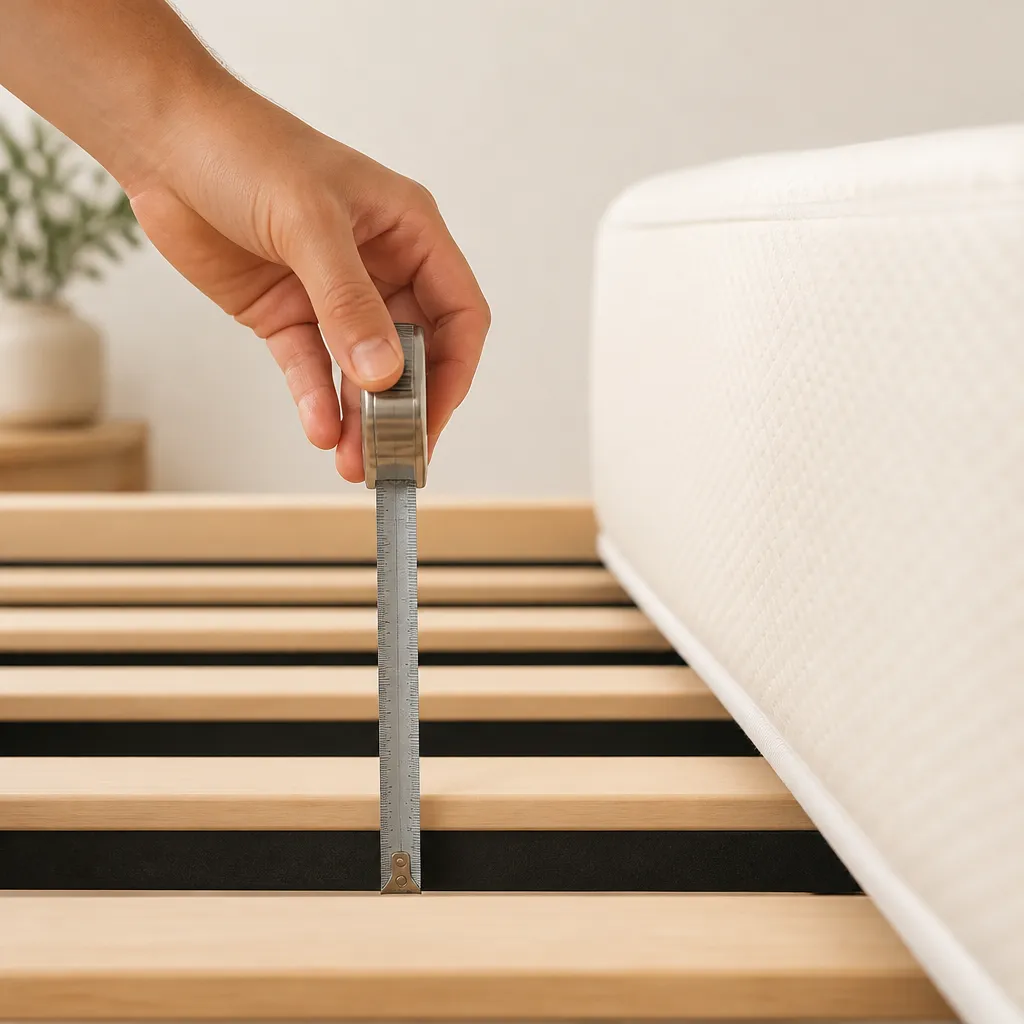
One major manufacturer allows slatted frames when each slat is at least 3 inches wide and no more than 4 inches apart, and when the frame is structurally sound enough to support the mattress and its occupants. Those are narrow boundaries. A frame with 5-inch gaps may look fine on a showroom floor, but it fails the spacing test before anyone lies down on it.
Slat width matters as much as the gap. A frame with thin slats spaced evenly can still flex in the middle, and over time that flex pushes the mattress down between the rails. Measure the slat width and the spacing, not just the number of slats listed on a spec sheet.
Pro tip: Carry a tape measure when you shop. Measure the widest gap between slats, then measure again near the center of the frame, where flex is most likely to show up.
Testing a Frame You Already Own
If you plan to keep an existing frame, sit on the edge and then the center, and watch for movement in the rails. A frame that creaks or shifts under light pressure will not hold a heavy mattress for years. Check that each leg meets the floor evenly, because an uneven frame concentrates weight on one corner.
Once the frame passes the flex test, confirm the slat spacing. If the gaps exceed the manufacturer limit, add a solid support panel or replace the slats. Avoid improvised fixes such as loose cardboard or thin plywood laid between slats, since those fail the moisture test and can void coverage.
Frame Types Compared
Flat Foundations and Platform Decks
A flat foundation or solid platform deck is the simplest way to satisfy most support clauses. The surface is rigid, elevated, and designed to allow airflow. For a new mattress, these frames are often the safest choice because there is little to measure beyond height and fit.
Flat foundations do not have to be expensive. Many budget frames use a metal perimeter with a center support rail and a flat panel, which gives you a rigid surface without paying for a premium base. The key is confirming that the model you choose is listed as compatible with your mattress.
Slatted Frames and Adjustable Bases
Slatted frames work when they meet the spacing and strength rules. Adjustable bases form a separate category, and they should only be used with a mattress when the manufacturer lists that model as compatible. A base that moves does not automatically provide the support the warranty requires.
The table below compares the three options buyers weigh most often, along with the warranty risk each one carries when set up correctly and when it is not.
| Support Option | Why It Works or Fails | Warranty Risk |
|---|---|---|
| Flat foundation or solid platform deck | Rigid, elevated, and designed for airflow, with no gaps to measure | Low when the model is listed as compatible with your mattress |
| Compliant slatted frame | Works when slats are 3 to 4 inches apart and the frame does not flex under load | Low to moderate, depending on spacing and rigidity |
| Traditional box spring | Coils and wide spacing give under load, which the mattress cannot tolerate long term | High, named as a coverage-voiding setup in manufacturer guidance |
Finding a Budget Frame in Orange County
Shopping Discount Frames Without Guesswork
Many buyers in Anaheim and across Orange County assume a warranty-safe frame means a premium price. That is not true. A basic metal or solid-deck frame with the right dimensions costs far less than a designer bed, and it protects the mattress you just paid for.
Bring the mattress make and model with you, or write them down before you shop. The support requirement belongs to the specific mattress, so a frame that suits one model may not suit another. Ask staff to show you the slat spacing and rail design before you agree to anything.
Using Payment Plans Without a Credit Check
A good frame and a good mattress often land in the same budget conversation. Our no-credit-needed payment plans let customers pair the two without stretching the bedroom project across a year of waiting. A 3-month purchase option is available in California, which gives buyers a clear finish date.
Delivery timing matters too. We aim for exact day-and-time delivery windows, and most orders are delivered within 24-48 hours. That schedule helps when the frame needs to be in place before the mattress arrives.
Pro tip: Have the frame delivered and assembled before the mattress arrives. A mattress left on the floor, even for a short time, can trap moisture and create a warranty question before it is ever slept on.
Mistakes That Void Warranties
Plywood, Floors, and Futons
Three setups show up again and again in warranty disputes. Plywood can trap moisture beneath the mattress, and placing the mattress directly on the floor creates the same problem. A futon folds the mattress in a way that damages it, and manufacturer guidance states that folding voids coverage.
These shortcuts often start as temporary fixes. A mattress left on the floor during a move becomes a permanent setup because nobody gets around to buying the frame. Set a deadline for the frame purchase before the mattress is delivered, not after.
Folding Wall Beds and Daily Use
Murphy wall beds can work, but only with a flat, rigid frame that meets the same slat rules as any other base. Folding the bed into the wall every morning is the mistake to avoid. Manufacturer guidance says the mattress is best protected when it rests on a flat horizontal surface at all times.
The same logic applies to any frame with a lifting mechanism or storage feature that changes the sleeping surface. Confirm that the frame stays flat in use, and check the warranty document to see whether the mechanism is acceptable before you buy.
Pro tip: Write the mattress model number and the warranty page reference on a card, and keep it with the frame instructions. If a claim ever comes up, that paperwork settles the question faster than memory does.
Setting Up Your Frame for Long-Term Support
Leveling and Center Support
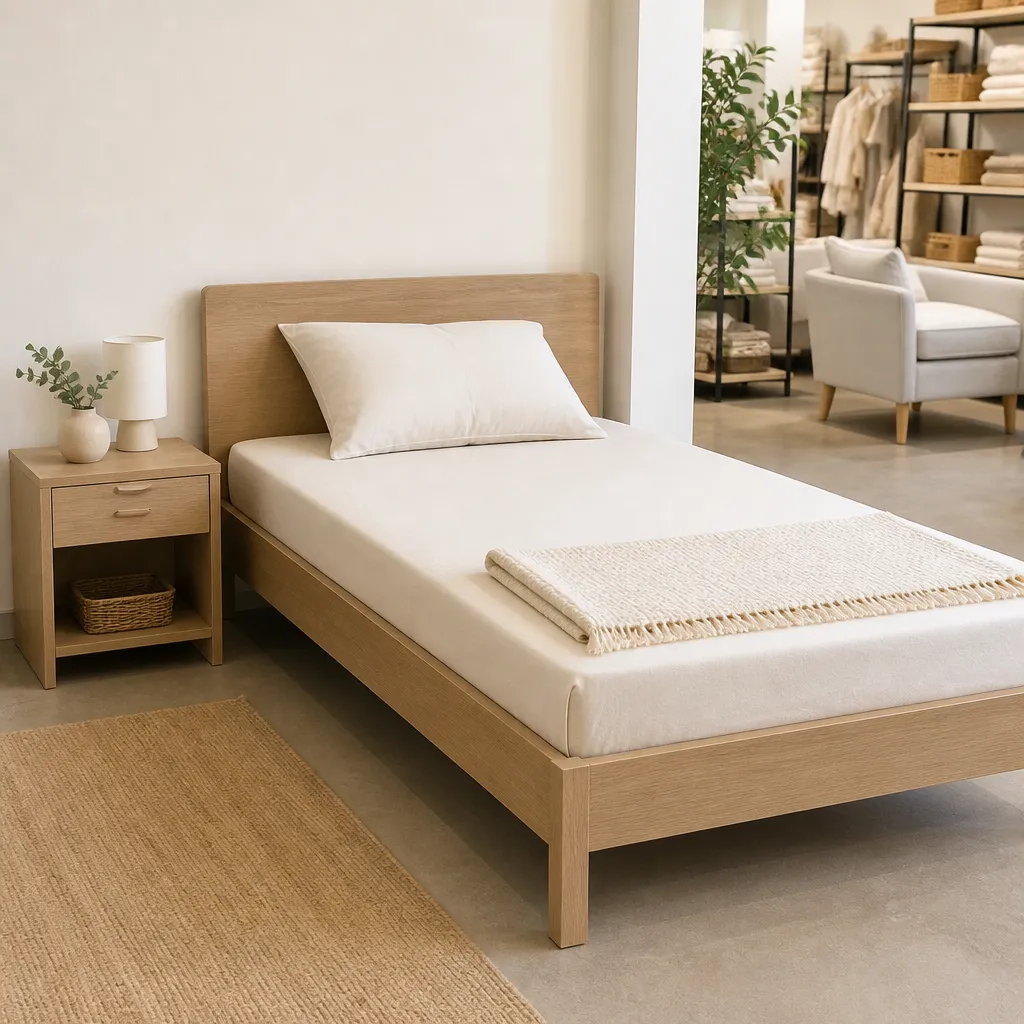
Assembly is where many setups go wrong. Tighten every bolt, check that the rails sit square, and confirm the legs rest flat on the floor. A frame that rocks slightly will shift the sleeper’s weight toward one corner, and that uneven load eventually shows up as a dip in the mattress.
Use the center support rail or center leg if the frame includes one, especially with queen and king sizes. The middle is where the most weight and flex concentrate, so it deserves the closest attention during setup.
Keeping Air Flow and Rotation
Airflow under the mattress matters. Keep the space beneath the frame clear of storage bins and stacked bedding that block air. A sealed box under the bed holds humidity, which is the same moisture problem that plywood and floors create.
Follow the rotation and care instructions in your warranty and review them once a year. Routine checks catch loose slats, sagging rails, and worn feet before a small problem turns into a claim.
Frequently Asked Questions
Will a box spring always void my mattress warranty?
Not always, but it is a serious risk. Manufacturer guidance states that traditional box springs have too much give to properly support a mattress and that using one will void the warranty. If your mattress is paired with a box spring, switch to a flat foundation that the manufacturer lists as compatible before relying on the coverage.
Can I use a slatted bed frame with a new mattress?
Yes, if the slats meet the manufacturer limits. One major brand allows slatted frames when each slat is at least 3 inches wide, no more than 4 inches apart, and structurally sound enough to carry the mattress and its occupants. Measure the gaps yourself before you buy, since a frame that looks sturdy can still fail the spacing rule.
Is a metal bed frame safe for a warranty?
A metal frame can be safe when it provides a rigid surface with a center support and slats or a solid panel that meet the spacing rule. Check the frame for flex by pressing on the center and edges. If the frame bends or shifts, it will not meet the support requirement no matter what material it is made from.
Can I put my mattress on plywood or directly on the floor?
No. Manufacturer guidance says plywood can trap moisture, and placing a mattress on the floor creates the same problem. Both setups are common reasons claims are denied for improper support, so a proper frame or foundation should be in place before the mattress is set down.
Can I use a Murphy wall bed with my mattress?
Yes, but only if the flat wooden frame is strong enough to support the mattress and its occupants and meets the same slat requirements. Manufacturer guidance also recommends against folding the bed into the wall each morning, because the mattress is best protected when it rests on a flat horizontal surface at all times.
How do payment plans affect buying a frame and a mattress together?
Customers can use no-credit-needed payment plans to purchase a frame and mattress together, and a 3-month purchase option is available in California. Ask about the plan before you choose the frame, so the support requirements and the budget are settled in the same visit.
Tell us what frame you are sleeping on now and whether it passed your warranty check, because your setup may be the next question we answer.
References
- Manufacturer guidance on approved mattress bases and foundations
- Explainer comparing flat foundations and box springs for mattress support
- Expert-tested review of bed frames for 2026