

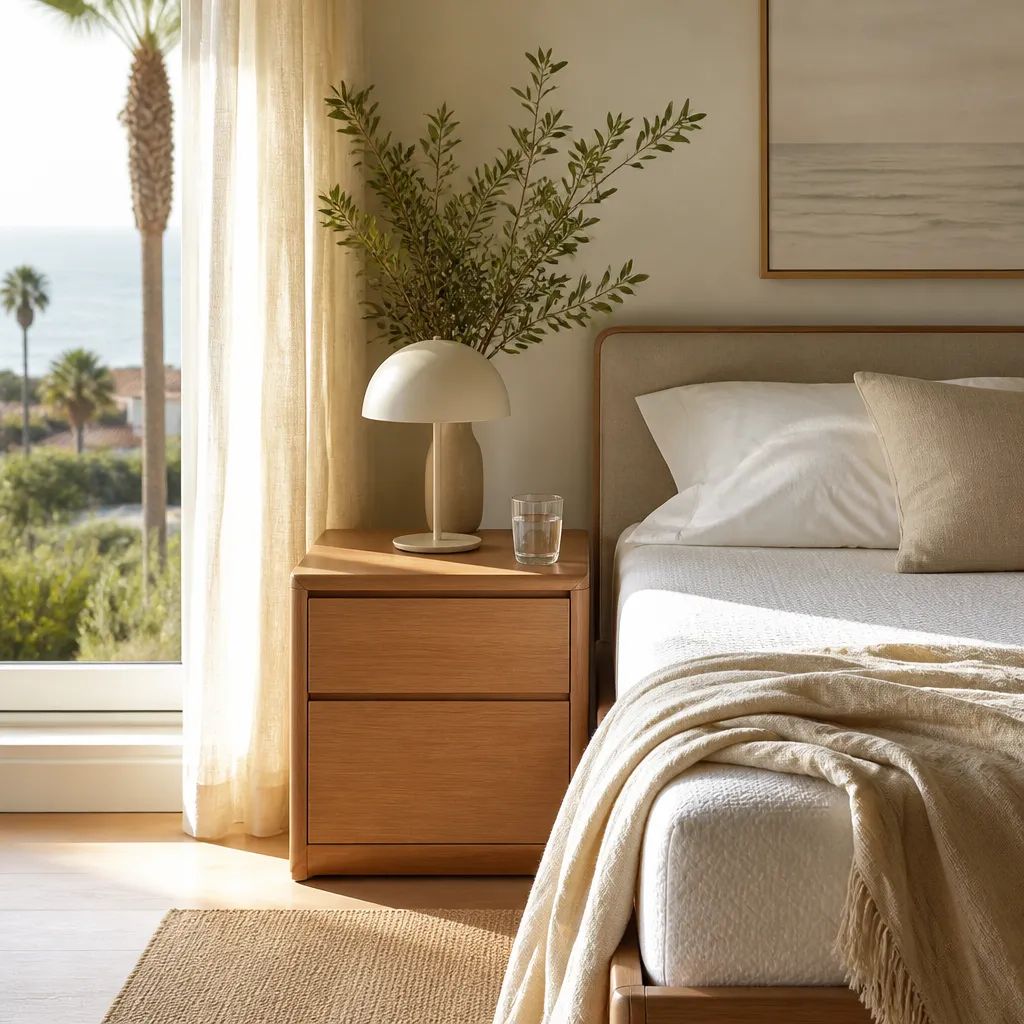
Bedroom Dresser and Nightstand Setup for Better Mornings
Most people blame their mattress when they wake up groggy, but the furniture beside the bed often causes the morning trouble. A nightstand that sits too far from your hand, a dresser that forces you to dig for socks in the dark, or a lamp that glares into your eyes can turn a quick routine into a rushed scramble. Bedroom furniture in Orange County is usually bought one piece at a time, so the dresser and nightstands often end up mismatched, cramped, or badly placed. This guide explains how nightstand and dresser placement shapes your morning, what belongs where, and how to set up the whole room without overspending.
Table of Contents
- Quick Takeaways
- Why Your Dresser and Nightstand Get Forgotten
- Nightstand Placement for a Faster Morning
- Dresser Layout That Supports Your Routine
- Morning Sequence: What Your Bedroom Should Allow
- Comparing Three Bedroom Setups
- Common Setup Mistakes in Small Orange County Bedrooms
- Budgeting a Matched Bedroom Set in Orange County
- Frequently Asked Questions
- References
Quick Takeaways
| Key Insight | Explanation |
|---|---|
| Keep your phone, water, and glasses within one arm’s reach of your sleeping side | You should find them without sitting up, leaning over, or turning on a light first. |
| Limit the dresser top to a tray, one lamp, and nothing else | Every extra item becomes something you must move before you can get dressed. |
| Store your most-worn clothes in the top two drawers | Those drawers sit at waist-to-shoulder height, so you avoid bending at 6 a.m. |
| Set the nightstand height within a few inches of the mattress top | You can set things down and pick them up from a seated position without a awkward dip. |
| Give each sleeper a charging spot at the bed, not on the dresser | Your phone stays out of reach of the day’s tasks, so the first thing you see is the time. |
| Check the walkway, closet door swing, and drawer clearance before buying | A dresser that jams the closet door costs time every single morning, so measure first. |
Why Your Dresser and Nightstand Get Forgotten
Most households buy the bed first, spend the rest of the budget on the mattress, and fill the room with whatever is left. The dresser often arrives weeks later from a different store, and the nightstand gets picked to match a lamp someone already owns. The result is a room where no piece was planned to work with the others.
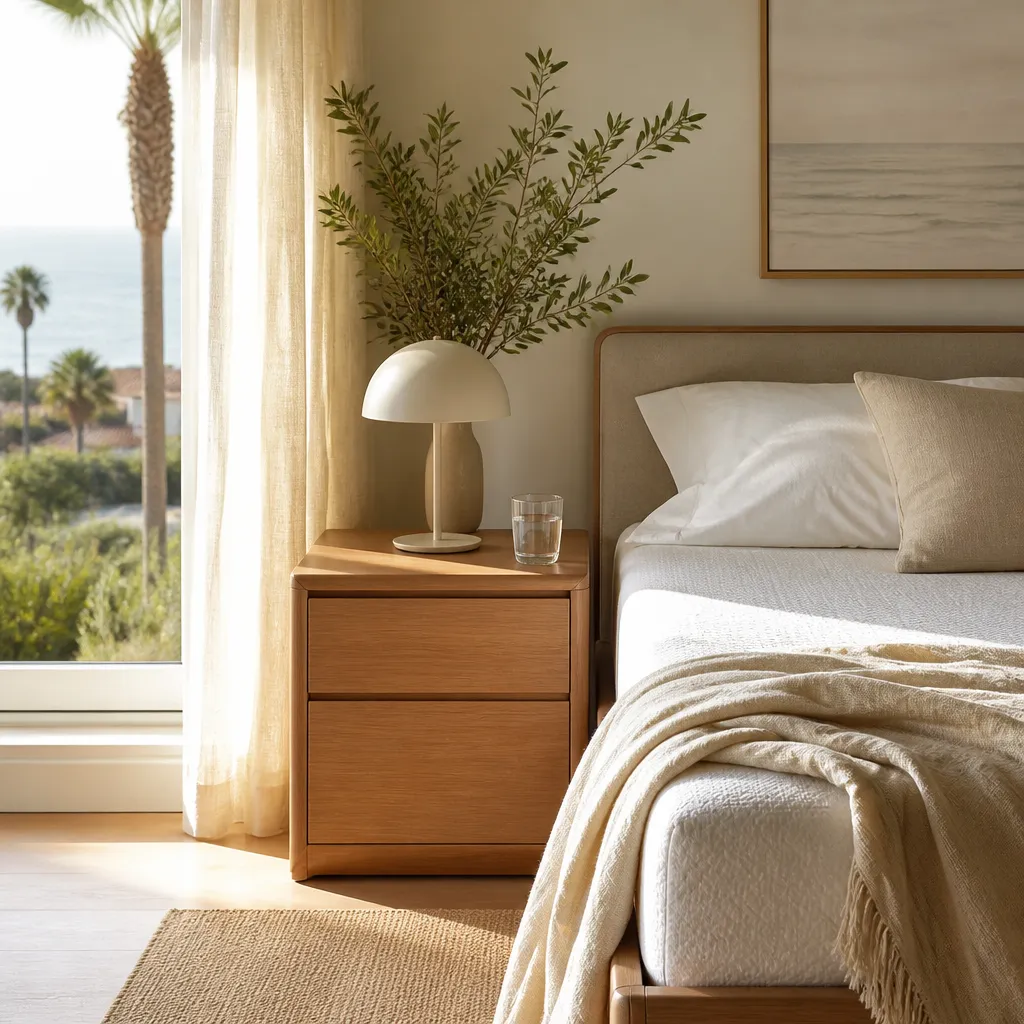
That gap matters more than most shoppers expect. A 2023 paper by S. Emmitt, indexed on ScienceDirect, states that the interior environment of bedrooms directly affects sleep quality, which in turn affects productivity, health, and wellbeing. Furniture is part of that environment, so the pieces around your bed belong to your sleep setup, not just your decor.
Your morning starts in the dark, with your hands. The furniture you touch first matters more than the furniture you look at.
An Apartment Therapy writer who hired a professional organizer found a similar problem in her own bedroom. She discovered that moving her shoes from the top of the closet to a lower spot made her far more likely to put them away, so her mornings went from hunting for pairs to simply grabbing one. The lesson applies to nightstands and dressers too: if an item is hard to reach, it will end up on the floor or the chair.
One bedroom organization guide notes that clutter in these spaces may contribute to stress and irritability early in the morning, before the day’s demands even begin. That is why a cluttered dresser top or a crowded nightstand is not a small cosmetic issue. It is a daily tax on your start, and it is easy to fix once you know which pieces are causing it.
Nightstand Placement for a Faster Morning
The nightstand has one job before sunrise: hold what you reach for without thinking. In practice, the phone, glasses, water, and a light switch should all sit within a single arm’s reach from the side of the bed where you get up. If you have to sit up, lean, or fumble for a lamp chain, you are waking yourself up before you have even left the bed.
Height matters as much as position. A nightstand whose top sits within a few inches of the mattress top lets you set things down and pick them up from a seated position. A short table that sits well below the mattress edge forces a dip every night, which feels fine for a week and annoying for years.
Reach Zone Rules
Think of the nightstand top in three zones. The closest zone holds the phone and water. The middle zone holds a lamp or a small tray for glasses. Anything else, including books, lotion, and chargers you use only once a week, belongs in the drawer. Keep the near zone nearly empty so you never have to clear space before you find what you need.
Lighting You Can Find in the Dark
A lamp with a switch on the base is easier to find than one with a cord switch hanging at an odd angle. Choose a shade that keeps the bulb below your eye line when you sit up, so you are not hit with full brightness at 6 a.m. A warm, dimmable bulb softens the jolt of waking up to a bright room.
Two sleepers often need different lighting. If one partner wakes earlier, a small lamp on that side set to a low level protects the other partner’s sleep. Matching nightstands can still hold different lamps, and the matching look comes from the finish and height, not from identical accessories.
Charging Without the Cord Tangle
Cords that run across the floor get yanked, and then the phone ends up on the dresser, where it pulls you into the day’s tasks. Route a short charging cable through a cable hole or the gap at the back of the drawer, then plug the charger into a power strip inside the drawer. Keeping the phone at the bed means the first thing you see is the time, not your inbox.
Dresser Layout That Supports Your Routine
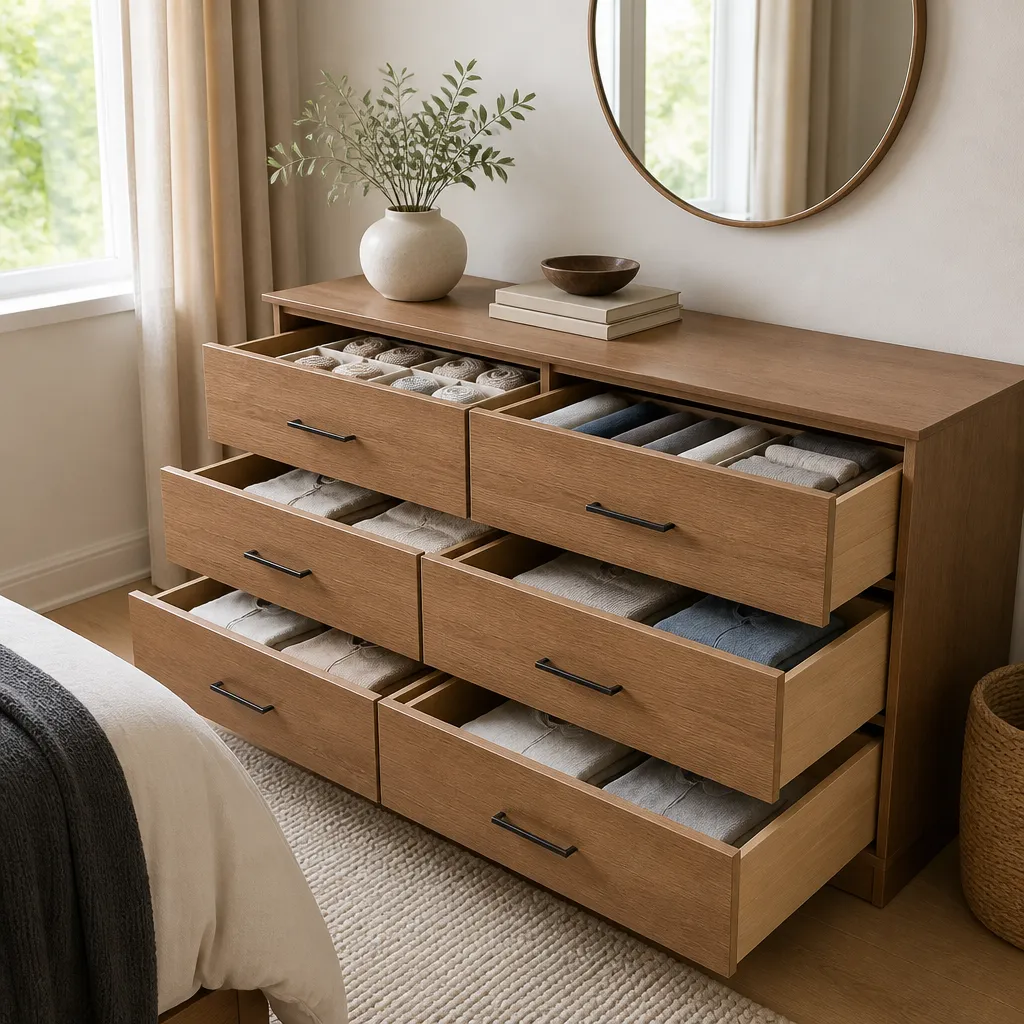
A dresser should answer one question: what do you need before you leave the room? If the answer is clean socks, a work shirt, and a watch, those items belong in drawers you can open without kneeling or bending. Bulky seasonal pieces go lower, or into a closet shelf where they stop competing with daily clothes.
Think in reach bands. The top two drawers sit at easy waist-to-shoulder height for most adults, so they should hold the clothes you wear most often. The lowest drawers should hold items you change out only a few times a year. Stowing off-season clothes is one of the fastest ways to free up the drawers you open every day.
Assigning Drawers by Reach Height
Assign each drawer a job and stick to it. For example, put underwear and socks in the top drawer, work shirts in the second, and sleepwear or gym clothes in a lower drawer. When each category has a fixed home, you can dress with the lights low because your hand already knows where to go.
Keeping the Dresser Top to a Minimum
The top of a dresser works best with a tray for jewelry or a watch, one lamp or nothing, and perhaps a single plant. Each extra item adds a decision you have to make before you can leave the room. A common mistake is treating the dresser top as overflow storage, which turns it into a pile you have to sort every morning.
Placing the Dresser Where You Can Use It
Opposite the bed is the default, but the best spot is the one that gives you a clear path from the bed to the closet and lets every drawer open fully. In smaller Orange County bedrooms, a dresser that blocks the closet door or sits against a walkway costs you seconds every morning. Placement that feels slightly less balanced on paper often works far better in daily use.
Morning Sequence: What Your Bedroom Should Allow
Map your morning as a sequence and check every step against your layout. Most people wake, reach for a phone or glasses, sit up, find a light, stand, grab clothes, dress, and leave the room. A bad layout adds a few seconds to each step, and those seconds stack into a rushed commute.
A useful test is to walk the sequence in a dim room, ideally at the time you usually get up. If you bump a corner, cannot open a drawer without moving something else, or step over shoes on the way out, the layout is failing. Fix the worst failure first, since it will cost you the most time every day.
The First Two Minutes After the Alarm
Nothing you need in those first minutes should require standing up. Glasses, phone, water, and a lamp switch belong inside the near zone of your nightstand. Those two minutes are also when most people start scrolling, so a quiet, predictable setup helps you start the day on your terms.
Getting Dressed in Low Light
Lay out the clothes you plan to wear the next day, or keep the top drawer organized by complete outfits. A dresser placed where the drawers open fully lets you see what you need without switching on the overhead light. A small lamp near the dresser is a better choice than a harsh ceiling fixture at that hour.
Leaving the Room Without a Detour
The exit path matters. If shoes pile up at the foot of the bed, you step around them every morning, and that small obstacle makes you move more slowly. Keep a shoe rack or basket near the closet door, outside the main walkway, so you can grab a pair on the way out.
Comparing Three Bedroom Setups
Three setups cover most bedrooms we see in Orange County homes and apartments. Each one solves the morning problem differently, and each has a predictable weak spot. Choose based on how much floor space you have and how you actually get dressed.
| Setup | Where It Works | Where It Breaks Down |
|---|---|---|
| Matched dresser and two nightstands | Consistent heights and a clear reach zone on each side of the bed, with drawer and charging plans that work for two people | Costs more upfront, and a wide dresser can crowd a small room |
| Mixed pieces bought separately | Lets you buy a nightstand sized to your reach and a dresser sized to your closet, often at a lower total cost | Heights and finishes clash, and the nightstand may end up too low for the mattress |
| One nightstand with a wall or floating shelf | Frees floor space, keeps the near zone clear, and suits tight rooms or single sleepers | Limited drawer storage, so clothes need a dresser or closet elsewhere in the room |
In practice, the matched set works best for most couples because each side of the bed gets the same reach zone and the room looks finished. For a single sleeper in a small room, one nightstand and a wall shelf usually beats a dresser that blocks the walkway. The right answer depends on your floor plan, not on which set looks best in a showroom.
Matched Sets Versus Mixed Pieces
A matched set saves decision-making. You know the heights line up, the finish is consistent, and both sides of the bed work the same way. Mixed pieces can still work if you measure the nightstand height against the mattress first and choose a dresser that suits your closet and walkway.
When a Floating Shelf Makes Sense
A floating shelf works when the room is too narrow for a nightstand, or when you want the floor clear for cleaning and movement. Mount it at a height you can reach from the bed, and keep the charger on the shelf with a short cable. Expect to store clothes elsewhere, since a shelf gives you no drawers.
Common Setup Mistakes in Small Orange County Bedrooms
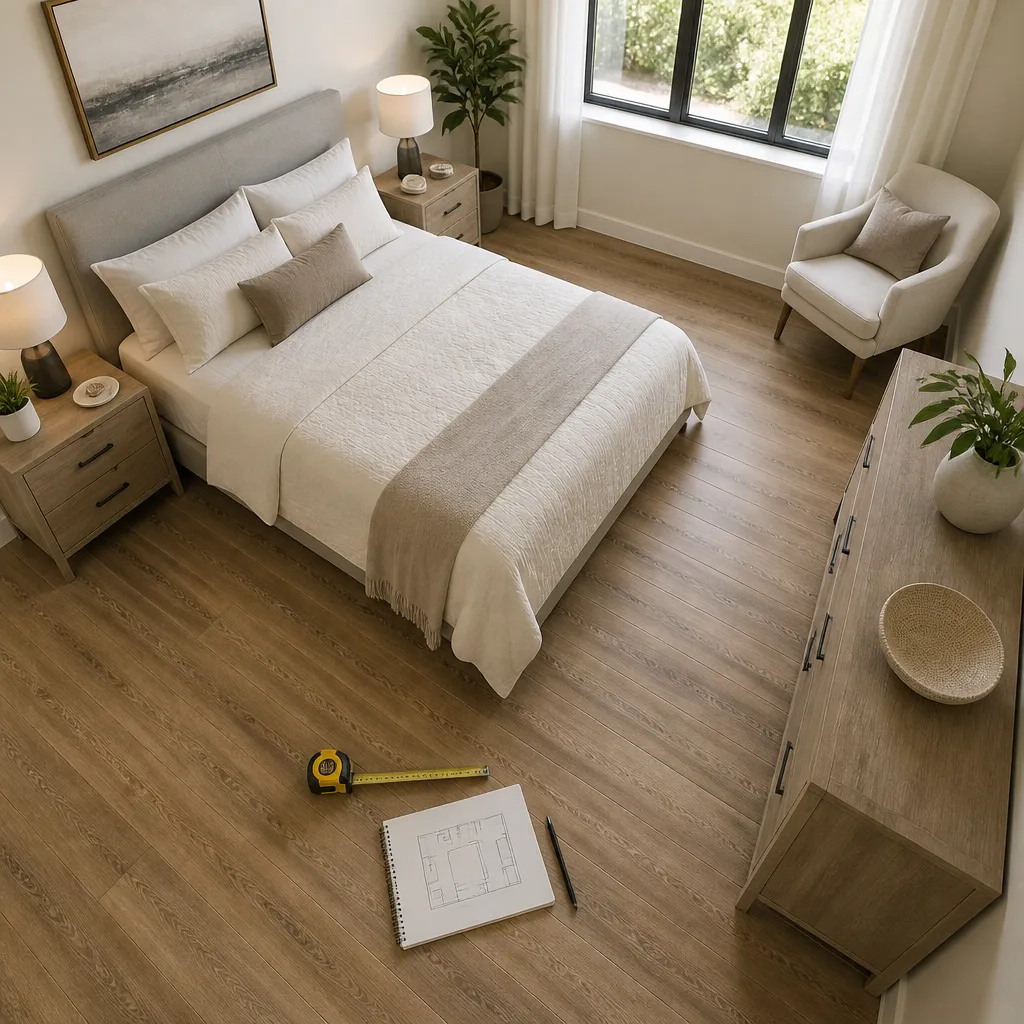
Most mistakes come from buying for the showroom rather than for the bedroom. A dresser that looks right in a large display can jam the closet door in a room with less space. Measure the walkway, the closet swing, and the drawer clearance before you buy, not after the truck arrives.
Dresser Blocking the Closet or Door
This is the most common error we see in smaller bedrooms. The dresser fits the wall on paper, but when the closet door opens, it hits the drawer front, or you cannot pull a drawer out fully while standing. Check both swing paths and leave enough room to stand in front of each drawer.
Nightstands That Are Too Short or Too Tall
A nightstand that is too short forces you to reach down every night, which is hard on your back when you are still groggy. One that is too tall puts the lamp shade or the top surface at an awkward height, and you end up with glare or a cluttered table. Match the top to the mattress, then check the lamp against eye level when you sit up.
Overloading the Top of the Dresser
A crowded dresser top is the quiet cause of many slow mornings. Items pile up because there is no designated place for them, and each one adds a small task before you can leave. Give every surface on the dresser a limit, and move anything that exceeds it into a drawer or closet.
Pro tip: Before you buy, tape the footprint of the dresser and both nightstands on the floor, then open an imaginary drawer in each spot. If the tape blocks the closet swing or the path to the bathroom, the piece will cost you time every morning.
Budgeting a Matched Bedroom Set in Orange County
Spend in the order that affects your sleep and your mornings. The mattress comes first, then the nightstand you touch every day, then the dresser. Many shoppers reverse that order because the dresser is larger and easier to picture in the room, but a dresser is the piece you can most easily replace later.
Using Payment Plans Without Credit
Our payment plans do not require credit, and a 3-month purchase option is available in California. Ask for the exact terms in person, since plan details depend on what you buy. Planning the full set up front keeps you from ending up with a mismatched dresser that you bought weeks later.
Planning the Room With Interior Design Help
Our interior design service helps you map the room before you buy, so the dresser and nightstands are chosen for the space you actually have. The process is one-on-one, with no commissioned sales associates pushing a bigger purchase. Most orders are typically delivered within 24 to 48 hours, and delivery is scheduled to an exact day and time window, so you can set the room up around your routine.
Pro tip: Buy the nightstand on the side where you get out of bed first. It is the piece you touch every day, and it sets the height and finish you should match for the second one.
Frequently Asked Questions
How far should a nightstand sit from the bed?
Place it close enough that you can reach the top from a seated position on the edge of the mattress, usually directly beside the bed with only a small gap. If you have to stand or stretch to reach the surface, the spacing or the height is wrong.
Should my nightstand match my dresser?
Match the finish and general height, but identical pieces are not required. Matching the color and style makes the room look planned, while the function of each piece matters more than a perfect copy.
What belongs on top of a dresser?
A small tray for jewelry or a watch, one lamp or nothing, and perhaps a single plant is enough for most bedrooms. Anything else should go into a drawer or closet so you do not have to clear the surface every morning.
Can a small Orange County bedroom fit a dresser and two nightstands?
Often yes, but only if the dresser depth, the closet swing, and the walkway all allow it. If the room is tight, a single nightstand with a wall shelf can give you a clear reach zone without sacrificing the path to the door.
Do payment plans apply to bedroom furniture?
Our payment plans do not require credit, and a 3-month purchase option is available in California. Ask about the exact terms for the pieces you want before you commit, so the full bedroom plan fits your budget.
Share your experience: which piece of your bedroom setup slows your mornings the most, and what would you change first?
References
- Ten tips on how bedroom design can affect your morning mood
- A writer’s account of a professional bedroom reorganization and morning routine
- 2023 research paper on bedroom design and sleep quality
- Expert bedroom organization ideas and clutter tips