

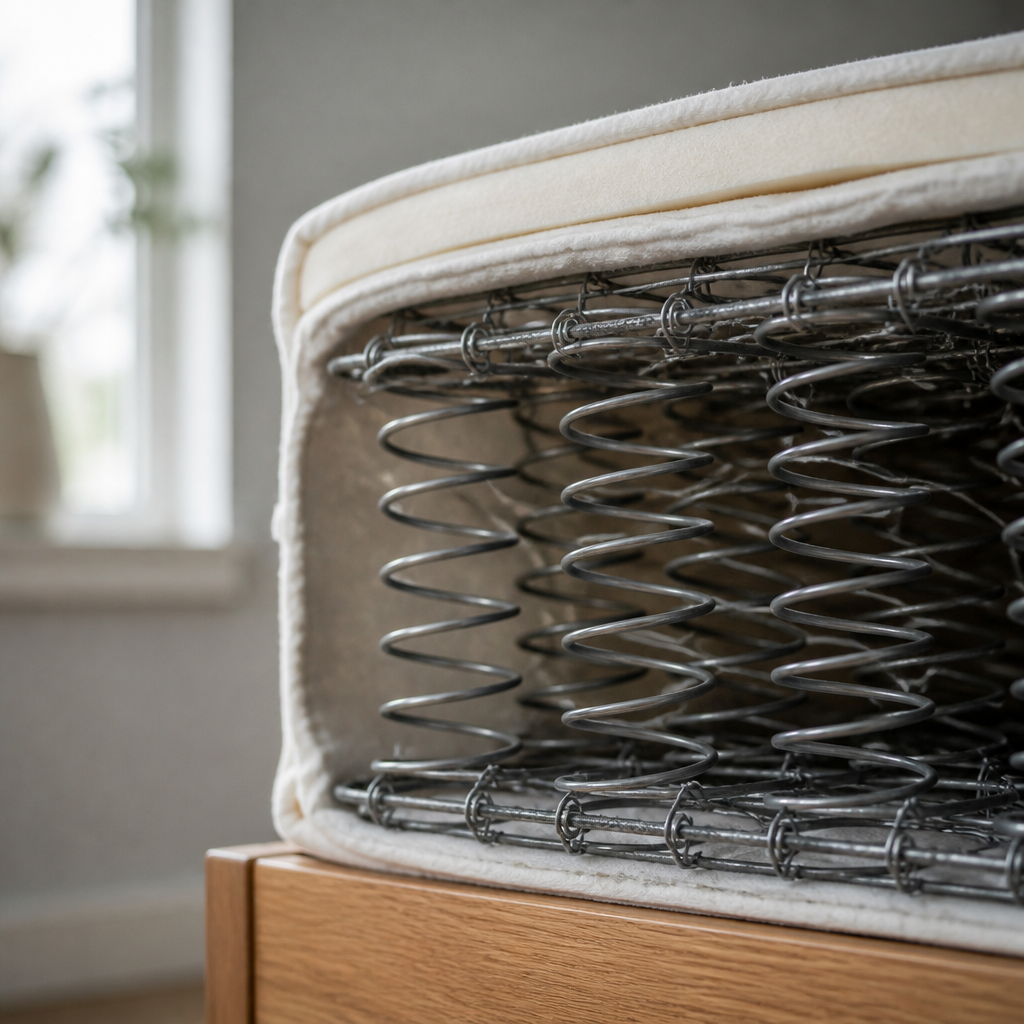
Coil Gauge Mattress Guide: Feel, Support and Durability
Ask a salesperson why one innerspring feels firmer than another and you will often hear “more coils.” That answer misses half the picture. Coil gauge, which describes how thick the steel wire in each spring is, shapes how a mattress supports your hips, how long it keeps its shape, and whether your shoulders sink too far by morning. Many Orange County shoppers are replacing a sagging bed on a tight budget, and knowing what gauge does before you pay can keep you from buying the wrong coil system twice. This guide explains how the coil gauge mattress decision works in practice and what to demand from the seller.
Table of Contents
- Quick Takeaways
- What Coil Gauge Actually Measures
- How Gauge Changes Feel and Support
- Coil Count and Gauge: Why You Need Both
- Durability: What Thick Coils Do Over Time
- Comparing Coil Systems Side by Side
- What to Demand Before You Buy
- Discount Quality Mattresses in Orange County
- Frequently Asked Questions
- References
Quick Takeaways
| Key Insight | Explanation |
|---|---|
| A lower gauge number means thicker wire | The scale runs backwards. A 13 gauge coil is heavier than a 15 gauge coil, so check the number on the spec sheet instead of trusting the phrase “heavy duty.” |
| Coil count and gauge work together | A high count of thin wire can feel bouncy at first but fatigue faster. A moderate count of thicker wire often lasts longer under the same body weight. |
| Gauge matters most under the hips and shoulders | Side sleepers and heavier sleepers concentrate pressure in these zones, so thin coils there show wear first. |
| Edge strength is a measurable test | Sit on the outer third of the mattress. If the edge folds or drops sharply, the perimeter coils are too weak for daily getting in and out of bed. |
| Get the specs in writing | Written gauge, count, and coil design let you compare two models on equal terms and hold the seller to what was promised. |
| A discount is only a bargain if the coils match the price | Low prices make sense when overhead is low, but the coil system underneath should justify the price tag on its own. |
What Coil Gauge Actually Measures
Coil gauge describes the thickness of the steel wire used to form each spring in an innerspring unit. The scale runs in reverse: a lower number means a thicker wire, and a higher number means a thinner one. When a seller tells you a mattress uses “thick coils,” ask for the number, because thick is a feeling and gauge is a measurement.
Gauge is only one part of the coil story. The shape of the spring, the way neighboring coils are connected, and the height of the coil unit all change how the mattress reacts when you lie down. The Sleep Foundation describes modern innerspring mattresses as pairing a supportive coil system with soft cushioning, which means the coils are the structural base and the comfort layers sit on top.
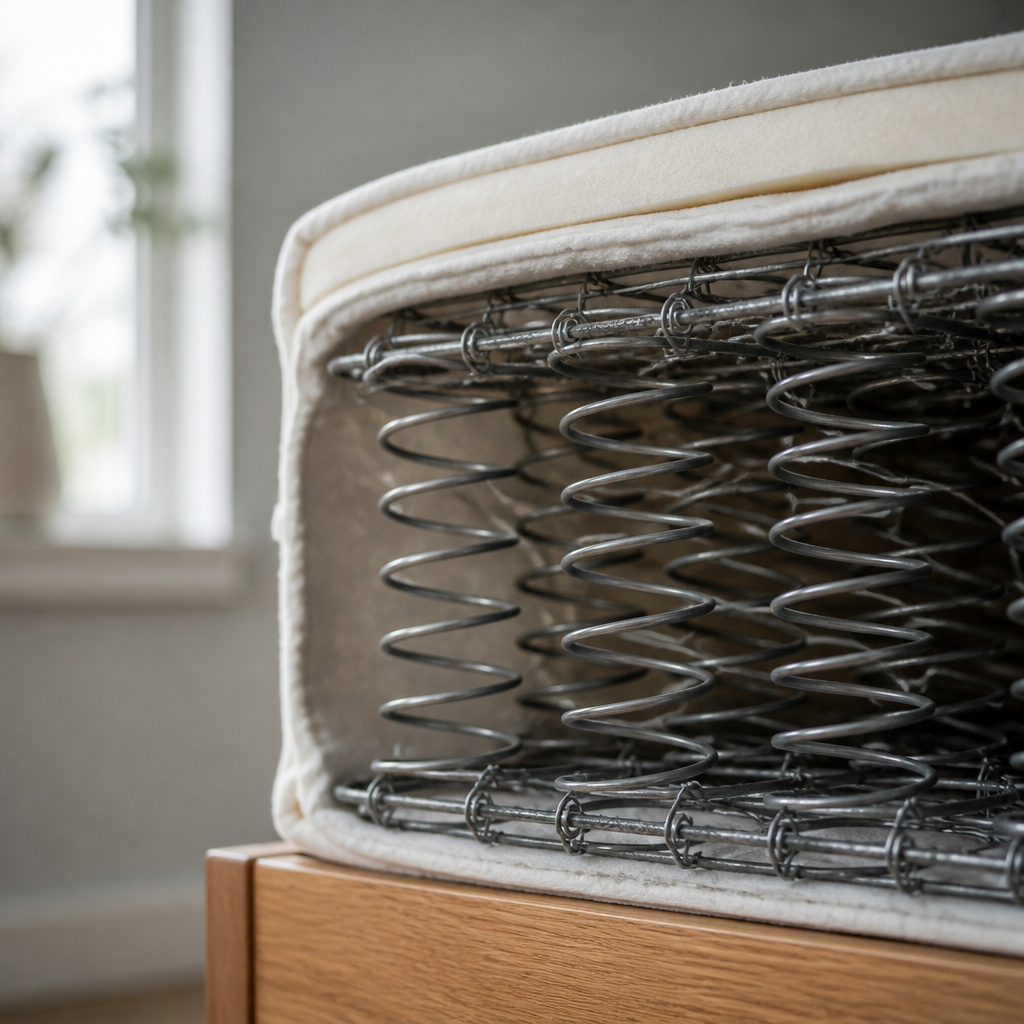
A thicker coil is not automatically a better mattress, but a thin coil rarely outlasts a thick one under the same body weight.
In practice, the first thing to check is whether the seller can state the gauge of the core coils. If they cannot, the coil system was probably chosen for price rather than for performance. Gauge tells you about wire thickness, and wire thickness tells you how much force the spring can resist before it bends.
Pro tip: Ask whether the gauge refers to the core coils or the border wire. The perimeter often uses a different wire than the interior, so a single number on the tag may not describe the whole unit.
How Gauge Changes Feel and Support
Pressure Relief at the Hips and Shoulders
Your hips and shoulders carry the most concentrated pressure when you sleep on your side, which is where thin coils show their weakness first. A thin wire bends under less force, so the spring compresses more under the hip and then pushes back unevenly. That is why a mattress can feel soft and forgiving in the showroom yet leave you waking with a sore shoulder after a few weeks.
Thicker wire resists that bending. A heavier gauge gives the mattress a firmer base under the pelvis, which keeps the spine closer to a straight line when you lie on your side. Side sleepers who want a little give at the shoulder should look for a sturdy coil system under a softer comfort layer, rather than expecting the comfort layer alone to do the work.
Edge Support and Getting Out of Bed
Edge support is where gauge becomes most visible to everyday buyers. Sit on the outer third of the mattress and press down. If the edge folds or drops sharply, the perimeter coils are too thin, too few, or not tied together well. A weak edge shrinks the usable sleep surface, which matters for couples and for anyone who hates feeling like they might roll off.
Older sleepers and people with hip or knee pain often struggle most when a collapsed edge forces them to push up from a sinking position. A firm, well-built perimeter lets you sit on the side of the bed and stand without sinking. In our showroom, this one test is often the quickest way to separate a well-built unit from a shell.
Coil Count and Gauge: Why You Need Both
Coil count is the number of springs in a unit, usually quoted for a standard size. Shoppers love big numbers, but count alone tells you very little. A long-running community thread on the Reddit mattress forum about longevity makes a sensible point: with more coils, each one carries a smaller share of the body weight, so individual coils can be thinner and still hold up.
The reverse is just as important. A low count of thick coils can feel firm and stable but offer less contour, while a very high count of thin wire can feel responsive yet wear faster under heavy use. The right balance depends on your body weight, your sleep position, and how long you expect the mattress to last.
Why a High Count Can Hide Thin Wire
Count is the easiest number to compare, so it often gets the biggest print on the tag. A unit with many springs sounds premium, but if the wire is thin, you are buying a lot of small springs rather than strong ones. Be suspicious when the count is advertised prominently and the gauge is missing from the label.
Ask for both numbers before you compare prices. Two mattresses with the same count can perform very differently if one uses a heavier wire, and that difference will show up in your back and hips long before it shows up on a receipt.
When a Lower Count Still Works
A lower count with a heavier gauge can perform well, especially in a firm profile or in a hybrid where a memory foam comfort layer shares the load. What matters is that the coil system is engineered as a whole. A lighter sleeper on a modest budget may get better long-term support from a well-built unit with fewer but thicker coils than from a flashy high-count model.
Durability: What Thick Coils Do Over Time
Durability in an innerspring comes down to how the steel handles repeated compression. Every night the coils flex under your weight, and over the years that flexing decides whether the mattress still supports you the way it did on day one. Sagging, lumps, and a dip in the middle are the usual signs that the coil system has started to fail.
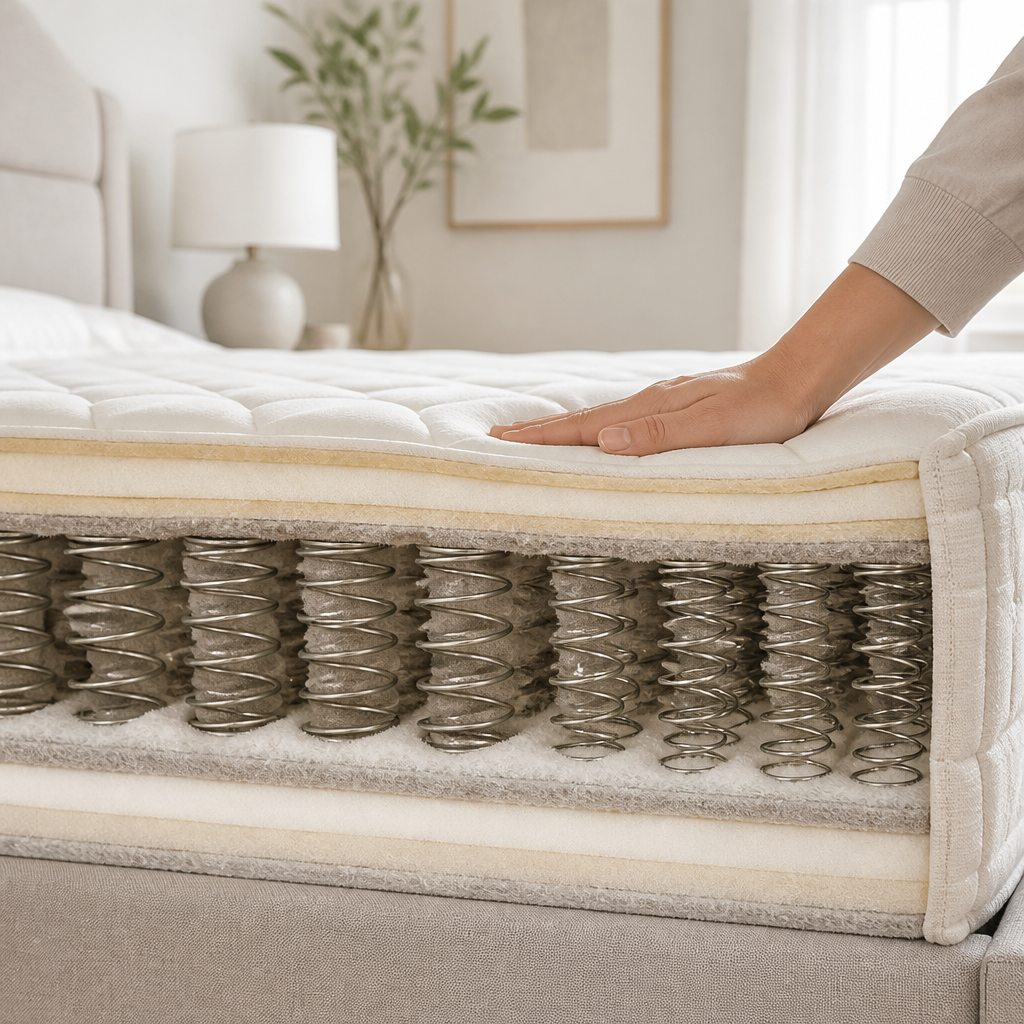
Gauge helps here because thicker wire has more reserve strength before it takes a permanent set. A mattress that starts with a sturdy coil system has room to lose some resilience and still feel supportive. A thin-wire unit may feel great in the first months and then start to feel hollow once the springs lose their rebound.
Sagging and Loss of Shape
Sagging usually shows up first in the center third of the mattress, where the body spends the most time and where side sleepers settle deepest. Lay a straight edge across the surface after a few months of use and look for a gap underneath. Early sag often means the coils were never heavy enough for the weight they were asked to carry.
Shape loss is quieter. The mattress still looks flat, but your hips start sinking deeper than your shoulders, or you wake with stiffness that was not there before. These changes usually come from the coils rather than the comfort layers, which is why a new topper rarely fixes them.
Coil Fatigue Under Daily Load
Coil fatigue is the gradual weakening of spring steel under repeated loading. A 2022 study by BH Jacobson on mattress coil spring fatigue and weight-bearing support found that weakened coil springs can negatively affect comfort and, ultimately, sleep quantity and quality, depending on the age and use of the mattress. That matters for buyers because the damage affects function, not just appearance.
The practical takeaway is to buy the heaviest gauge your budget supports for the coil system, especially if you are a heavier sleeper or share the bed with a partner. Rotate the mattress if the manufacturer allows it, and avoid sitting on one edge for long stretches, since uneven loading speeds up the fatigue you are trying to prevent.
Comparing Coil Systems Side by Side
Gauge is only one variable inside a coil system. The way the springs are connected and wrapped changes how the mattress behaves, so compare design alongside wire thickness. The table below covers three common designs you will see on the sales floor.
| Coil System | Strengths | Trade-offs |
|---|---|---|
| Hourglass coils | Simple, sturdy, and widely used. Solid base support with a firmer, steady feel. | Less independent motion isolation, so a partner’s movement can travel across more of the surface. |
| Offset coils | Coils connected to their neighbors in a staggered arrangement, which tends to give a consistent feel and dependable edges. | The surface often feels firmer, and the contour is less responsive to the shoulder and hip. |
| Pocketed coils | Each spring is wrapped in its own fabric pocket, allowing targeted response and better motion isolation. | Can feel softer on the surface, and the wrapping adds cost compared with simpler builds. |
Choose the design that matches how you sleep. Side sleepers often do well with pocketed coils under a softer comfort layer, while back and stomach sleepers who want a stable surface may prefer a firmer hourglass or offset build. In every case, check the gauge before you decide, because a well-designed system with thin wire can still disappoint.
What to Demand Before You Buy
Most buying mistakes happen before the delivery truck arrives. A salesperson who knows the product answers specific questions without hesitation, and a store that stands behind its mattresses puts the details in writing. Use the points below as your checklist before you commit to any innerspring.

Ask for the Gauge in Writing
Request the coil gauge, coil count, and coil design on the spec sheet or the product label. If the answer is “heavy duty,” you have a marketing phrase, not a measurement. Written specs let you compare two models on equal terms and hold the seller to what they told you.
Match the Count to Your Weight and Position
Heavier sleepers should lean toward thicker coils and a moderate to high count, because each spring carries more load. Lighter sleepers can often choose a lower count with a heavier gauge in a firmer profile. Side sleepers need enough give at the shoulder and hip, so evaluate the comfort layers along with the coils.
Be honest about how you sleep. A mattress that suits a back sleeper of one body weight can feel wrong to a side sleeper of a very different weight, even at the same price.
Test the Edges and Center in Person
Lie down in your usual position for at least ten minutes, then sit on the edge and press the center. Notice whether your hips sink into a hollow or rest on top of the support. Revisit the bed on a second visit before you decide, since one short test can be misleading.
Pro tip: Photograph the spec tag on the display model. If the sample and the delivered unit do not match, a photo gives you something concrete to point to.
Discount Quality Mattresses in Orange County
Good coil construction does not have to cost a fortune. Slumber-n-Serenity Discount Mattress and Furniture is a husband-and-wife business running a small, cozy showroom in Orange County, California. We keep overhead low, operate on a tiny profit margin, and have no commissioned sales associates, so the conversation stays focused on the coil specs rather than on a sales pitch.
Getting Coil Quality Without Box-Store Markup
The same top-selling mattress and furniture styles that major retailers carry can reach you at a lower price when overhead stays tight. Use the gauge and count checklist from this guide to compare units side by side. A discount price is not automatically a compromise, but a discount mattress is only a good buy when the coil system underneath matches what you pay for.
We serve homeowners across Orange County and Anaheim, CA, many of whom are furnishing a bedroom for the first time. Often they need support for back, neck, hip, or shoulder pain without paying premium prices. Spec transparency is how we earn that trust, and if you are furnishing the whole room, our interior design help can match the bed and frame to the space.
Payment Plans Without a Credit Check
Limited or no credit should not decide whether you get a supportive mattress. We offer no-credit-needed payment plans, including a 3-month purchase option available in California, so you can get the coil system you need now and spread the cost over time. Confirm the current plan terms with our team before you sign.
Delivery planning matters too. We offer exact day-and-time delivery windows and same-day-window delivery, and most orders are typically delivered within 24 to 48 hours. A good coil system does little good sitting in the garage for a week.
Frequently Asked Questions
Does a lower coil gauge number mean thicker wire?
Yes. The gauge scale runs in reverse, so a 13 gauge wire is thicker than a 15 gauge wire. Always check the number on the spec sheet rather than relying on descriptive phrases.
Is a higher coil count always better?
No. A high count of thin wire can feel bouncy but may fatigue faster under heavy use. Look at count and gauge together, and weigh them against your body weight and sleep position.
What coil gauge is best for a heavier sleeper?
Heavier sleepers generally benefit from thicker wire paired with a moderate to high coil count, since each spring carries more load. Test the edges and center in person, and make sure the seller can state the gauge in writing.
How can I tell if coils are wearing out?
Look for a dip in the center third, a hollow where your hips rest, or edges that fold under light pressure. Lay a straight edge across the surface to measure sag, and note whether you wake up with new stiffness.
Does coil gauge matter for memory foam mattresses?
Not in the same way. An all-foam memory foam mattress has no metal coils, so gauge applies to innerspring and hybrid units. For a foam model, focus on the density and thickness of the foam layers instead.
Can a mattress topper fix sagging coils?
Rarely. A topper can soften the surface and hide a dip for a while, but it does not restore lost spring support. If the coils have lost their resilience, the underlying mattress usually needs replacing.
Do payment plans require a credit check?
We offer no-credit-needed payment plans, including a 3-month purchase option available in California. Confirm the current terms with our team before you commit, since plan details can change.
Tell us about your own coil experience, including what you noticed in the first month and what you wish you had asked before buying.
References
- Research article on mattress coil spring fatigue and weight-bearing support
- Sleep Foundation guide to innerspring coil and spring support
- Consumer Reports lab-tested guide to top mattresses
- Community discussion on which coil gauge offers longevity