


Bedroom Setup for Sleep: A Fall Guide for Orange County
Most people blame their mattress when they wake up tired, but the room around the bed often causes the problem. A bright streetlight, a truck rumbling past before dawn, or a bedroom that stays at 72 degrees all through October can wreck a night of sleep even when the mattress is fine. A solid bedroom setup for sleep is one of the cheapest upgrades you can make this season, and it starts with four things: temperature, light, noise, and the bed itself. At Slumber-n-Serenity in Orange County, we have helped local homeowners fix these problems on a budget, and this guide covers what actually works.
Table of Contents
- Quick Takeaways
- Set the Temperature Before Anything Else
- Block Light Before It Wakes You
- Control Noise Through the Night
- Choose a Mattress That Matches Your Pain Points
- Bedding and Cleaning Habits for Fall
- Blackout Curtains, Eye Masks, and White Noise Compared
- Furniture Layout and Clutter in Small Bedrooms
- Paying for the Upgrade Without Credit
- Frequently Asked Questions
- References
Quick Takeaways
| Key Insight | Explanation |
|---|---|
| Aim for 65 degrees Fahrenheit | Sleep Foundation cites 65 degrees as an ideal, and Stanford research links 60 to 67 degrees with more consolidated sleep. |
| Block streetlights and standby glow | Darkness triggers melatonin, and small LED indicators on electronics can delay sleep onset. |
| Mask noise instead of chasing silence | Steady background sound hides sudden noises that wake you during light sleep. |
| Match the mattress to your sleep position | Side, back, and stomach sleepers need different support to keep the spine aligned. |
| Wash bedding on a fixed schedule | Regular washing reduces dust mites and allergens that build up once fall heating starts. |
| Place the bed away from the window and door | Drafts, light, and foot traffic disrupt sleep more than most people realize. |
| Choose payment timing that fits your budget | No-credit-needed plans and a 3-month purchase option in California let you start the upgrade now. |
Set the Temperature Before Anything Else
Temperature is the setting most people get wrong, and it is the one that costs nothing to fix. Your core body temperature drops as you fall asleep, and a room that stays warm makes that drop harder to achieve. Sleep Foundation notes that many experts consider 65 degrees Fahrenheit (18.3 degrees Celsius) the ideal bedroom temperature for sleeping.

Stanford Lifestyle Medicine reports that studies have linked a bedroom temperature of 60 to 67 degrees Fahrenheit with more consolidated sleep, meaning fewer awakenings. In practice, that range gives you a target. Set the thermostat to the cool end of your comfort zone, then adjust by a degree or two each night until you wake up without sweating.
Why 65 Degrees Is a Starting Point, Not a Rule
Not every sleeper feels the same. Some people run hot because of body size, medication, or a partner who sleeps under a heavy comforter. If 65 feels too cold, add a layer on the body instead of raising the thermostat. A lightweight blanket or a breathable top sheet keeps you comfortable while the room stays cool.
A common mistake is buying a heavy comforter to fight a cold room while leaving the thermostat at 72. Your body then has to work harder to shed heat, and you wake up overheated at 3 a.m. Pick bedding that works at a cool room temperature, then let the room do the work.
Fan Placement and Airflow on Warm Fall Nights
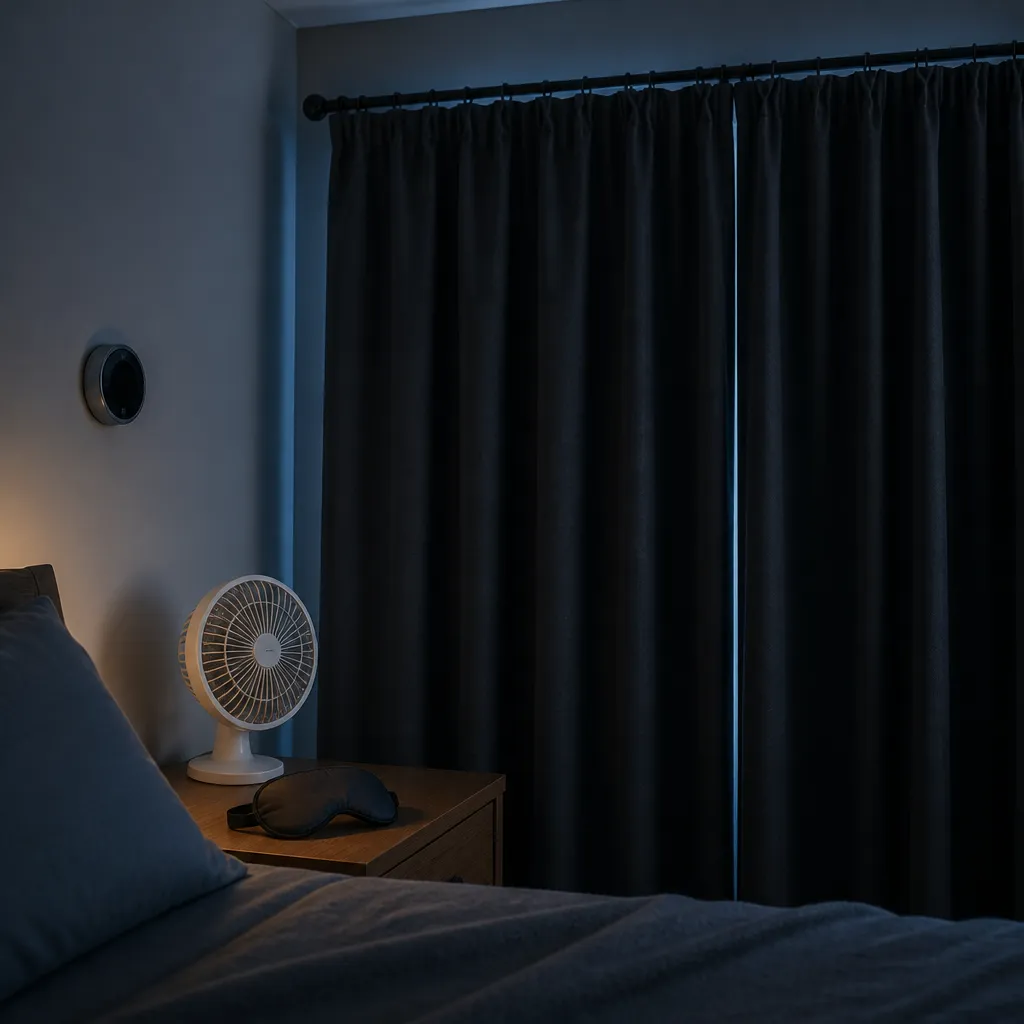
Orange County can still bring warm afternoons and mild nights, so the bedroom may not drop to 65 on its own. A fan that moves air across the bed can help, especially if you position it so air circulates without blowing directly on your face all night. In our experience, a fan aimed at the doorway, pushing cooler air toward the bed, works better than one aimed straight at the pillow.
Block Light Before It Wakes You
Light is the second thing to fix, and it matters more than most people expect. Darkness signals the brain to produce melatonin, the body’s natural sleep hormone. Streetlights, a hallway nightlight, or a phone charging on the nightstand can delay that signal, which means you lie awake longer than you want.
Stanford’s sleep guidance recommends a comfortable eye mask or blackout curtains to block light sources. Early morning light is the sneaky one. Sunlight coming through thin blinds can cause awakenings you never remember, which is why some people feel unrested even after a full night in bed.
“The bedroom should be like a cave: dark, cool, and quiet,” says Dr. Cheri D. Mah, a sleep physician with Stanford Lifestyle Medicine.
Hidden Light Sources Most Homeowners Miss
Walk the room at night with the lights off and look for glowing standby indicators on the TV, router, speaker, and charger. A single small LED can be enough to disrupt a light sleeper. Turn electronics face down, move them out of your line of sight, or unplug the ones you do not need after dark.
Pro tip: Lie down in your usual position and look toward the window. If you see a streetlight, a glowing clock, or a gap at the edge of the curtain, fix that before you buy anything else.
Choosing Between Blackout Curtains and Eye Masks
Blackout curtains work best when they cover the full window frame and overlap at the sides. Curtains hung just inside the frame leak light at the edges, and that leak is often where the problem lives. An eye mask costs far less and travels well, but it fits some sleepers poorly and does nothing about sound. Most homeowners do better with curtains for the bedroom and a mask as a backup for trips.
Control Noise Through the Night
Quiet matters because the sleep cycle changes how easily you wake. Stanford’s sleep physician explains that each cycle of light, deep, and REM sleep takes roughly 90 to 120 minutes, and you are most sensitive to noise when you are transitioning into sleep. A sound you ignore at 10 p.m. can wake you at 3 a.m. when you are in light sleep.
Total silence is rarely realistic in Orange County neighborhoods with traffic, sirens, and early garbage pickups. Instead of chasing silence, aim to make every sound less noticeable. Mask sudden noises with steady background sound, and block the ones you can control.
Why Steady Sound Beats Silence
A fan, a white noise machine, or soft music running through the night gives your ear a constant baseline. Sudden sounds like a car door or a delivery truck stand out less against that baseline. Adaptive white noise machines go a step further by increasing volume when a sudden noise happens, which helps you stay asleep without a jolt.
Physical Fixes That Reduce Noise at the Source
If noise is a regular problem, start with the window. Double-paned windows reduce outside sound more than almost any accessory. Thick curtains that absorb sound help too, along with silicone earplugs or noise-cancelling headphones for sleepers who can tolerate them. A rug on bare floors absorbs the echo of hallway footsteps. Choose one or two fixes that address your specific noise rather than buying five gadgets that each do a little.
Choose a Mattress That Matches Your Pain Points
A room can be perfect and still fail you if the mattress does not support your body. Sleep Foundation advises that a mattress, pillow, and bedding should suit your body, sleep position, and personal preferences. That sounds obvious, but many people keep a bed that is a decade old and wonder why their neck or hip hurts every morning.
Side Sleepers, Back Sleepers, and Spine Alignment
Your sleep position tells you what the mattress must do. Side sleepers need enough give at the shoulder and hip so the spine stays straight rather than bending. Back sleepers usually need steady support under the lower back. Stomach sleepers often do best on firmer surfaces that keep the hips from sinking.
Shoulder, neck, and hip pain often come from a surface that lets the heaviest part of your body sink too far. The goal is a mattress that relieves pressure on the joints while still holding the spine in line. Memory foam is one option many sleepers choose for pressure relief, though the feel changes with density and firmness.
Testing a Mattress Before You Commit
Lie down for at least 10 to 15 minutes in your usual sleep position, and bring the pillow you actually use. A mattress that feels good for two minutes in a showroom may not feel good after half an hour of lying still. If you share the bed, test it together, because two bodies with different weights often need different support.
Mattress Upgrades Versus Budget Patches
A mattress topper can soften a firm bed, but it cannot fix a sagging base. If the mattress has permanent dips, a topper only hides the problem for a while. Replace the mattress when it no longer supports your body, and treat a topper as a comfort adjustment rather than a repair.
Bedding and Cleaning Habits for Fall
Fall is when many homeowners pull out heavier bedding and run the heater for the first time. That combination can turn a clean bedroom into an allergen trap. Sleep Foundation advises that regularly cleaning your bedroom and washing your bedding can reduce dust mites and other allergens.
Think of fall as a reset point. The comforter that sat in a closet all summer is the one most likely to carry dust into your bed on the first cold night, so give it a wash before it goes on.
Dust Mites, Pet Hair, and Heavy Comforters
Dust mites thrive in warm, humid bedding, and they feed on shed skin. A heavy comforter that rarely gets washed can hold more allergens than a sheet you change every week. If you own pets, keep them out of the bedroom or at least off the bed, because pet dander builds up quickly on pillows.
A Washing Schedule That Actually Gets Done
Wash sheets and pillowcases every one to two weeks, and wash pillows and comforters several times a year. Most people skip the pillow entirely, yet it collects the most oil, sweat, and dust. A simple routine works better than an annual deep clean that never happens.
Pro tip: Put a zippered mattress protector on the bed before fall bedding goes on. It keeps dust and moisture away from the mattress, and it is far easier to wash than the mattress itself.
Blackout Curtains, Eye Masks, and White Noise Compared
Three of the most common sleep fixes solve different problems, and most bedrooms need more than one. Use the table below to match the tool to the issue you actually have, not the one that looks best in a product photo.
Which Tool Fixes Which Problem
Blackout curtains are the strongest choice for streetlights and early sunrise. An eye mask is the most flexible option, but it does nothing for sound. A white noise machine or fan handles traffic and neighbor noise, though a constant sound can bother some light sleepers.
| Tool | Best for | Main limitation |
|---|---|---|
| Blackout curtains | Streetlights and early morning sun through the window | Light leaks at the edges if the panels are too narrow for the frame |
| Eye mask | Travel, shared rooms, and windows you cannot change | Can shift during sleep and does nothing to block sound |
| White noise machine or fan | Traffic, neighbors, and sudden noises during light sleep | Constant sound can become a distraction for some people |
Where Each Option Falls Short
Curtains look great but leak light if they are too narrow for the window. Masks slide around, and many people wake up with the strap tangled near their ear. White noise can fade into the background until you stop hearing it, so pick a volume low enough to mask sound without drowning out conversation in the next room.
Furniture Layout and Clutter in Small Bedrooms
Layout affects sleep more than most people think. A bed pushed against a window exposes you to drafts and light, while a bed lined up directly with the door can feel exposed and keep you alert. Many bedrooms we see were arranged for convenience, not rest, and a small change often makes a noticeable difference.

Bed Placement Away From Windows and Doors
If your room allows it, place the bed on a solid wall away from the window. Keep a clear path to the door, but do not line the bed up with it. Leave enough space on at least one side to make the bed and reach the nightstand without squeezing past furniture.
Nightstands, Lighting, and Clutter
Choose nightstands at a height that matches the top of your mattress, so you can reach a glass of water or a lamp without stretching. Use a warm, dimmable lamp for the last hour before bed instead of an overhead light. Clear the floor of laundry and boxes, since clutter becomes an obstacle in the dark and makes the room feel busy when you are trying to unwind.
If the layout feels impossible, our interior design service can work through the options with you. Sometimes moving one piece of furniture changes the whole room.
Paying for the Upgrade Without Credit
A better mattress or bedroom set is often the expensive part of a fall sleep plan. Many shoppers delay because they do not have credit or do not want to finance through a card. We offer payment plans that do not require credit, so you can start the upgrade without waiting on an approval process.
No-Credit Payment Plans and the 3-Month Option
Our no-credit-needed payment plans spread the cost of a mattress or furniture order over time. Customers in California can also use our 3-month purchase option. Ask for the exact terms before you sign, and compare the total you will pay against the cash price so there are no surprises.
Scheduling Delivery Windows That Fit Your Week
Delivery timing matters when you are upgrading during a busy season. We offer exact day and time delivery windows, and most orders are typically delivered within 24 to 48 hours. Clear the old bed and the floor space beforehand, and plan to be home for the window so the crew can set up without delays.
Pro tip: Order your mattress before you rearrange the room. The new bed’s footprint decides where the nightstands, lamps, and curtain rods should go.
Frequently Asked Questions
What is the best bedroom temperature for sleep this fall?
Sleep Foundation cites 65 degrees Fahrenheit (18.3 degrees Celsius) as an ideal for many people, and Stanford research points to a range of 60 to 67 degrees for more consolidated sleep. Start at the cool end of your comfort zone, then adjust with bedding rather than raising the thermostat.
Do I need blackout curtains if I already use an eye mask?
An eye mask works well for travel or when you cannot change the window, but blackout curtains usually block light more consistently. Curtains also help the room feel quieter and cooler. Many people use both, with curtains for the bedroom and a mask for nights when light is unavoidable.
How often should I wash my bedding in the fall?
Wash sheets and pillowcases every one to two weeks, and wash comforters and pillows several times a year. Bedding that has sat in storage over the summer often collects dust, so wash it before the first cold night.
Can a new mattress fix neck and shoulder pain?
A mattress that matches your sleep position and supports your spine can reduce pressure on the neck, shoulders, and hips for many sleepers. It cannot treat a medical condition, so talk with a clinician if pain persists. Test any mattress for 10 to 15 minutes in your usual position before you buy.
Can I improve my bedroom for better sleep without buying a new bed?
Yes. Fixing temperature, light, noise, and clutter costs very little and often improves sleep quickly. Replace the mattress only when it no longer supports your body, because a bed that sags or has lost its shape can undo the other changes.
Tell us which of these changes you plan to try first this fall, or which one already made your nights better.
References
- Stanford Lifestyle Medicine guide to five bedroom changes for better sleep
- Sleep Foundation guide to bedroom temperature, noise, light, and bedding