

Best Mattress for Side Sleepers: What Protects Your Spine
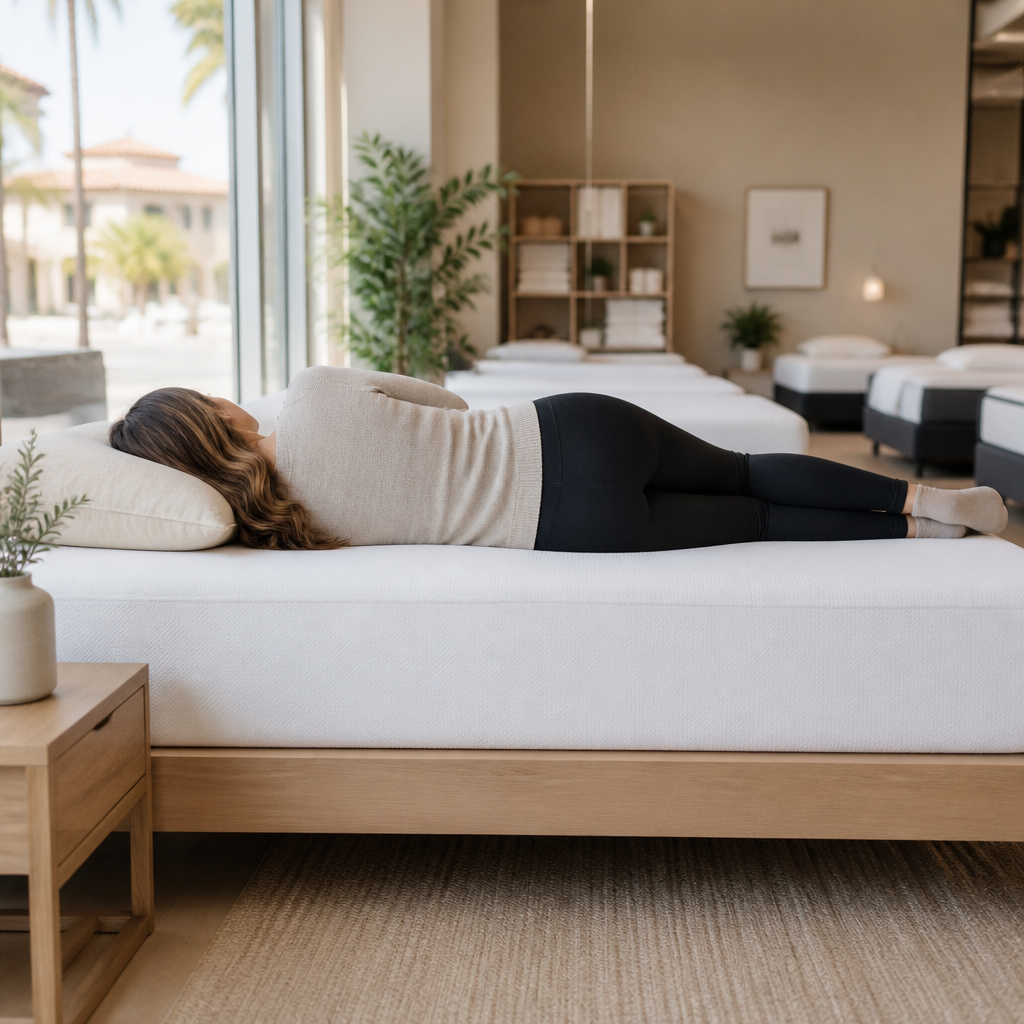
If you sleep on your side, your mattress does more work than you might think. Your shoulder and hip carry most of your weight, and the surface beneath them decides whether your spine stays in a straight line all night or bends into a shape it should never hold for eight hours. Finding the best mattress for side sleepers is less about chasing a brand name and more about three things: how firmness is distributed, how pressure is relieved at the shoulder and hip, and how the surface responds when you move. This guide covers what to check, what to skip, and how to shop without overpaying in Orange County.
Table of Contents
- Quick Takeaways
- Why Side Sleeping Loads Your Spine Differently
- Firmness That Keeps Your Hips Level
- Pressure Relief for Shoulders and Hips
- Zoned Support and Spinal Alignment
- Memory Foam and Sleeping Cool on Your Side
- Getting Spinal Support Without Overpaying
- Comparing Three Mattress Types for Side Sleepers
- Frequently Asked Questions
- References
Quick Takeaways
| Key Insight | Explanation |
|---|---|
| The hip and shoulder decide alignment | Those two points sink first on a side. If they sink to different depths, the spine twists and the lower back compensates overnight. |
| Aim for medium-firm, not the firmest bed | A surface that is too firm leaves a gap under the waist. A surface that is too soft lets the hip drop below the shoulder. |
| Look for zoned support | Softer zones under the shoulder and hip paired with firmer support under the lower back keep the spine level. |
| Run the waist gap test | Lie on your side and slide a hand between your waist and the surface. The fit should feel snug, not loose or forced. |
| Check foam density, not just thickness | Higher density foam holds its shape under repeated side-sleeping pressure. Thick, low-density foam can still sink at the hip. |
| Match your pillow to the mattress | The pillow should fill the gap between your ear and the mattress so your neck stays neutral when you lie on your side. |
| Budget is not a barrier to good support | Discount pricing and no-credit payment plans let you buy a supportive bed without waiting for credit approval. |
Why Side Sleeping Loads Your Spine Differently
When you lie on your side, your body rests on two main points: the shoulder and the hip. These areas are heavy relative to the surface they press into, so they sink deeper than the waist. If the mattress lets them sink too far or unevenly, the spine tilts sideways and the lower back has to work to compensate.
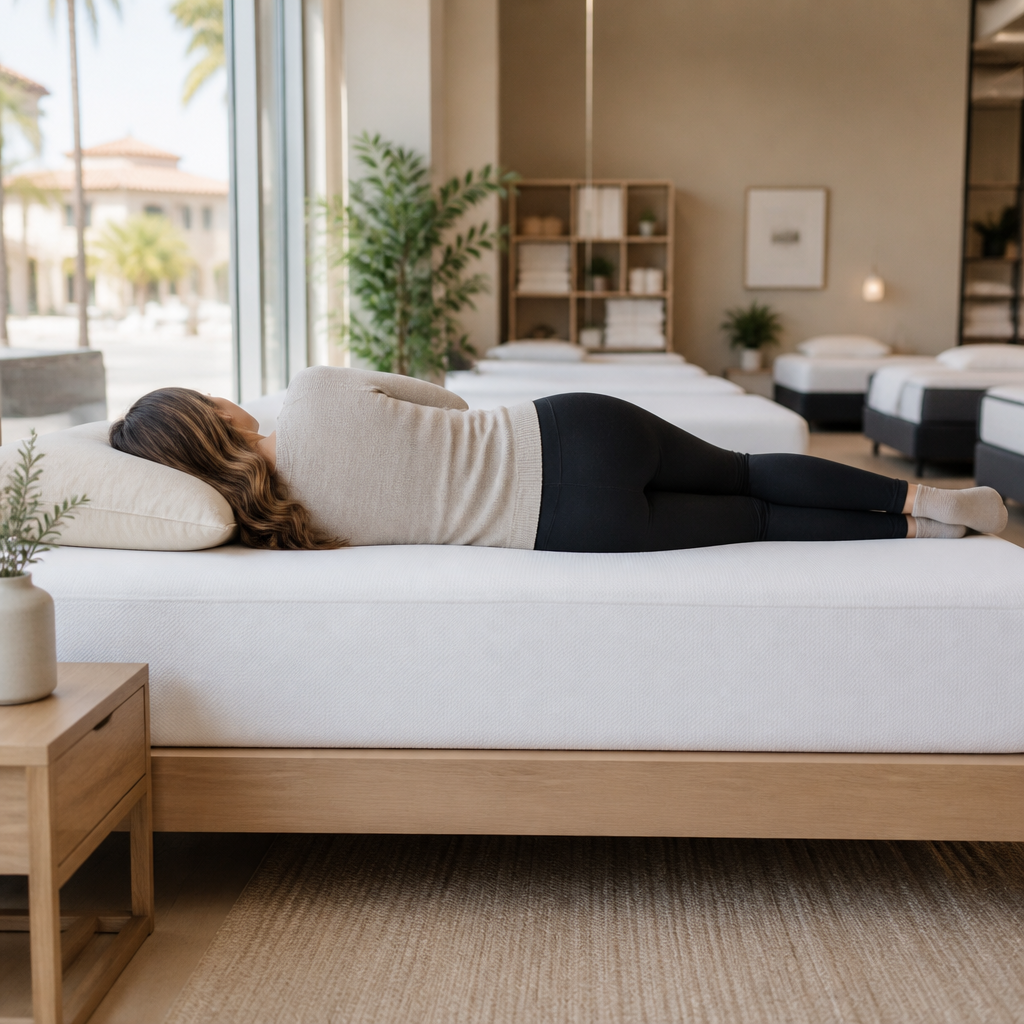
Back and stomach sleepers can often get by with a bed that is simply comfortable. Side sleepers have less margin for error. Sleep Foundation’s testing guidance describes side sleepers as needing excellent support and pressure relief for the hips and shoulders, and that trade-off is the core of every choice in this guide.
The Two Pressure Points That Decide Alignment
Think of the shoulder and hip as two anchors. When both sink to roughly the same depth, your spine stays close to level. When one sinks deeper, your torso rotates, and the spine curves in a way it was not built to hold for hours.
A common mistake is assuming a soft bed is more comfortable for side sleeping. A soft surface cradles the shoulder at first, then lets the hip drop, which pulls the spine out of line by morning.
What Waking Up Stiff Is Telling You
Morning stiffness in the lower back or shoulder usually points to a surface that fails in one of two directions. If it is too soft, the hip sinks. If it is too firm, the shoulder cannot settle, so the upper arm and neck absorb the strain.
A mattress cannot treat a medical condition on its own. If pain persists after several weeks on a well-chosen bed, see a clinician to rule out other causes.
Firmness That Keeps Your Hips Level
For most side sleepers, a medium-firm surface offers the best balance. It is firm enough to stop the hip from sinking past the rest of the body, yet soft enough to let the shoulder settle a little. The right feel varies with body weight, so treat firmness as a range rather than a single number.
Why Body Weight Changes the Answer
Heavier side sleepers generally need more support because they compress foam and springs further. Lighter side sleepers often find a firm surface pushes back too hard at the shoulder, so a slightly softer top layer can feel better without sacrificing alignment.
Do not assume the firmest bed is the safest choice. An overly firm surface leaves a gap at the waist that the lower back cannot close, which pulls the spine into a subtle arch.
The Waist Gap Test
The quickest check is to lie on your side in your normal sleeping position and slide a hand between your waist and the mattress. A snug fit with your hand flat means the surface is supporting the midsection. If your hand slides in with ease, the bed may be too firm. If you have to push hard to get it in, the surface may be too soft.
The right mattress is the one that keeps your spine in a line you could draw with a ruler, not the one that feels best while you sit on the edge of it.
Pro tip: Test firmness lying on your side for at least ten minutes, with your knees and shoulder in the position you actually sleep in. Sitting or lying on your back tells you very little about side-sleeper support.
Pressure Relief for Shoulders and Hips
Pressure relief decides whether your shoulder aches by two in the morning. Pressure builds where body weight concentrates, and the longer you hold one position, the more that single spot matters. A good side-sleeper surface spreads that load instead of concentrating it.
Contouring Without Sinking Too Far
The ideal surface follows the curve of the shoulder and then pushes back. Look for a top layer that softens under the shoulder and hip but recovers quickly when you shift. A surface that only sinks and never rebounds will hold you in one spot all night.
Memory foam is often the first material to consider for this job because it conforms closely to the body. Quality depends on foam density, so ask about that rather than focusing only on how thick the layer is.
Shoulder Room Matters
Check that the shoulder zone has enough depth that the joint is not pressed against a firm base. Broader-shouldered side sleepers usually need more give at the top of the mattress than narrower ones.
Pair the mattress with a pillow that fills the gap between your ear and the bed. A pillow that is too high pushes the head up and pulls the shoulder into strain, while one that is too low lets the neck drop out of line.
Zoned Support and Spinal Alignment
Zoned support means the mattress has different firmness levels across the body, usually softer under the shoulders and hips and firmer under the lower back. Good zoning helps the spine stay straight while still letting the pressure points settle into the surface.
How Zones Are Built
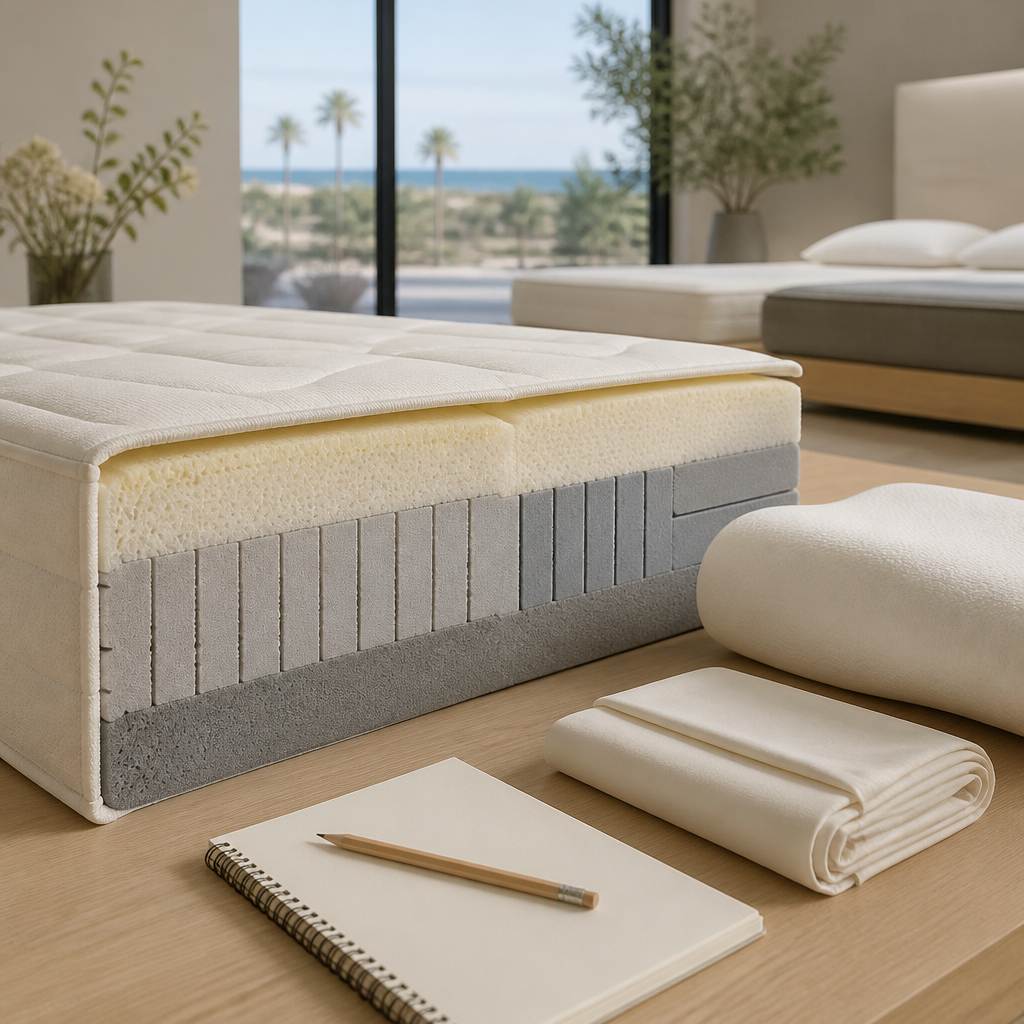
Zones can be created with coil layouts, changes in foam density, or layered comfort materials. The method matters less than the result. The lumbar area should resist sinking, while the shoulder and hip areas should give enough to relieve pressure.
Review sites that test beds for side sleepers, such as Mattress Nerd, put zoned support for spinal alignment alongside hip and shoulder relief on their checklist. That pairing is a useful framework for your own shopping.
When Zoning Is Not Worth Paying For
Marketing often uses the word zoned for very small differences. If a bed feels evenly firm when you lie on it, a zoning claim alone does not justify a higher price. Trust your body during the test, not the label.
Pro tip: Ask the seller to explain how the zones are built, including the depth of the comfort layer and the density of the base foam. Clear, specific answers are a good sign that the staff knows the product.
Memory Foam and Sleeping Cool on Your Side
Memory foam is a core part of our range, and it suits many side sleepers because it contours closely to the shoulder and hip. Dense foam can also trap heat if it lacks airflow, so the sleep-cool question deserves attention before you buy.
Density and Support Over Time
Foam density, measured in pounds per cubic foot, is one of the clearest indicators of durability. Higher density foam generally holds its shape longer under repeated side-sleeping pressure.
Low-density foam softens quickly under the hip, and that sink is what leads to spinal misalignment over months of use. Ask for the density of each layer, not just the total thickness.
Keeping Temperature Under Control
Open-cell foam, breathable covers, and comfort layers designed for airflow can all reduce heat buildup. None of them fully replaces ventilation, so pay attention to the cover fabric and the temperature of your bedroom.
Sleeping cool is not only about the mattress. Lightweight bedding and a breathable pillow make a noticeable difference for side sleepers who tend to run warm.
Getting Spinal Support Without Overpaying
Good side-sleeper support does not require a luxury price. We sell the top-selling mattress and furniture styles that larger retailers carry at a fraction of the cost, because we run on a small margin with low overhead and no commissioned sales associates. You spend your budget on the bed, not on the showroom.
Payment Plans Without a Credit Check
If you have limited or no credit, our no-credit-needed payment plans make it possible to buy a supportive bed now instead of waiting. We also offer a 3-month purchase option for California customers. Ask our team to walk you through the terms in writing before you commit.
Delivery Windows and Setup
Many side sleepers put off a new bed because they cannot schedule the delivery around work. We set delivery windows to an exact day and time, and most orders are typically delivered within 24 to 48 hours. That keeps your sleep schedule from slipping while you wait.
Clear a path through doorways and plan for removal of the old mattress before delivery day. A little preparation keeps the setup smooth for everyone.
Comparing Three Mattress Types for Side Sleepers
Most side sleepers shop among three basic constructions. Each handles hip and shoulder pressure differently, and each comes with trade-offs in feel, heat, and long-term support.
| Mattress Type | Strengths for Side Sleepers | Watch Out For |
|---|---|---|
| Memory foam | Conforms closely to the shoulder and hip, with strong pressure relief | Dense foam can trap heat, and low-density foam sinks over time |
| Zoned hybrid | Firmer lumbar support with softer comfort zones and a more responsive feel | Quality depends on coil design and comfort layers, and zoning claims vary widely |
| Pillow-top innerspring | Soft, familiar surface feel that often comes at a lower price | The top layer can sag under the hip, and lumbar support is weak in some designs |
In practice, memory foam suits most side sleepers who want pressure relief, and zoned hybrids suit people who want more lift and airflow. Pillow-top innerspring is the option we would approach with the most caution for side sleeping, because the soft top often lets the hip sink.
Frequently Asked Questions
What is the best mattress for side sleepers?
The best mattress for side sleepers is usually medium-firm, with enough pressure relief at the shoulder and hip to prevent sinking and enough support under the lower back to keep the spine level.
Is a firm mattress better for side sleeping?
Not necessarily. A surface that is too firm leaves a gap at the waist and can cause the lower back to arch. Most side sleepers do better with a medium-firm feel that lets the shoulder settle slightly.
Can the right mattress help with shoulder pain when sleeping on your side?
It can reduce pressure on the shoulder when the joint is allowed to settle without the hip dropping. A mattress cannot treat an injury, so if shoulder pain persists, consult a clinician.
Do I need a different pillow for a side-sleeper mattress?
Yes, in most cases. Your pillow should fill the space between your ear and the mattress so your neck stays in line with your spine, and it should be adjusted if the new mattress changes how high your head sits.
Can I buy a side-sleeper mattress without good credit?
Yes. Our no-credit-needed payment plans are designed for customers with limited or no credit, and we also offer a 3-month purchase option for California customers. Ask for the terms in writing before you sign.
Tell us how your side-sleeping nights feel right now, and which change to your mattress or pillow has made the biggest difference for your shoulders or hips.
We would love your feedback and any insights you would share with others. What perspective would you add?
References
- Expert-tested guide to choosing a mattress for side sleepers
- Side-sleeper mattress roundup covering zoned support and pressure relief
- Guide to the best mattress for side sleepers in 2026
- Tested mattress guide for back pain relief