


Mattress Warranty Truths for Orange County Shoppers
A mattress warranty looks like a safety net, but most shoppers never read it until a dip appears two years after delivery. Orange County households often spend real money on a mattress while stretching a budget or setting up a payment plan, so the warranty deserves the same attention as the feel and the price. In this guide, we explain what a mattress warranty usually covers, what it quietly leaves out, and the questions to ask before you sign. The goal is simple: help you tell whether the coverage on your next bed is real protection or just a reassuring label.
Table of Contents
- Quick Takeaways
- What a Mattress Warranty Actually Covers
- Prorated vs Non-Prorated Warranties
- Sagging and Body Impressions
- What Voids a Mattress Warranty
- Reading the Fine Print Before You Buy
- Comparing Warranty Types
- Warranties and Payment Plans
- Frequently Asked Questions
- References
Quick Takeaways
| Key Insight | Explanation |
|---|---|
| A warranty covers defects, not comfort | Most warranties address manufacturing flaws such as broken coils or split seams. A bed that feels too firm or too soft is a preference issue, not a defect. |
| Check whether the warranty is prorated | A prorated clause lowers what you can recover as the bed ages. Ask for the exact formula in writing before you pay. |
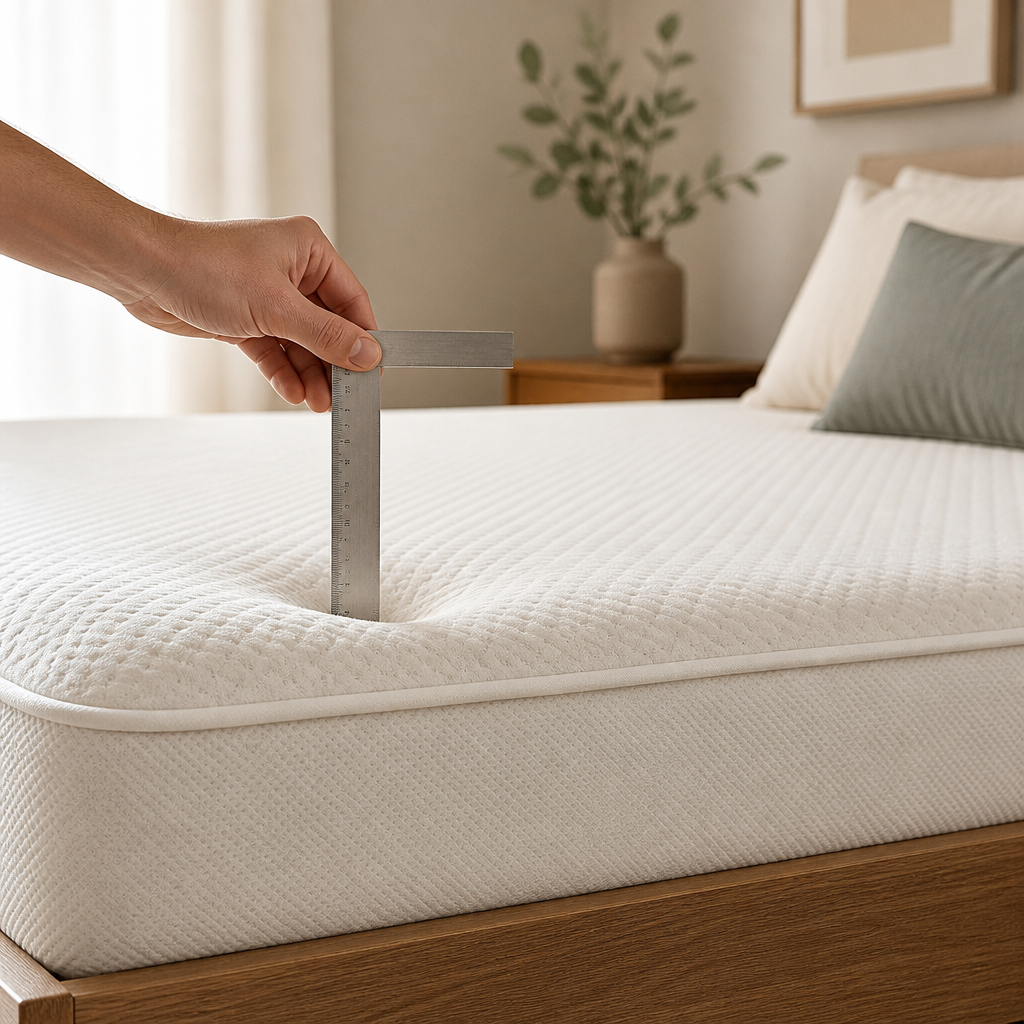
| Measure sagging the way the claim process will | Warranties usually define a dip by depth, measured on a flat surface with the bed on its required foundation. Photograph the dip and record the measurement with a date. |
| Foundation mismatches can void coverage | Placing a mattress on a base that does not meet the manufacturer’s spec is one of the most common reasons claims get questioned. Confirm the requirement before delivery. |
| Build the claim file on day one | Your receipt, warranty document, plan paperwork, and dated photos form the proof a reviewer will ask for. Store them together, on paper and digitally. |
| A payment plan does not change the warranty | A no-credit-needed plan changes how you pay, not what the manufacturer owes. Read the warranty with the same care as the payment schedule. |
What a Mattress Warranty Actually Covers
Many people assume a mattress warranty covers how the bed feels. It does not. A warranty is a promise that the manufacturer will repair or replace the product if it fails because of a defect in materials or workmanship, and that promise is narrower than most shoppers expect.
In practice, the warranty is the document you will reach for in a dispute, not the brochure on the showroom floor. Read it before you choose a model, because the legal language decides what happens when a problem shows up long after delivery.

Manufacturing defects versus comfort complaints
A defect is something that went wrong during manufacturing, such as a broken coil, a seam that splits along its stitching, foam that crumbles under normal use, or a border that separates from the core. A comfort complaint is different. If the bed is too firm, too soft, or runs warm, that is a preference problem, and no warranty obligates the manufacturer to fix it.
This is why trial periods and warranties are separate tools. A trial period, where one is offered, tests whether the bed suits your body. The warranty tests whether the bed was built correctly. Shoppers who mix the two up often file claims that get denied and then feel misled, when the mistake was in their expectations.
Structural failures and what they look like
Structural failures are usually easy to spot. You may notice a broken support layer, an edge that caves in during the first few months, or a cover that pulls away from the base layer. Photograph these problems as soon as you see them, because a claim filed after weeks of rough use is harder to defend.
Some warranties also address foam that loses its shape faster than expected. Read the definition closely. Terms like “material failure” or “structural defect” are often tied to a measured depth, so a dip that feels obvious to you may still fall below the threshold the warranty sets.
Prorated vs Non-Prorated Warranties
The most important word in many mattress warranties is “prorated.” A prorated warranty pays for a defect only in proportion to how much of the coverage period has passed, so the payout often shrinks each year. Two warranties with the same stated length can deliver very different value.
A non-prorated warranty keeps the remedy at full value for its stated term, though it may still limit which costs are covered. The difference matters most when a defect appears in the middle years, which is exactly when many shoppers need help.
A warranty tells you what the manufacturer will do when a defect shows up. It says nothing about whether you will enjoy sleeping on the bed.
How the prorated formula reduces your claim
Here is a hypothetical example. Suppose a warranty pays a replacement credit that drops each year. If a defect appears in year three, the credit may reflect the remaining value of the bed rather than the price you paid. The wording often sits in a table on a separate page, so ask the seller to show you that table before you pay.
Shoppers on tight budgets sometimes compare only the headline number of years. That is the wrong comparison. A prorated term can pay less in its later years than a shorter non-prorated term pays in its early years.
Pro tip: Ask for the prorating schedule in writing and calculate the credit at years one, three, and five. If the numbers look weak at year three, the headline length is doing the selling, not the coverage.
Why a shorter non-prorated term can be worth more
A shorter non-prorated warranty can outperform a longer prorated one for many sleepers. Many defects that matter show up in the early years, and that is where full-value coverage matters most. Let the payout drive your decision, not the marketing headline.
For budget-conscious buyers, the best warranty is often the one that would still make you whole if the bed failed in year three. Compare that number across each option you are considering.
Sagging and Body Impressions
Sagging is the most common reason shoppers file a warranty claim, and it is also the reason claims get denied most often. Many warranties allow for a body impression, the normal depression that forms where you sleep. Only dips beyond a stated depth count as a defect.
This is where expectations collide with the contract. A mattress can look flat in the showroom and still develop a dip that the warranty considers normal. The way to protect yourself is to learn the measurement rules before you need them.
Measuring a dip the right way
Warranty language on this topic usually describes measurement in terms of depth, taken across a flat surface with a straightedge and with the bed on the foundation the manufacturer requires. Measure from the level of the surface to the lowest point of the impression. Do not place pillows or blankets on top, because they change the reading.
Take the measurement at a consistent time of day, ideally with nobody lying on the bed, and write down the result. A single reading taken after a long night on one edge of the bed will not persuade a claims reviewer.
Building the claim file
A strong claim file contains four things: the original receipt, the warranty document, dated photos of the problem, and written measurements taken the same way each time. Keep them in one folder, with a phone or cloud backup in addition to paper copies.
Customers who buy on a payment plan should add that paperwork to the same folder. Proof of purchase and proof of payment protect you if a manufacturer asks about the date and terms of the sale years later.
What Voids a Mattress Warranty
Voided warranties are the quiet trap. A warranty can be valid on paper and still fail the moment the bed sits on the wrong base or picks up a stain the manufacturer classifies as moisture damage. The most common voids are rarely dramatic. They are small details the buyer never saw as important.
Read the exclusions or conditions section first, then go back to the coverage section. The exclusions tell you exactly how a claim can fail, and in most cases they are written in plain language if you know where to look.
Foundation and frame requirements
Many manufacturers specify a foundation, such as a solid deck, slats at a stated spacing, or a base that meets certain support standards. Placing a mattress on a frame with wide gaps, a damaged slat set, or an unsupported platform can void coverage. If your current frame does not meet the requirement, plan for a compliant base before delivery rather than after a problem appears.
Pro tip: Photograph your foundation the day the mattress arrives, with the slat spacing and model number visible. If a claim is questioned later, that single photo can settle a support question that would otherwise turn into a months-long argument.
Stains, moisture, and protectors
Liquid damage is one of the most frequent reasons claims are denied. Many warranties exclude stains, odors, and mold because they point to moisture or misuse the manufacturer cannot control. Use a breathable, waterproof protector, and check whether the warranty names specific protector requirements.
Keep food and drinks off the bed, even if you think a small spill will dry. A stain that looks minor can become the deciding factor in a claim if the surface was damp for hours.
Adjustable bases and powered accessories
If you pair a mattress with an adjustable base or a powered accessory, the mattress warranty and the base warranty are usually separate documents. A problem with the base will not be covered under the mattress warranty, and a mattress defect will not automatically cover a motor failure. Keep separate paperwork for each product, including its own model number and purchase date.
Reading the Fine Print Before You Buy
Most shoppers read the warranty after the bed is already in the bedroom. Reverse that order. The fine print determines how you will be treated if something goes wrong, and it is much easier to ask questions while you still have the option to choose a different model.
Because our showroom is small and our team has no commissioned sales staff, you can ask us to walk through the warranty line by line without feeling pushed toward a purchase. Take advantage of that before you commit.
Who stands behind the warranty
Clarify whether the manufacturer, the retailer, or a third party handles claims. Some warranties are issued by the manufacturer and processed through the seller, while others route everything through a separate service center. Ask who receives the claim, where it is sent, and how long the process usually takes.
Transfers, registration, and deadlines
Some warranties require you to register the product within a set window after delivery. Others become void if the original buyer sells or gives the mattress away. If you are buying for a guest room, a child, or a rental, check whether the warranty can transfer and what paperwork that requires.
Filing deadlines matter too. A claim submitted after the stated period can be rejected even when the defect is real. Put the deadline on your calendar the day you take delivery.
How claims are usually filed
Expect to submit photos, measurements, the purchase date, and the model or serial number. Some manufacturers require an inspection, which can take time. Our customers get exact day-and-time delivery windows, and most orders typically arrive within 24-48 hours, so inspect the set at the door and note any damage on the delivery paperwork before the crew leaves.
If the inspection stretches out and your back or neck needs a firm surface in the meantime, plan a temporary sleeping arrangement now rather than scrambling later.
Comparing Warranty Types
Shoppers rarely see three neat options, but the warranties you encounter generally fall into a few categories. The table below compares them by what a claim actually returns, which is the question that matters after the first problem.
| Warranty Type | What You Typically Receive | Where Buyers Get Caught |
|---|---|---|
| Prorated limited warranty | A replacement or credit that shrinks each year as the coverage period passes | The headline length looks generous, but the payout in later years can be small |
| Non-prorated limited warranty | A repair or replacement at full value for the stated term, subject to listed exclusions | Labor, delivery, and removal may be excluded, so the real cost of a claim can be higher than expected |
| Warranty with a required inspection step | A repair or replacement once an inspection confirms the defect and measurements | Long inspection timelines and strict measurement rules can slow or reject claims |
Reading the comparison against your sleep
A side sleeper who relies on the bed for shoulder and hip support should weigh the defect definition heavily. Surface changes that cause discomfort can be shallow, which means they may fall below the threshold a warranty sets, even when they matter to you every night.
Shared beds wear unevenly. If one partner is heavier or moves often, one side of the mattress carries more load over time. Check whether the warranty measures the surface in a way that fits how your bed is actually used.
Choosing the approach that fits your budget
For a budget buyer, a non-prorated term with clearly defined costs usually deserves more weight than a longer prorated term. Compare the worst realistic claim, not the best case. Pick the warranty whose payout in year three you would still accept.
Do not treat the warranty as a substitute for choosing the right bed. Back and neck complaints are a comfort and alignment question first. Choose the mattress for support and feel, then use the warranty as protection against defects.
Warranties and Payment Plans
Payment flexibility and warranty coverage are separate contracts, and many shoppers mix them up. A no-credit-needed payment plan changes how you pay. It does not change what the manufacturer owes if the mattress fails. Read both documents with equal care before you sign.

Keep your payment contract with the warranty file
Your payment schedule, receipt, and warranty document together prove the purchase date, price, and model. Ask our team how to store the plan paperwork alongside the warranty so that the purchase date and model number are easy to prove years from now.
Plan documents also help you answer questions a reviewer may ask. Keeping everything in one place means you will not have to reconstruct the timeline from memory.
The three-month purchase option and what to check
Our three-month purchase option is available in California. Shoppers who use it often want to know how the warranty timeline lines up with their payments. Confirm the delivery date in writing and check whether your warranty runs from purchase or from delivery, since the document states which one applies.
Do not assume a payment plan extends or shortens coverage. The manufacturer’s warranty sets the coverage terms, and the plan is simply how you pay for the bed.
Pro tip: Before you sign any payment agreement, write the mattress model, the warranty term, and the delivery date on the same page. That single note can save you an hour of searching if you ever need to file a claim.
Frequently Asked Questions
Does a mattress warranty cover sagging?
It can, but only when the sag exceeds the depth the warranty defines as a defect. Shallow body impressions within the stated limit are usually treated as normal wear, so measure the dip carefully and compare it with the warranty wording.
What is the difference between a prorated and a non-prorated mattress warranty?
A prorated warranty reduces the value of your remedy as time passes, while a non-prorated warranty keeps it at full value for the stated term. Check whether labor, delivery, or removal costs are included, because they change what you actually receive.
Will a payment plan affect my mattress warranty?
A no-credit-needed payment plan changes how you pay for the mattress, not the coverage terms. Keep the plan contract with your receipt and warranty document so you can prove the purchase date and model number if you ever need a claim.
Can a bed frame or foundation void my warranty?
Yes, if the warranty requires a specific foundation and your setup does not meet that requirement. Confirm the rules before delivery and photograph the base the day the mattress arrives.
Should I choose the longest mattress warranty I can find?
Not automatically. Length matters less than the payout structure, the exclusions, and the claim process. Compare what each warranty would return in years two and five, and choose the one whose real remedy you would accept.
Share your own mattress warranty experience, especially what the manufacturer asked you to provide when you filed a claim, so other Orange County shoppers can learn from it.
We would love your feedback and any insights you would share with others. What perspective would you add?
References
- Overview of mattress warranty terms, coverage types, and how to file a claim
- Guide to prorated versus non-prorated mattress warranty coverage and body impressions
- Explanation of what can void a mattress warranty and how to measure sagging