

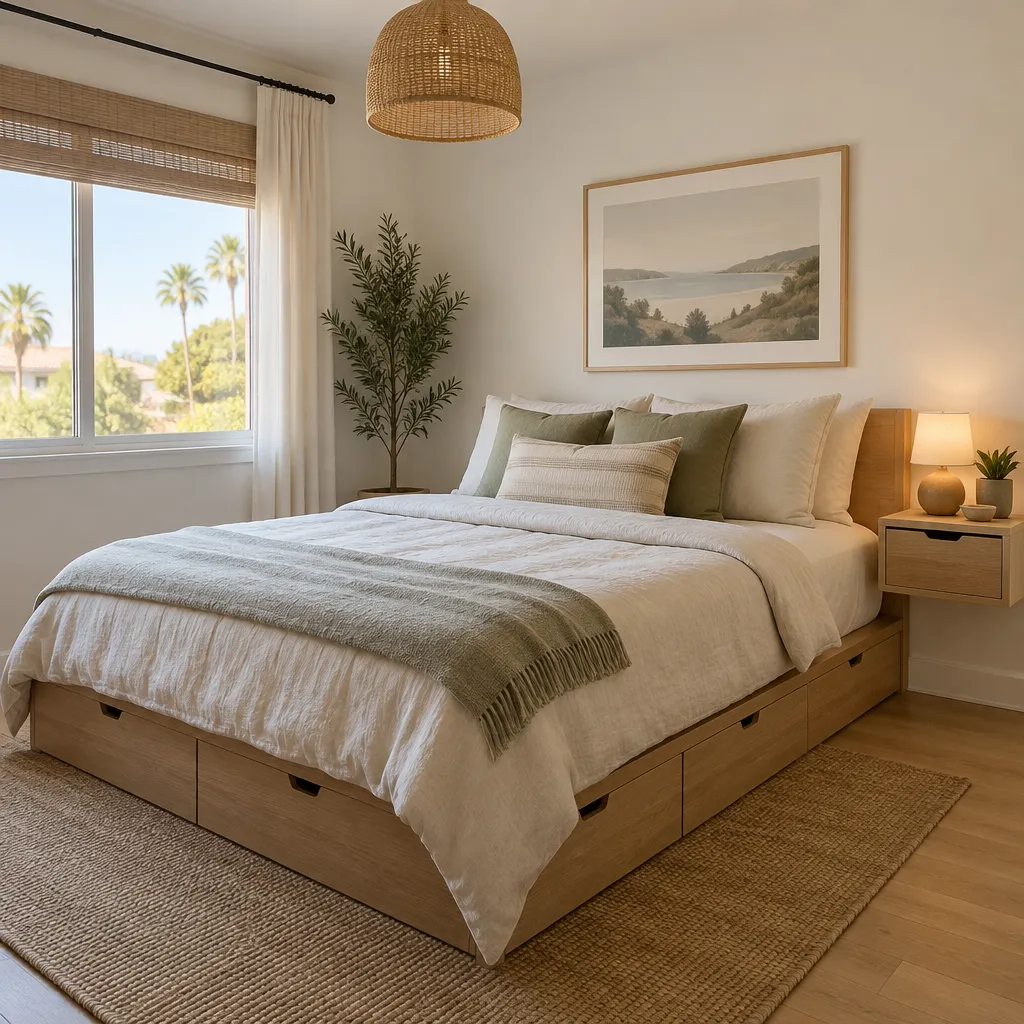
Bedroom Storage Furniture in Orange County on a Budget
Most small bedrooms in Orange County don’t fail because they’re too small. They fail because every piece takes up floor space and gives nothing back. A bed with empty space underneath, a nightstand that holds only a lamp, and a dresser that blocks the closet add up quickly. Bedroom storage furniture is the fix many shoppers overlook until the room feels cramped, and it works best when it’s chosen before the rest of the room is filled in. This guide covers the storage pieces that work best in compact bedrooms across Anaheim and the county, how to plan the layout first, and how to pay for it over time without a credit check.
Table of Contents
- Quick Takeaways
- Why Small Orange County Bedrooms Run Out of Room
- Storage Beds and Platform Frames
- Nightstands, Wall Shelves, and Vertical Storage
- Dressers, Benches, and Closet Alternatives
- Comparing Three Storage Approaches
- Planning the Room Before You Buy
- Paying Over Time Without Credit Checks
- Frequently Asked Questions
- References
Quick Takeaways
| Key Insight | Explanation |
|---|---|
| A storage platform bed can replace two pieces | Drawers or a lift-up base under the mattress hold bedding and off-season items, which can remove the need for a separate chest. |
| Tape the footprint before you buy | Mark each piece on the floor with painter’s tape and check that drawers open fully and you can walk to the closet without turning sideways. |
| Move storage to the walls | Floating nightstands and wall shelves store items without taking any floor space, which makes a small room look and feel larger. |
| Choose one primary storage piece | Two bulky chests in one small bedroom usually cancel out the space you gained and turn the walkway into a series of tight turns. |
| Place the bed before anything else | The bed sets the walkways, so decide its wall first, then fit the dresser, bench, or shelves around it. |
| Check the wall before mounting | Floating furniture needs solid anchoring, so confirm the wall type and use anchors rated for the weight you plan to store. |
| Spread the cost, not the plan | Our no-credit-needed payment plans and 3-month purchase option in California let you furnish the whole room in one trip. |
Why Small Orange County Bedrooms Run Out of Room
Plenty of bedrooms in Anaheim and across Orange County are compact, especially in condos, townhomes, and older single-family homes where the closet was built for a different era. When a room is short on space, the floor fills up first. A bed takes the largest footprint, then a dresser, then a nightstand on each side, and suddenly there is no clear path to the closet.
In practice, the problem is rarely the total square footage. It is the number of separate objects competing for the same few feet. Each standalone piece that stores only one thing adds a footprint without adding capacity, and that is the trade-off storage furniture is designed to fix.
Sleeping Space Versus Storage Space
Think of a small bedroom as two zones: the sleeping zone and the storage zone. The sleeping zone needs a bed, clear walkways, and room to get in and out of bed without bumping into anything. The storage zone holds clothes, linens, shoes, and the daily clutter that otherwise ends up on a chair. Furniture that serves both zones at once is the real budget win, because you stop paying for floor space you never use.
A common mistake is buying the bed first and treating storage as an afterthought. By the time the bed arrives, there is only room for a small dresser, and the closet ends up holding everything. Reversing the order, and asking what each piece will store before choosing its size, usually produces a calmer room with fewer pieces.
In a small room, every piece of furniture should earn its footprint twice, once for how it looks and once for what it holds.
Storage Beds and Platform Frames
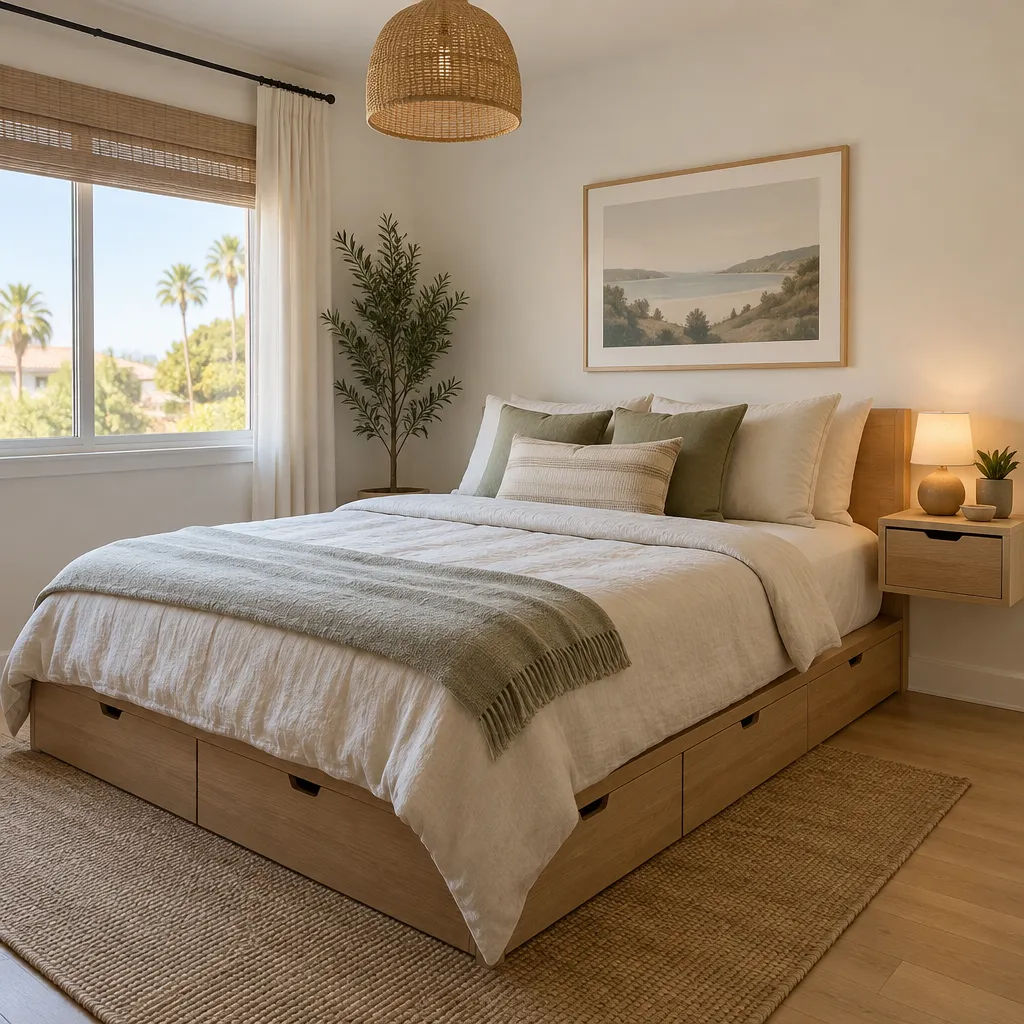
A storage platform is often the single most effective piece for a small bedroom, because it replaces the bed and the dead space under it in one purchase. The rest of this section covers what these beds hold well, how to choose between drawers and lift-up lids, and where they fall short.
What a Storage Bed Holds Well
A storage bed with drawers or a lift-up base holds bedding, off-season blankets, and extra pillows out of sight and off the floor. For a room that otherwise has only one dresser, that can remove the need for a second storage piece entirely. It works best when the stored items are soft and bulky, since those are the things that crowd a closet fastest.
Drawers suit people who reach for the same items every day, such as sheets and sleep clothes. Lift-up platforms suit bulkier items like comforters and storage bins, but you have to lift the mattress each time you want something. That gets old quickly if you are in and out of the bed every morning.
Drawers Versus Lift-Up Lids
Choose drawers if you want easy access and a tidy look. Drawers need clearance to open, so measure the distance from the bed’s side to the nearest wall, nightstand, or door. A lift-up base needs less planning but sits lower in the room, so look for a sturdy hinge or gas-lift setup that holds the weight without drifting closed.
Pro tip: Before you pick drawers or a lift base, measure from the bed’s side to the nearest wall or nightstand. Drawers need that full clearance to open, and a bed that cannot be pulled out far enough leaves its storage unusable.
Where Storage Beds Fall Short
Storage beds are not a fit for every room. If the bed sits in a corner with no space to pull drawers out, or if you already own a frame you like, a storage base can make the room feel more crowded rather than less. Deep storage beds also raise the sleeping height, which some people find harder to climb in and out of, especially after a long day on their feet.
Memory foam mattresses are often heavy and thick, so confirm that the platform can carry the load and that the sleeping height still works for you. Sit on the edge of a display bed before you commit, and check how you would get up in the middle of the night.
Nightstands, Wall Shelves, and Vertical Storage
Walls are the most underused storage in most small bedrooms. Floating nightstands, shallow shelves, and tall narrow chests move storage upward and leave the floor open for walking. The trick is to use the wall without overloading it or crowding the space above the bed.
Floating Nightstands That Free the Floor
A floating nightstand mounts to the wall and leaves the floor visible underneath. That single change makes a room look larger, and it makes vacuuming easier too. Floating units only work when the wall is solid enough to carry the load, so check the wall type before drilling, and use anchors rated for the weight you plan to store.
Look for a floating nightstand with at least one drawer or a small shelf. A bare shelf is fine for a lamp and a phone, but a drawer keeps chargers, glasses, and medication out of sight. That matters when the nightstand is the only surface you reach for in the dark.
Wall Shelves Above the Bed
Wall shelves above or beside the bed use space that otherwise goes unused. Keep them shallow, so they don’t crowd your head when you sit up. Place them at a height you can reach from the bed, and keep heavier items on the lower shelf.
A row of books and a small plant works well. Avoid heavy ceramic pieces on a high shelf, because a fixture that gives way at night is a real safety problem, not just a styling issue.
Vertical Storage Within Reach
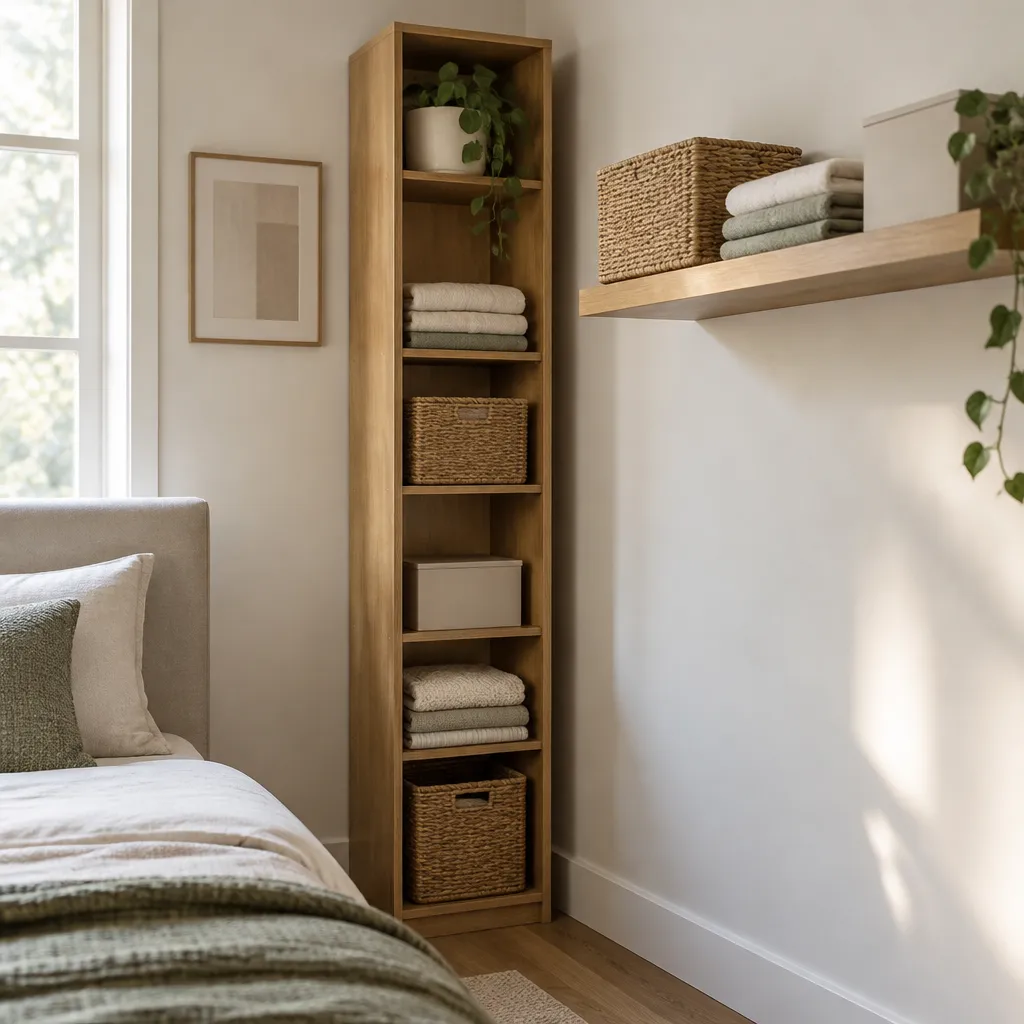
Vertical storage works when it fits the room’s existing walls. A tall, narrow chest can sit beside the closet door, and a slim tower of drawers can fit into a corner that a wide dresser would block. The key test is whether you can open every drawer without moving the bed. If you cannot, the piece will end up as decoration.
Pro tip: Mount wall shelves into studs or use anchors rated for the load, then test the fixture with a light load before you add books or decor. Renters should check the lease before drilling, and removable anchors can help protect a deposit.
Dressers, Benches, and Closet Alternatives
A dresser still has a place in a small bedroom, but it is rarely the first piece to buy. The options here focus on storage that doesn’t block the walkway, from benches at the foot of the bed to the space behind the closet door that most rooms waste.
When a Dresser Still Makes Sense
A dresser is the right choice when you have a lot of folded clothing and want everything in one place. The problem is depth. Many dressers built for larger rooms project far enough to block the path to the closet, so choose a chest that is shallower than you think you need, with a clear top that doesn’t invite stacking.
Look at the drawer front from the doorway before you buy. If a fully opened drawer would sit in the walkway, the dresser is too deep for the room, no matter how good the price looks.
Benches and Ottomans With Hidden Space
A storage bench at the foot of the bed holds seasonal bedding, shoes, or extra pillows, and it doubles as seating while you dress. It is one of the most budget-friendly ways to add storage without adding a tall object. Look for a bench with a soft-close or supported lid, because an unsupported lid can pinch fingers or slam into the wall.
Storage ottomans do the same job in a smaller footprint, but they hold less and can’t carry anything on top. In a room that already has a bed and a dresser, an ottoman is often the better choice because it adds seating without blocking the walkway.
Using the Closet Door and the Back of the Room
Many small bedrooms waste the back of the closet door and the wall behind the bed. Over-the-door organizers handle shoes and accessories, and a slim rolling cart can hold folded clothes near the closet without pushing into the walkway. These options cost little and come with you when you move.
A common mistake is loading the closet with items that belong in the dresser, then wondering why the rod is still crowded. Sort by how often you use each item. Daily clothing stays within reach, and seasonal clothing goes into bins under the bed or onto a high shelf.
Comparing Three Storage Approaches
Three approaches cover most small bedroom problems. The table below compares them by the kind of room they suit, their main advantage, and the trade-off to check before you buy. Use it as a starting point, then measure your own room before you decide.
How to Read the Comparison
The first column names the option. The second describes the room it suits best. The third is where most shoppers get surprised, so read it before you commit. In practice, the best choice usually comes from the trade-off you can live with, not the feature list on the tag.
| Storage Option | Best For | Trade-off to Watch |
|---|---|---|
| Storage platform bed with drawers | Rooms that need a bed and one large storage piece in a single footprint | Drawers need clearance to open, and the bed height can be harder to climb in and out of |
| Floating nightstands and wall shelves | Rooms where the floor is the main constraint and the walls are solid | Needs secure wall anchoring, and it holds less than a full chest |
| Storage bench or ottoman at the foot of the bed | Rooms that need seating and a place for bedding or shoes | Holds less than a dresser and can’t be stacked on top |
Which Option Fits Which Room
If your room has a large empty wall and a small closet, start with floating nightstands and wall shelves, then add a bench if you still need space. If the room has a bed and nowhere to put clothes, a storage platform usually gives the biggest return on floor space. A room with both problems needs a combination, and the trick is to pick one primary storage piece and let the others support it.
Avoid stacking two large storage pieces in one small room. Two bulky chests usually cancel out the space you gained, and the walkway becomes a series of tight turns.
Planning the Room Before You Buy
A good layout takes about as long as a cup of coffee and prevents most of the returns and rearrangements that make budget furniture expensive. The steps below are the ones we walk through with customers in the showroom, adapted for a room you can measure at home.
Measuring the Footprint
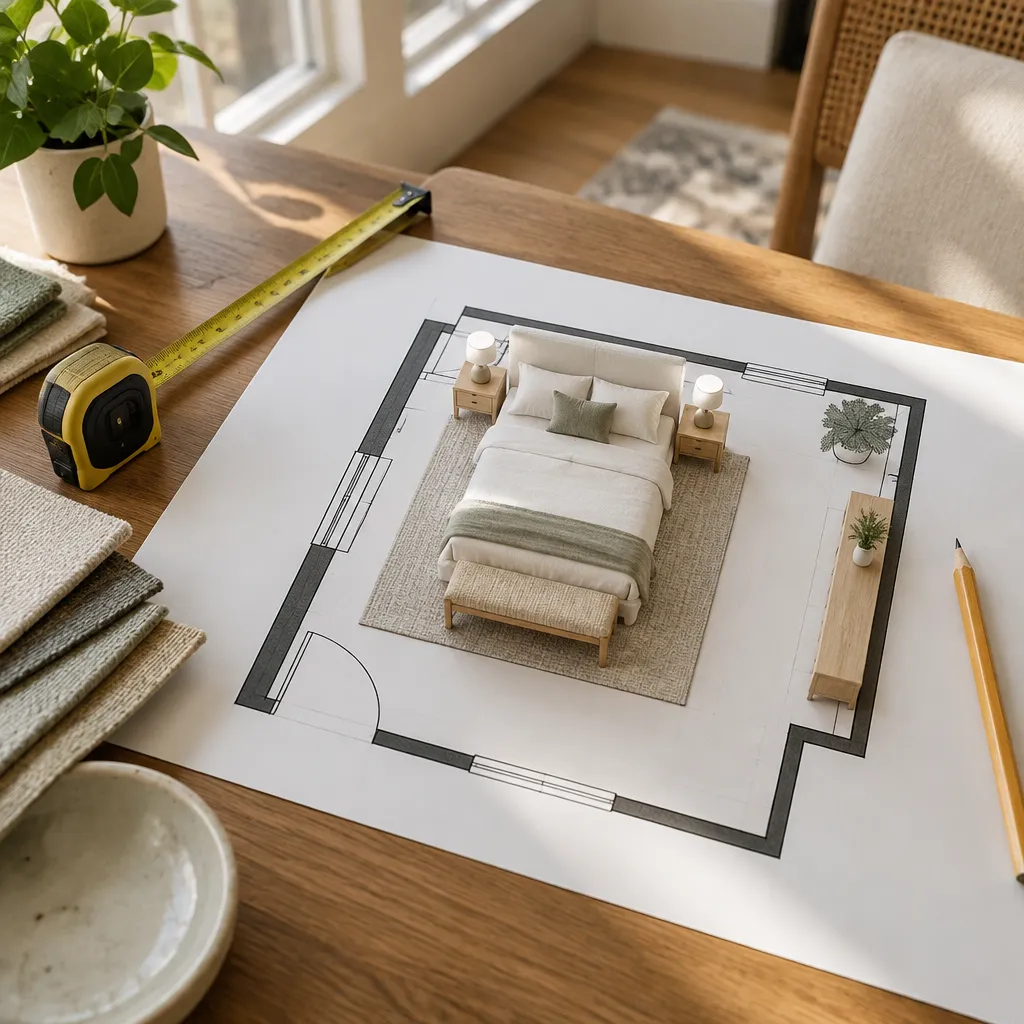
Measure the room, then tape the footprint of each piece on the floor before you buy. Mark the bed, the dresser, and the path to the closet. Walk the room with the tape in place and open the doors and drawers in your head. If you cannot reach the closet without turning sideways, the layout needs to change.
Include the door swing, the window sill, and any radiator or vent. These fixed items reduce usable space more than most shoppers expect, and they are easy to forget when you are standing on a showroom floor.
Sequence Matters: Bed First, Storage Second
Bed placement drives everything else. Choose the wall for the bed first, then decide where the nightstands and storage sit. In many small rooms the bed works best against the longest solid wall, which leaves the other walls for a dresser or shelves.
Once the bed is set, you will know how much room is left for drawers, a bench, or a chest. If the bed is placed last, the storage piece you wanted often won’t fit without blocking the door.
Mistakes That Cost Shoppers Twice
The most expensive mistake is buying a piece that looks right in the showroom but doesn’t fit your bedroom. The second is buying storage that is attractive but makes the room harder to use, such as a dresser that blocks the closet or a bed that can’t be pulled out far enough to open its drawers. Both lead to returns, rearranging, or a second purchase to fix the first.
Pro tip: Photograph your tape outlines from the doorway, then compare them with the product dimensions before you buy. It is a quick check that catches most layout mistakes.
Paying Over Time Without Credit Checks
Many shoppers want a complete bedroom but don’t have the credit history or the cash for everything at once. The good news is that you can plan the full room first, then decide how to pay for the pieces that matter most. Storage is often the category that gets cut from the budget, so it is worth planning for before the bed arrives.
How No-Credit-Needed Payment Plans Work
We offer no-credit-needed payment plans, so you can furnish the bedroom with the bed, storage piece, and nightstands that fit your layout and pay over time. Ask about the terms in person so you know exactly what you are agreeing to before you sign anything.
We also offer a 3-month purchase option available in California. It works well when you want to finish the room in one trip but don’t want the full amount due at once. Compare it with the cost of replacing a poorly sized piece later, because a wrong purchase costs more than a payment plan.
Getting Delivery Windows Right
Storage furniture is heavy and awkward, so delivery timing matters. We provide exact day and time delivery windows, and most orders are delivered within 24 to 48 hours. Clear your walkway and the path to the bedroom before the window opens, because a crew that has to move clutter first loses time.
Plan the order so the bed arrives before the storage pieces that depend on its footprint. If you buy a platform bed and a dresser together, confirm the placement with the crew so the bed goes in first.
Getting a No-Pressure Consultation
Our showroom is small, and our staff spend time with you without commissioned sales pressure, because we don’t pay sales associates on commission. Bring your tape measure and a photo of the room, then talk through how you sleep and what you need to store. That conversation usually saves more money than any single discount, because it keeps the wrong size out of your home.
Frequently Asked Questions
How do I fit bedroom storage furniture into a small room without blocking the closet?
Tape the footprint of each piece on the floor before you buy, then open the closet door and every drawer in your mind. If you cannot reach the closet without turning sideways, choose a shallower dresser or move the storage to a wall or the foot of the bed.
Is a storage bed worth it if I already own a mattress?
It can be, if the room lacks storage and your mattress is compatible with the base. Check the mattress size, height, and weight against the platform’s specifications, since a heavy memory foam mattress needs a base built to carry it.
Can I install floating nightstands in a rental?
Often yes, but check your lease first. Use anchors rated for the load, and avoid relying on drywall alone for anything you plan to fill with heavy items.
Which should I buy first for a small bedroom, the bed or the storage?
Decide the bed’s wall and footprint first, then choose storage that fits around it. Buying storage first often leaves the bed with no clear place to go.
Can I pay over time for bedroom storage furniture without a credit check?
Yes, we offer no-credit-needed payment plans, plus a 3-month purchase option available in California. Confirm the terms at the showroom before you agree to anything.
How long does delivery take after I order?
Most orders are delivered within 24 to 48 hours, and we provide exact day and time delivery windows so you can plan your walkway and your day.
Tell us which storage piece made the biggest difference in your bedroom, or which one didn’t work, because your experience will help other small-room shoppers choose better.
We would love your feedback and any insights you would share with others. What perspective would you add?