

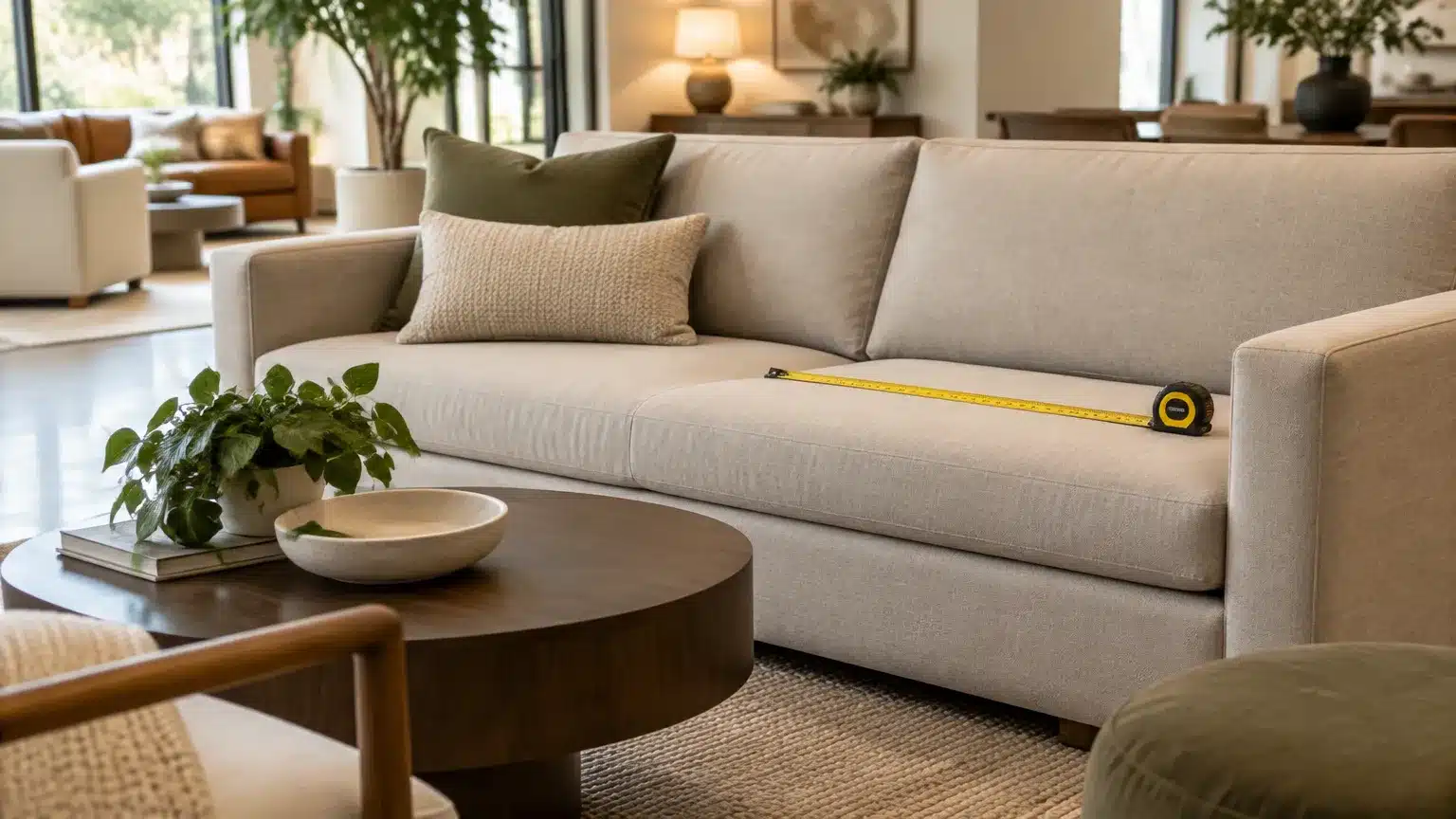
Sofa for Back Pain in Orange County: What to Look For
Most sofa shopping starts with color, fabric, and whether the piece fits the wall. If you wake up stiff after a movie night, or your hip aches after an hour on a low, deep cushion, those choices matter far less than seat depth, foam firmness, and lumbar height. Finding a sofa for back pain in Orange County is not about buying the most expensive couch on the floor. It is about checking the parts of the sofa that touch your spine and hips, and ignoring the rest. This guide covers what to test in a sofa and sectional when back or hip pain is part of your daily routine.
Table of Contents
- Quick Takeaways
- Why Back and Hip Pain Change What You Need From a Sofa
- Seat Depth: The Measurement That Decides Hip Comfort
- Seat Cushion Firmness and Foam Density
- Lumbar Support Height and Back Angle
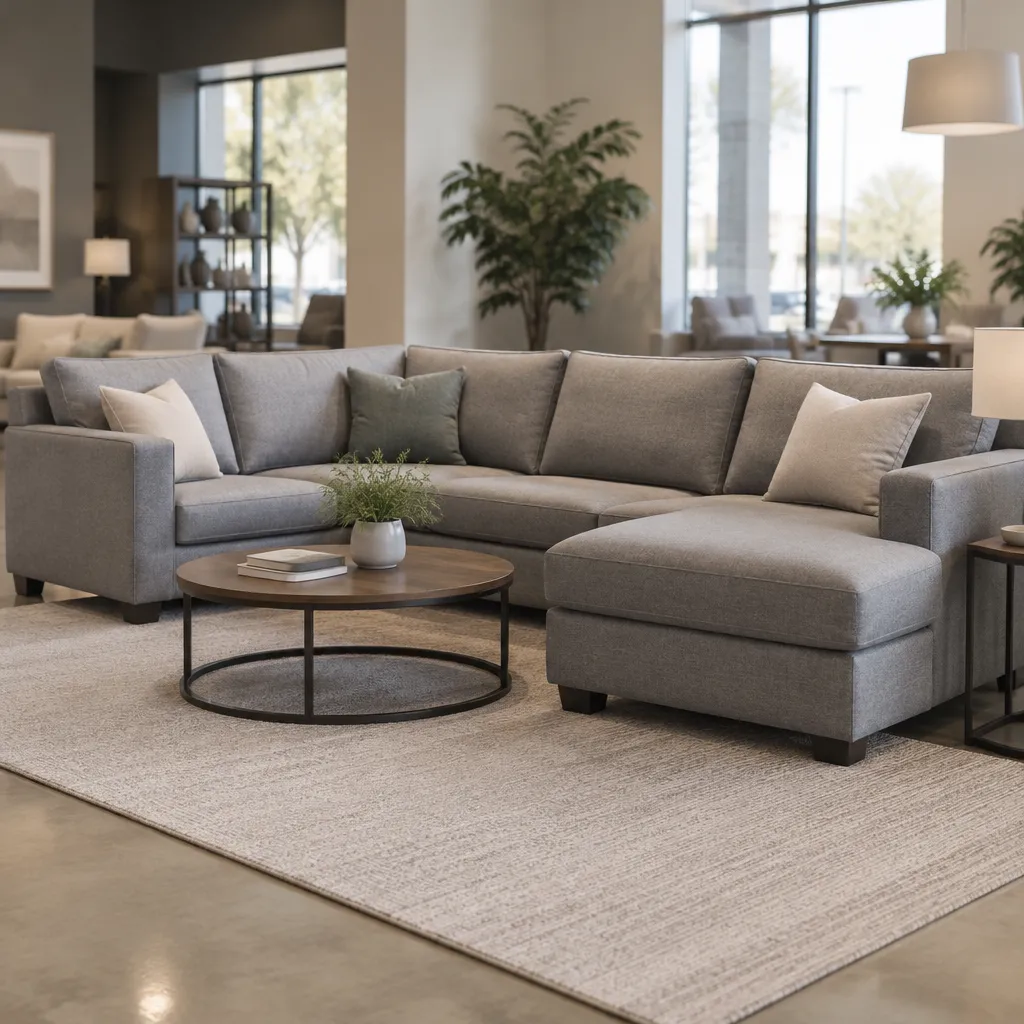
- Sectionals for Hip Pain: Layout, Corners, and Chaise Depth
- Comparing Sofa Types for Back and Hip Pain
- Testing a Sofa in the Showroom and Planning the Budget
- Frequently Asked Questions
- References
Quick Takeaways
| Key Insight | Explanation |
|---|---|
| Measure seat depth first | Povison’s buying guide recommends an 18-20 inch seat depth for back pain, and notes that deep sectionals often run 24 inches or more. Ask for the seat measurement, not the overall depth. |
| Target firm, high-density foam | The same guide describes a target of 2.0 lb/ft³ or higher, compared with about 1.5 lb/ft³ in budget sofas. If the seller cannot give you the density, treat the cushion as the lower grade. |
| Place lumbar support at 14-16 inches | Measure from the seat base to where the support presses into your back. Support that lands in your mid-back or ribs will not hold the lower back where it needs help. |
| Sit for 20 minutes, not 2 | A quick sit hides problems. Sit in your normal posture for at least 20 minutes and check whether you slide forward or feel tightness when you stand. |
| Test each sectional piece separately | Corners and chaises are often the deepest sections. Check the main seat and the chaise in the exact configuration you plan to buy. |
| Confirm the total cost and payment terms | Sofas start at $189 and sectionals start at $449 at our store. No-credit-needed payment plans are available, and a 3-month purchase option is offered in California. |
Why Back and Hip Pain Change What You Need From a Sofa
A sofa is the one piece of furniture many people sit on for hours without thinking about posture. That is why a sofa can quietly make back and hip pain worse. A cushion that feels cozy in the first five minutes can let your pelvis roll backward, flatten the natural curve of your lower back, and leave you working harder to stand up at the end of the night.

In practice, the most common mistake is judging a sofa by how it feels when you first sit down. Soft, sink-in cushions feel generous on the showroom floor, but they rarely hold your spine steady once you settle in for a movie. Hip discomfort follows a similar pattern, since a seat that is too deep or too low keeps your hips rotated and your knees pushed forward for long stretches.
How a soft, deep sofa changes your posture
When the seat is deep and the cushions give way under your weight, your pelvis tends to tilt back and your upper body slumps to compensate. Over an evening, that slump shifts load onto the lower back and the muscles that are supposed to keep you upright. The problem is rarely one bad night. It is the same position repeated every evening for months.
A soft cushion can also remove the support you need from the backrest. Once the lumbar area sags, your spine loses its natural curve, and you start to rely on your muscles to hold you up. That effort is quiet at first, which is why most people do not connect the ache with the sofa until it becomes a daily problem.
Why hip pain responds to seat depth and height
Hip discomfort on a sofa usually comes from a seat that puts your hips in a position they do not want to hold. If the cushion is too deep, your back cannot reach the backrest while your feet still rest flat, so you either perch on the front edge or slide back and lose support. Both positions can leave the hips feeling tight by the end of the evening.
We treat the sofa as a posture tool first and a style piece second. Once you know which features matter, the list narrows quickly. If your hip pain also shows up in bed, our guide to choosing the right firmness level for hip pain covers that side of the problem, and it pairs well with the sofa checks in this article.
Seat Depth: The Measurement That Decides Hip Comfort
If you measure only one thing in a showroom, measure seat depth. It determines whether your back can meet the backrest while your feet stay flat on the floor and your knees bend comfortably at the front edge. Get it wrong and every other feature matters less, because the sofa is positioning you before the cushions even come into play.
The 18-20 inch range to aim for
The Povison buying guide recommends an 18-20 inch seat depth for back pain relief, and it contrasts that with the 24-plus inches common in deep sectionals. Those figures line up with what we advise shoppers: if you sit for an hour or more, a seat much deeper than 20 inches usually means you are either sliding back into the cushion or perching forward.
Ask for the seat depth in inches rather than settling for words like “roomy” or “deep.” Overall dimensions can include the backrest and arms, so the seat measurement is the number that matters. Sit with your back against the backrest, slide your hips fully back, and check how far your knees fall past the cushion edge. If your feet barely touch the floor, the seat is too deep for your frame.
Why deep sectional seats cause trouble
Deep seats are the main reason people with hip pain end up unhappy with a sectional. A chaise or corner seat often looks like the best part of the piece in a showroom, because it is the most inviting place to stretch out. The same depth that feels luxurious for a twenty-minute read can keep your hips rotated and your back unsupported when you use it every night.
Pro tip: Sit in the spot you will use most, then stand up and sit down again. If you have to shift forward after five minutes to reach the armrest, the seat depth is working against you.
Seat Cushion Firmness and Foam Density
Firmness is the second feature that decides whether a sofa supports you or only looks good in the showroom. Foam density tells you how much the cushion will hold up over time. It is measured in pounds per cubic foot, and it is the spec most shoppers never ask about.
Foam density numbers to check
The Povison guide describes firm high-density foam at 2.0 lb/ft³ or higher, with a target range of 2.0-2.5 lb/ft³, and contrasts that with about 1.5 lb/ft³ in budget sofas. Those are useful benchmarks, though they come from one buying guide rather than a formal standard, so use them as a starting point and compare the actual cushions you are considering.
If a seller cannot tell you the density of the seat foam, assume you are looking at the lower-grade option. Ask the same question for every sofa on your list so you are comparing like with like. A vague answer is a useful answer in itself.
Why sink-in cushions fail the back
Soft cushions feel generous on day one, but the foam compresses under repeated use, and the seat slowly turns into a bowl. Once that happens, your pelvis tilts back and your lower back loses the support it needed. A cushion that feels slightly firm in the store is often the one that still feels right a year later.
Firm does not mean hard. The goal is a seat that holds your weight without pushing you onto the front edge. Look for a medium-firm to firm feel with a stable base, and avoid any cushion that leaves a deep dent after you stand up. That dent is the foam showing you how it will behave over time.
A sofa that feels comfortable in the first five minutes can still be the wrong sofa for your spine by the end of the evening.
Pro tip: Sit on each cushion for at least 20 minutes, then stand and look at the seat. A dent that does not spring back quickly tells you the foam is likely to soften further.
Lumbar Support Height and Back Angle
Lumbar support is the part of the sofa that holds the natural inward curve of your lower back. If the support sits too low or too high, it does not match that curve, and the rest of the sofa cannot correct the mismatch. Many shoppers overlook this feature because they assume every backrest provides support.
Povison recommends lumbar support positioned 14-16 inches from the seat base. That range places the support where the lower back needs it when you sit upright with your hips against the backrest. Measure from the top of the seat cushion to the spot where the support presses into your back, not to a random point on the backrest.
Where lumbar support should sit on your body
The easiest test is to sit fully back, let your hips reach the rear of the seat, and check whether the support lands in the small of your back. If it hits your mid-back or ribs, it is likely too high for your lower back. If you feel pressure below your belt line, it may be too low. Either way, the sofa is holding you in the wrong spot for every hour you sit there.
Povison’s own posture test on this point is worth knowing. The author tracked a lower spine angle that averaged 162 degrees on an old sofa and 172-174 degrees on properly designed models. Those numbers come from one reviewer’s personal test, so treat them as a guide rather than a clinical standard, but they show how much a small change in backrest design can alter the way your spine is held.
Pillows as a stopgap, not a fix
A lumbar pillow can help on a sofa that is almost right, but it cannot fix a seat that is too deep or a cushion that collapses. Pillows also shift, so the support you feel at the start of the night may be gone by the time the show ends. Treat a pillow as a temporary tool while you shop, not as a reason to keep a sofa that does not fit.
Sectionals for Hip Pain: Layout, Corners, and Chaise Depth
Sectionals appeal to Orange County households that want seating for family, guests, and the TV all in one room. They also create a particular problem for hip pain, because the corner and chaise sections can be deeper than a standard sofa. A sectional that is perfect for a lazy weekend can still be the wrong choice for someone who needs a firm, supportive seat every day.
Our sectionals start at $449, and the right one depends on how you use it. A layout with a shorter chaise and a standard seat in the main run often gives you the best of both worlds. Check the depth of each piece separately, because a sectional can have a supportive main seat and a corner that feels completely different.
Choosing the chaise and corner
The chaise is the section most likely to disappoint a person with hip pain. A long chaise invites you to stretch out, and that often means your hips slide forward and your lower back loses contact with the backrest. If you want a chaise for napping or propping up your legs, choose a model where you can still sit upright with your hips fully back.
Corners are the second trouble spot. A corner seat often has more depth than the rest of the piece, and it can pull you into a diagonal position that twists the hips. Sit in the corner for at least 20 minutes before you agree to the layout.
Room size and layout for smaller Anaheim living rooms
Measure your room before you choose a layout. A sectional that blocks a walkway or forces an awkward angle to reach the TV will make you shift and hunch, and that movement can aggravate hip pain. If your living room is tight, a smaller sectional with firm seats usually serves a sore hip better than a large one with soft corners.
Pro tip: Ask for a sit test on the exact sectional configuration you plan to buy. Sitting on the main seat alone does not show you how the corner feels once it is joined to the chaise.
Comparing Sofa Types for Back and Hip Pain
No single sofa type works for everyone with back or hip pain. The right choice depends on how long you sit, how much room you have, and whether you need to recline. The table below compares three common approaches and the main trade-off you should weigh before buying.
| Sofa Option | Best Fit For | Main Risk |
|---|---|---|
| Standard sofa with firm foam and an 18-20 inch seat | Daily sitting for an hour or more, with a need for a stable seat and upright posture | Cushions can still soften over time if the foam density is low |
| Sectional with a standard seat and a short chaise | Households that need more seating while keeping the main seats supportive | Deep corners and long chaises can push hips back and leave the lower back unsupported |
| Recliner sofa with lumbar support in the backrest | People who need to recline and want a backrest that holds the lower back | The reclining mechanism adds bulk and cost, and it does not fix a soft or overly deep seat |
Our practical view is that a standard sofa with firm foam is the safest starting point for most people with back pain. A sectional makes sense when the room and the household demand one, provided both the main seat and any chaise are tested. A recliner earns its place when you specifically need to recline, but do not let the mechanism distract you from checking seat depth and foam firmness.
Testing a Sofa in the Showroom and Planning the Budget
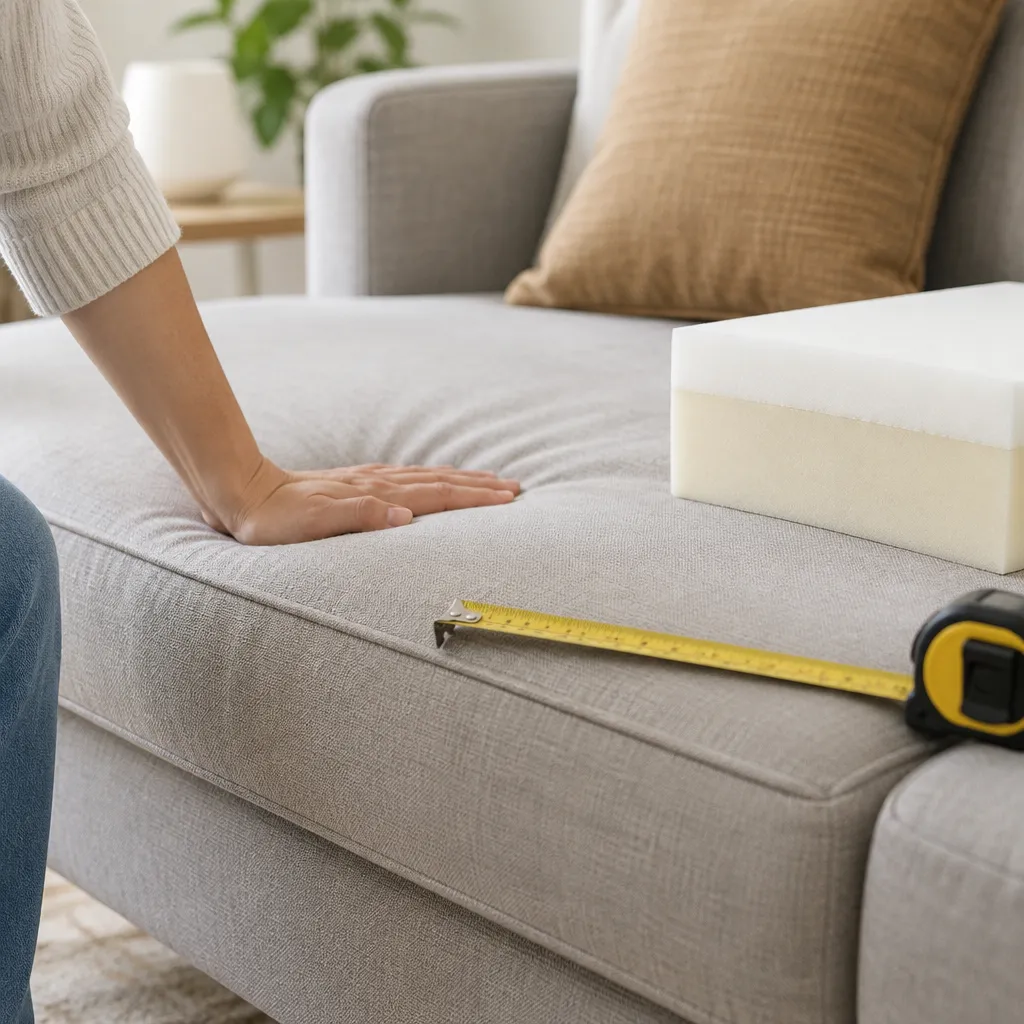
A showroom visit only helps if you test the sofa the way you will use it. Sit for at least 20 minutes in your normal posture, with a book or your phone, and pay attention to how your back and hips feel when you stand up. A quick sit that ends with you shifting around tells you the sofa is not working.
A 20-minute sit test that catches problems
Start by sitting with your hips fully back, then check whether your feet reach the floor without straining. Next, sit for 20 minutes with your usual posture. If you slide forward, feel pressure in the small of your back, or notice your hips tightening, the sofa is wrong for you, no matter how it looks.
At our Anaheim showroom, you get one-on-one attention, and we have no commissioned sales associates steering you toward a particular piece. You can spend as long as you need on seat depth and foam feel without anyone pushing a decision. If you have a question about a specific piece, call 714-864-0531 to schedule time with us.
Budget, payment, and delivery details
Sofas start at $189, and sectionals start at $449 at our store. For shoppers who need flexibility, we offer no-credit-needed payment plans, and a 3-month purchase option is available in California, which is the same as cash. The standard agreement offers 12 months to ownership. If you want to purchase early under the payment plan, call 877-898-1970.
Delivery is scheduled for an exact day and time rather than a 4-6 hour window, and most items arrive within 24-48 hours. That matters when you are replacing a sofa that already causes pain, because you do not want to wait another week for a couch that makes your back worse. You can visit us at 3030 E La Palma Ave, Anaheim, CA 92806, right off the 91 and Kraemer, between the 55 and 57 freeways.
If you are planning the whole room rather than one sofa, our guide to designing your home with pieces from a furniture sale in Orange County shows how to fit a seating piece into a broader plan.
Pro tip: Before you pay, ask for the total delivered cost in writing and confirm the delivery day and time, so the sofa does not arrive while nobody is home to receive it.
Frequently Asked Questions
What seat depth is best for a sofa for back pain?
For most people with back pain, the target is a seat depth in the 18-20 inch range, according to the Povison buying guide. Deeper seats, around 24 inches or more, often push the hips back and leave the lower back without support.
Is a firmer sofa always better for back pain?
No. Firm does not mean hard. You want a cushion that holds your weight without forcing you onto the front edge, and it should spring back after you stand up. Very hard seats can be as uncomfortable as sink-in ones.
Are sectionals a bad choice for hip pain?
Not necessarily. A sectional works well when the main seats are supportive and the chaise or corner is shallow enough to let you sit with your hips fully back. Test the exact configuration you plan to buy before committing.
Where should lumbar support sit on a sofa?
Povison recommends lumbar support about 14-16 inches from the seat base. Sit fully back and check whether the support lands in the small of your back. If it hits your mid-back or ribs, it is likely too high for your lower back.
Can I get a sofa on a payment plan without credit in Anaheim?
Yes. We offer no-credit-needed payment plans, and a 3-month purchase option is available in California, which is the same as cash. To purchase early under the payment plan, call 877-898-1970.
How soon can a sofa be delivered?
Most items are delivered within 24-48 hours, on the exact day and time you schedule rather than a 4-6 hour window. Call 714-864-0531 to confirm the timing for your order.
Have you tried a sofa or sectional that eased your back or hip pain, or one that made it worse? We would like to hear which feature made the biggest difference for you.