


Mattress Firmness by Body Weight: Too Soft or Too Firm?
Most shoppers choose a mattress by lying on it for thirty seconds in a showroom, then wonder why they wake up with a sore lower back three months later. The right firmness depends on a few things you can actually check: your body weight, how you usually sleep, and what your body tells you in the morning. Mattress firmness by body weight is one of the most useful starting points, because the pressure a bed absorbs rises with the weight pressing into it. This guide explains how to tell whether your current mattress is too soft or too firm, what to check at home, and how to test a replacement before you commit.
Table of Contents
- Quick Takeaways
- How Body Weight Changes the Firmness You Need
- Sleep Position and Firmness
- Signs Your Mattress Is Too Soft
- Signs Your Mattress Is Too Firm
- Comparing Firmness Scales and Body Weight Guides
- Testing Firmness in Person
- Choosing a Replacement and Paying for It
- Frequently Asked Questions
- References
Quick Takeaways
| Key Insight | Explanation |
|---|---|
| Body weight sets your baseline | Heavier sleepers compress a mattress more deeply, so they usually need a firmer feel than lighter sleepers on the same bed. |
| Side sleepers need some give | Side sleeping concentrates pressure at the shoulder and hip, so a slightly softer comfort layer usually helps, as long as the core still supports the hips. |
| Back and stomach sleepers need a level surface | A flatter, firmer surface keeps the hips from sinking and the lower back from arching overnight. |
| Morning stiffness is a clue | Waking stiff that eases after you move usually points to a bed that is too firm, while hip or shoulder ache that lingers points toward one that is too soft. |
| Test in your real sleep position | Lie in the position you use most for about 10 minutes and check whether your neck, back, and hips form a relatively straight line. |
| Ratings guide, your body decides | A firmness scale helps you compare models across sellers, but your own response over several nights makes the final call. |
How Body Weight Changes the Firmness You Need
Body weight is the factor most shoppers skip, and it changes how a mattress feels more than almost any other variable. A bed pushes back against the weight pressed into it, so the same surface can feel supportive under one sleeper and sag under another. That is the core idea behind mattress firmness by body weight: the firmness you need is tied to how much force your body applies.

A body weight guide from a mattress testing site groups sleepers into three bands. It places lightweight sleepers around medium on a 10 point scale, average-weight sleepers around medium-firm, and heavyweight sleepers at firm or higher. Treat those bands as a starting point, because a sleeper near the top of a band with a history of back pain may need a different feel than someone near the bottom.
Lighter sleepers can sink too far
Lighter sleepers do not generate enough pressure to engage the support layers of a firm bed, so the surface can feel unresponsive and hard. The Sleep Foundation’s body weight methodology notes that a firm mattress may lack cushioning for a lighter sleeper. In practice, a lighter person on a bed that is too firm often wakes with a sore shoulder or hip because the surface never gives enough.
Heavier sleepers need structure under the comfort layers
Heavier sleepers press deeper into comfort layers, which means a soft bed can bottom out and leave the spine sagging by morning. NapLab’s firmness guide says extra soft and soft mattresses are generally not adequately supportive for heavier sleepers. The same guide lists medium-firm models as appropriate for all body weights up to 300 pounds.
The practical test is simple. If your hips drop so far that your spine visibly bends when you lie down, the bed is not supporting your weight. A firmer core, not a thicker top layer, is usually what fixes that problem.
Sleep Position and Firmness
Sleep position decides where pressure lands. Side sleepers concentrate weight on the shoulder and hip, while back and stomach sleepers spread weight over a wider area and need the torso held level. Two people with the same weight can need different firmness because their pressure patterns are completely different.
NapLab’s guide rates soft mattresses at 4 out of 10 as best for primarily side sleepers, and it says stomach sleepers should avoid soft mattresses. It rates 7 out of 10 as slightly firm for primary back and stomach sleepers. It also states that the vast majority of sleepers need medium-firm, rated 6 out of 10, which suits all sleeping positions.
Side sleepers: letting the shoulder and hip settle
Side sleepers need enough give at the shoulder and hip for the spine to stay in line. If the mattress is too firm, those joints press into a small area, and you may wake with an aching shoulder or a tingling arm. A slightly softer top layer usually helps, provided the core below still stops the hips from dropping.
Back sleepers: keeping the lower back supported
Back sleepers are the easiest group to misjudge. A bed that is too soft lets the hips sink and flattens the natural curve of the lower back, while a bed that is too firm leaves a noticeable gap under it. Lie on your back and slide a hand under your lower back. If your whole hand fits easily, the bed is likely too firm to follow your curve.
Stomach sleepers: avoiding the arched spine
Stomach sleepers need a flatter surface. On a soft bed, the chest and hips sink, the lower back arches, and the neck twists to breathe. Of all the sleep position guidance in the firmness scale, the advice to avoid soft mattresses for stomach sleepers is the one most worth following.
Signs Your Mattress Is Too Soft
A mattress that is too soft usually announces itself through your body first. Lower back pain on waking, a persistent ache in the hip or shoulder, and neck strain are the three patterns that most often point to a bed with too little support. If you notice one of them after a few weeks on a new mattress, take it seriously.
The other signs are visible and physical. If the surface holds a deep hollow shaped like your body after you get up, the comfort layers are collapsing under your weight. If you feel trapped when you try to roll over, or you need a push to get out of bed, the mattress is not returning enough support.
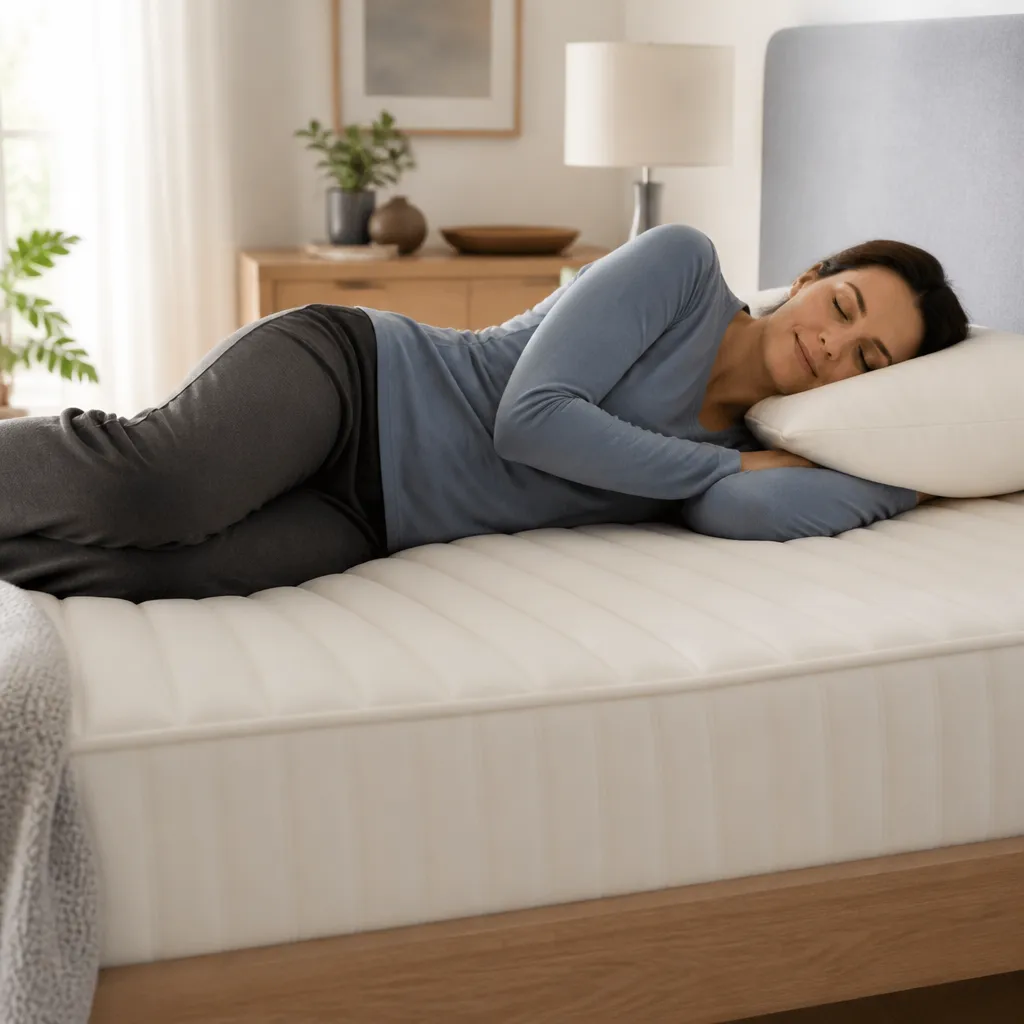
The body impression check
Make the impression check a habit. Right after you get up, pull back the covers and look at the surface. A hollow that matches your shape and stays visible for a while suggests the top layers are too soft for your weight, especially if the dip sits under your hips and shoulders.
Pain that starts at the joints
Joint pain is where softness matters most, and the National Council on Aging, known as NCOA, gives a clear way to think about it. Its guide includes this point from Gretchen Dueñas-Tanbonliong, Associate Director of Health and Wellness at NCOA:
“If our joints are supported in the right places, if our necks and backs are aligned, and if our body weight is well distributed, we’re less likely to toss and turn all night.” (Gretchen Dueñas-Tanbonliong, Associate Director of Health and Wellness at NCOA)
That quote works as a checklist. If your neck or lower back feels misaligned when you wake, the bed is failing the alignment test regardless of how comfortable it felt on the showroom floor. Alignment is the measure that matters most, not how plush the surface felt for ten seconds.
Signs Your Mattress Is Too Firm
A too-firm mattress is harder to spot because many people assume firm means supportive. A bed that does not let the shoulder and hip settle concentrates pressure on small areas, which can cause as much discomfort as a bed that sinks too far. The problem often shows up as stiffness rather than sagging.
NCOA’s guide makes a useful point about judgment. What one person calls soft may feel firm to someone else, so a numbered rating gives you a place to start rather than a final answer. Your own body’s response over several nights is the real test.
Stiffness that fades after you move
If you wake up stiff and only feel better after ten minutes on your feet, the surface may be pushing back too hard. Tingling in the arms, a hip that stays sore through the morning, and pressure marks on the shoulder are other common complaints. These symptoms are especially telling if they disappear once you sleep on a different bed for a night.
Lighter sleepers on a heavy-duty feel
Firm beds are often recommended for heavier sleepers, which leads some lighter people to buy one that is too firm for them. The Sleep Foundation’s note about cushioning for lighter sleepers applies here. If you are on the lighter end of your weight band and wake with pressure points, the fix is usually a medium or medium-soft feel rather than a firmer one.
Comparing Firmness Scales and Body Weight Guides
No single tool settles the question, so it helps to know what each one can and cannot tell you. The table below compares three approaches shoppers use when deciding how firm a mattress should be.
| Approach | What It Tells You | Where It Falls Short |
|---|---|---|
| 1 to 10 firmness scale | A shared rating that helps you compare models across sellers, with guidance on which sleep positions each feel suits | Ratings describe the average feel and cannot account for your exact build, pain history, or preferences |
| Body weight firmness bands | A starting range for lightweight, average, and heavyweight sleepers | The bands are broad and say nothing about sleep position or existing joint problems |
| In-person sleep test | Shows how your own body sinks and is supported in the position you actually use | A short visit can mislead if you lie down briefly or in a position you do not normally sleep in |
For most buyers, the best combination is a body weight band to set the starting point, a sleep position check to refine it, and a firsthand test to confirm the choice. Skipping any one of those steps is where most mismatches come from.
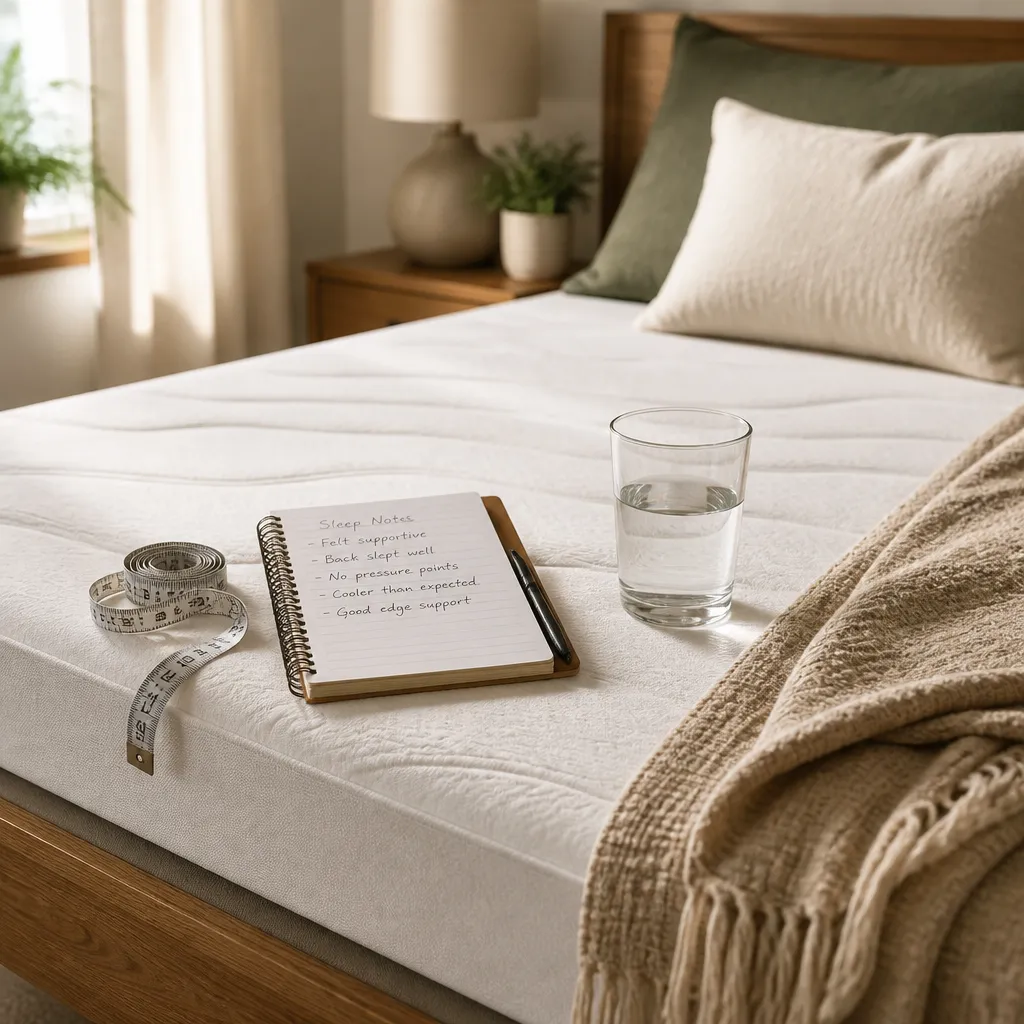
Consider a heavier side sleeper with shoulder pain. Body weight points toward a firmer bed, while side sleeping points toward more give, so the best fit usually sits in the middle of the scale rather than at either extreme. Test a few models in that middle band and let your shoulder decide which one works.
Testing Firmness in Person
Run a position-first test
Lie down in the position you use for most of the night and stay there for about 10 minutes. Keep your head on a pillow you normally use, and check whether your spine forms a relatively straight line from neck to hips. Ten minutes will not reveal everything, but a bed that feels wrong in the first minute rarely improves later.
Pro tip: Bring the pillow you sleep on at home. Pillow height changes how your neck sits on the mattress, and a showroom pillow can make a correct firmness choice look wrong.
Give the staff your weight range and sleep history
Tell the team your body weight range, your usual sleep position, and any joint or back pain you carry. Our showroom in Orange County keeps the conversation one-on-one, with no commissioned sales associates and no pressure to buy. That setup keeps the focus on which feel fits your body rather than on a sales target.
Choosing a Replacement and Paying for It
Once you know the firmness you need, the decision becomes about materials and budget. Memory foam mattresses contour closely, which can make a medium feel softer than its rating suggests. Check the firmness rating for the specific model, not just the material name on the label.
Matching memory foam to your body weight
Heavier sleepers should look for memory foam with enough density and a supportive base, because foam that feels comfortable for a lighter person can compress too far under heavier weight. Ask about the support core as well as the comfort layer. The core determines whether the bed stays level under pressure, and that matters more than how soft the top feels.
Paying over time without a credit check
Many shoppers who need a better mattress have limited or no credit history. Our payment plans do not require credit, and a 3-month purchase option is available in California, so you can choose the right firmness now and pay in set steps. Ask for the terms in writing before you commit so you know the schedule.
Delivery is scheduled to a day and time window you choose, and most orders are typically delivered within 24 to 48 hours. Plan the delivery around your sleep schedule so the new bed is ready the night it arrives.
Pro tip: Before you pay, ask for the firmness rating in writing along with the body weight range the seller recommends for that model. A written note gives you something concrete to compare against once the bed arrives.
Frequently Asked Questions
How do I know what firmness is right for my body weight?
Start with the weight band that matches you, then adjust for sleep position. Lighter sleepers often fit a medium feel, average-weight sleepers often sit at medium-firm, and heavier sleepers generally need a firm core. Confirm the choice with a sleep test in your usual position.
Can a mattress be too soft for a heavier person?
Yes. Soft and extra soft beds generally lack the support heavier sleepers need, so the hips and midsection can sink far enough to bend the spine. If you are heavier and wake with lower back pain, a soft bed is worth ruling out first.
Does sleep position matter more than body weight?
Neither factor wins on its own. Body weight sets the baseline firmness, and sleep position moves that baseline up or down. A heavier side sleeper and a heavier back sleeper can need different feels, so check both before choosing.
How long does it take to adjust to a new mattress?
Many people need a few weeks to settle in. A bed that causes new pain within the first several nights, however, is usually the wrong firmness. Give it a fair trial, and pay attention to where your body hurts when you wake.
Is a firm mattress always better for back pain?
No. A firm bed can leave pressure points and gaps under the lower back, which may aggravate some pain. Persistent back or joint pain deserves a conversation with a doctor or physical therapist, and a mattress change should be one part of that plan.
Can I get a better-fitting mattress if I have limited credit?
Yes. Our payment plans do not require credit, and a 3-month purchase option is available in California. Ask about the terms in writing before you commit so you know exactly what each payment covers.
Tell us in the comments below which firmness worked for your body weight and sleep position, and what you would change if you could choose again.
We would love your feedback and any insights you would share with others. What perspective would you add?
References
- Guide to the 1 to 10 mattress firmness scale and sleep position fit
- NCOA guide on understanding mattress firmness and joint support
- Body weight firmness ranges for lightweight, average, and heavyweight sleepers
- Sleep Foundation explanation of how body weight affects firmness ratings