

Mattress for Hip Pain: Choosing the Right Firmness Level
Waking up with a sore hip is a specific kind of frustrating. You lie down tired, shift onto your side to get comfortable, and by 2 a.m. the joint is throbbing into the mattress. If you searched for a mattress for hip pain, you are probably past the point of guessing. The surface you sleep on changes how much pressure lands on that hip, how your spine lines up overnight, and whether you wake up stiff. The firmest mattress is not automatically the right one, though. In our Orange County showroom, we see the same mistake again and again: people buy the hardest bed they can find and then wonder why their hip hurts more.
Table of Contents
- Quick Takeaways
- Why Hip Pain Gets Worse at Night
- Matching Firmness to Your Sleep Position
- Pressure Relief and Spinal Alignment for Your Hips
- Memory Foam, Latex, and Hybrid Options
- Cooling Strategies for Inflammatory Hip Pain
- Choosing and Testing a Mattress Without Pressure
- Frequently Asked Questions
- References
Quick Takeaways
| Key Insight | Explanation |
|---|---|
| The cause of your pain decides the mattress | Orthopedic pain tends to respond to supportive, firm-enough surfaces, while inflammatory pain often responds better to a cooler sleep surface. |
| Side sleepers need pressure relief first | Your top hip carries the load. A surface that is too firm concentrates pressure on the hip bone and tilts the pelvis. |
| Let the hip settle slightly, not sink | When you lie on your side, the spine should stay close to a straight line from head to tailbone. |
| Use a knee pillow as a diagnostic | A pillow between the knees keeps the hips stacked. If you wake with the top hip rotated or sore, the surface is not holding your pelvis level. |
| Body weight changes the firmness you need | Heavier sleepers usually need more core support, while lighter sleepers often do better with a softer comfort layer. |
| Give it a few weeks before you judge it | Sore joints adjust slowly, and a bed that feels wrong on night one may settle in after a week or two of consistent use. |
| Budget should not force a compromise | No-credit-needed payment plans and a 3-month purchase option in California let you buy the firmness your hip needs now. |
Why Hip Pain Gets Worse at Night
Hip pain rarely has one cause, and that is the first thing to sort out before you spend money on a bed. Arthritis, bursitis, an old injury, and long hours in a desk chair can all show up as the same deep ache when you lie down. A mattress cannot cure any of those conditions. It can, however, change how much load your hip absorbs for six to eight hours a night, and that matters more than most people expect.
NCOA’s expert-tested review of hip pain mattresses states that there is no single mattress doctors recommend for hip pain. If the pain comes from an orthopedic problem, a supportive, firm mattress may help. If the pain is inflammatory, a mattress that stays cool may help soothe the joint. Those are different problems with different solutions, which is why we start every hip conversation by asking what the pain actually feels like.
Orthopedic pain versus inflammatory pain
Orthopedic hip pain usually feels mechanical. It gets worse after standing, climbing stairs, or lying on the affected side, and it eases once you start moving. For this kind of pain, we look for a surface that holds the pelvis level and keeps the lower back from sagging. A bed that is too soft tends to make mechanical pain worse, because the hip sinks and the lower back twists to compensate.
Inflammatory pain often feels warmer, stiffer, and more persistent, and it can be worst after you have been still for a long time. Heat is the enemy here. A mattress that traps body heat can keep you restless, and the restlessness itself makes the joint feel worse by morning.
Why lying still makes the hip ache
During the day you shift your weight constantly, which spreads pressure across the joint. At night you may stay in one position for an hour or more, and the hip bone takes the full load. Sore tissue reacts to sustained pressure by tightening, which is why many people wake up stiff and then loosen up after ten minutes of walking.
In practice, the sleepers we talk with describe the same pattern. They fall asleep fine, wake around two or three in the morning on the painful side, and then roll over repeatedly without getting deep sleep. A surface that reduces pressure on the hip bone can cut those wake-ups, and fewer wake-ups usually means better rest overall.
Matching Firmness to Your Sleep Position
Firmness is the most searched and most misunderstood part of buying a mattress for hip pain. Many shoppers assume that firmer always means better support. For side sleepers with hip pain, that assumption is usually wrong. When you lie on your side, the hip is the highest point of your body, so it needs room to settle a little while the spine stays straight.
Support that holds the spine level matters more than a mattress that simply feels hard. A surface that feels firm in the showroom can still leave your hip under pressure after an hour of sleep.
Side sleepers: why medium-soft often wins
For most side sleepers, a medium-soft to medium comfort level gives the best balance. In our experience, that means a surface that cushions the shoulder and hip while a supportive base keeps the waist from dropping. A very firm mattress can push the hip into a rigid surface and create a pressure point that wakes you at 3 a.m.
Sleep Foundation’s guide to mattresses for side sleepers points shoppers toward memory foam, latex, and hybrid beds as the main categories to compare. That lines up with what we see on the showroom floor. The category matters less than how the top layer responds under your hip.
Back and stomach sleepers with hip pain
Back sleepers usually need more support under the lower back and a surface that does not let the hips sink too far. A medium-firm feel tends to work well here, because the pelvis stays in a neutral line. Stomach sleepers face a different problem. Lying face down can twist the hips and strain the lower back, so a firmer base is often the better choice, paired with a thinner top layer.
If you switch positions during the night
Many people with hip pain start on their side and roll onto their back or stomach before morning. If that describes you, look for a balanced middle ground rather than an extreme. Medium is where most combination sleepers land, and a pillow between the knees can make side sleeping much easier on the hip.
Pro tip: Lie on your side in the showroom for at least five minutes, then roll onto your back. If your hip feels pinched on the side or your lower back arches on the back, keep looking.
Pressure Relief and Spinal Alignment for Your Hips
Pressure relief and spinal alignment are the two qualities that determine whether a mattress helps your hip. You can have good alignment and still wake up sore if the surface compresses the hip bone into a hard point. Good hip-friendly mattresses do both jobs at once, which is harder than it sounds.
AARP’s testing of mattresses for hip pain named a memory foam model as its top performer, citing pressure relief and spinal support. Those are the qualities to check for, whatever the brand on the label. Treat them as a checklist rather than shopping by name.
The knee pillow check
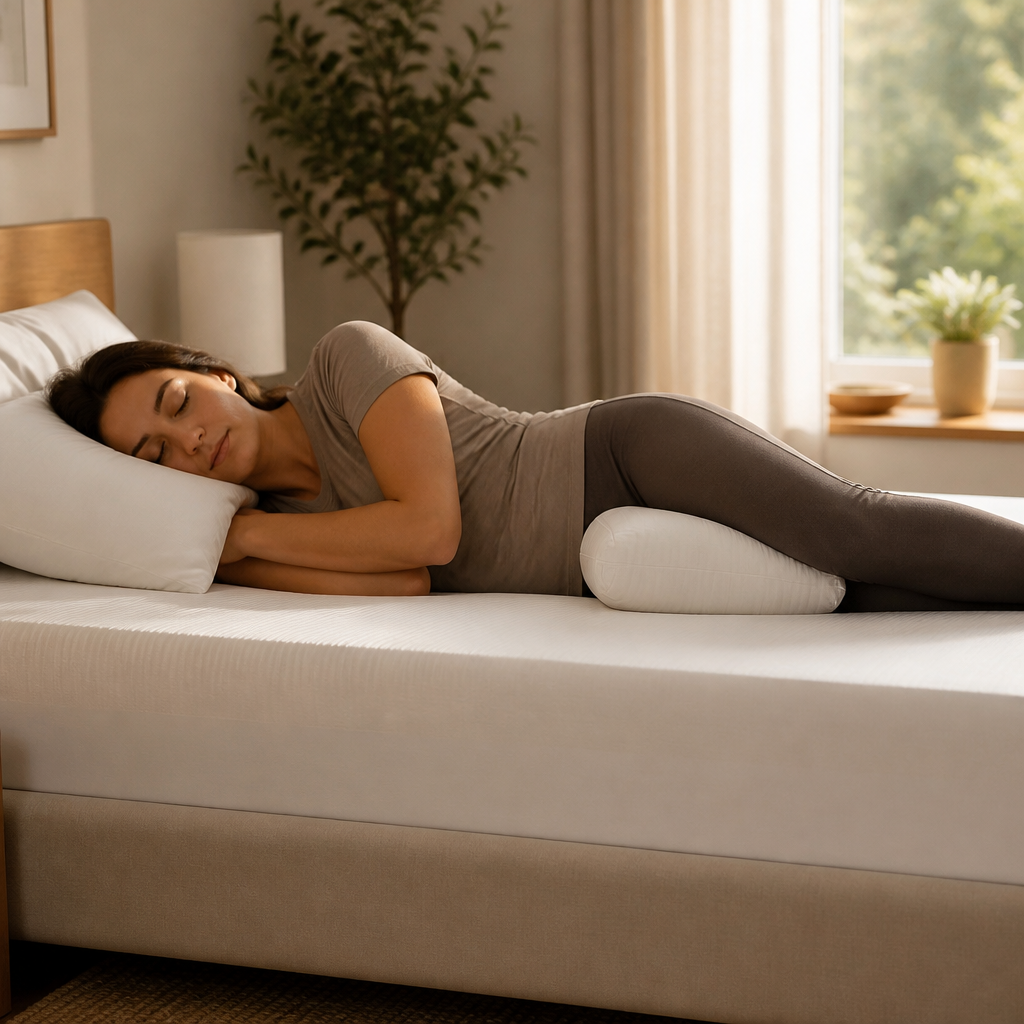
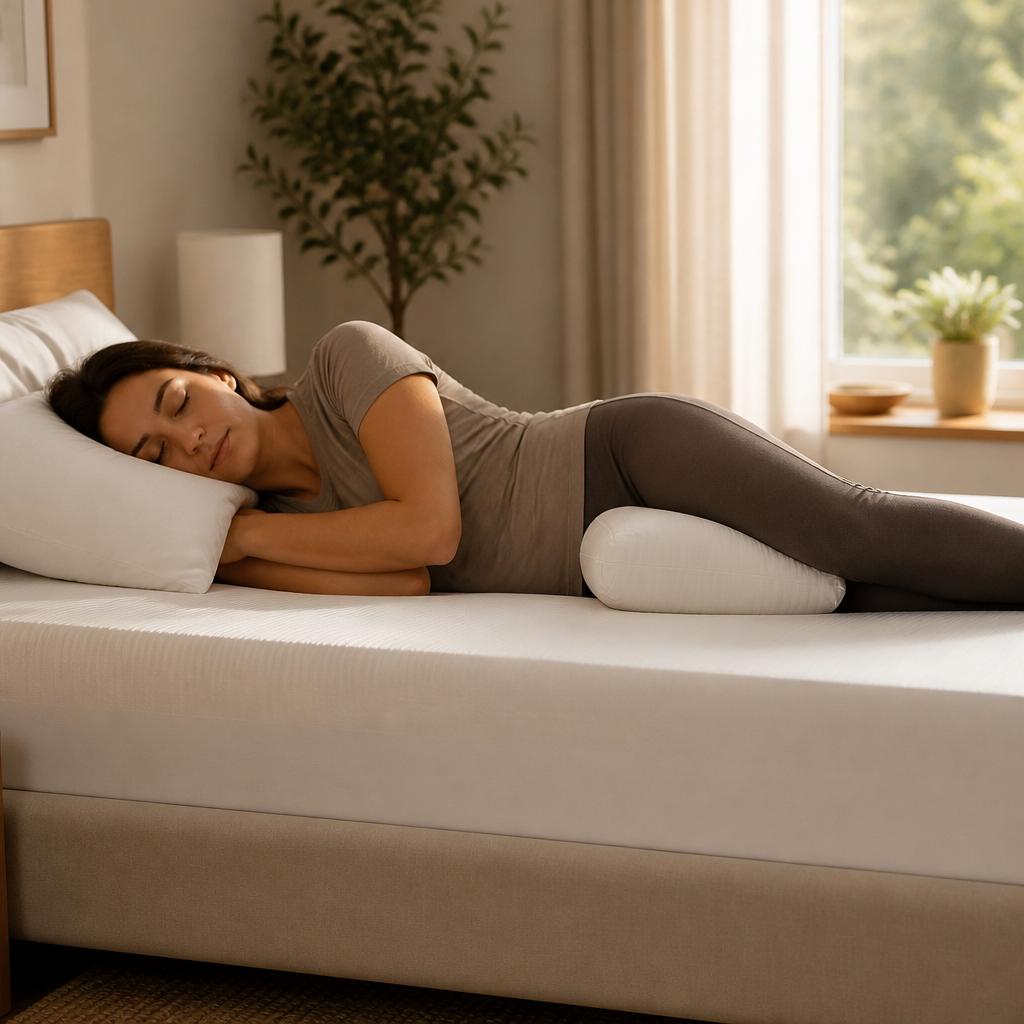
Lie on your side and place a pillow between your knees. Your top hip should stack over your bottom hip, and your spine should look like a straight line from the back of your head to your tailbone. If your top knee drops toward the mattress or your waist sinks noticeably, the surface is too soft to hold your pelvis level.
Repeat the check on your back with a pillow under your knees. If the lower back arches away from the bed, the mattress is not supporting the lumbar region. A surface that passes both checks is a strong candidate, even before you look at materials.
Why a deep hip impression is a warning sign
A deep depression under the hip is one of the clearest signs of a surface that will not hold up. Foam that dips quickly often has a thin or weak base, and that base is where your spine gets its support. Press the surface firmly with your hand, then lift it. Be cautious of anything that holds a deep hollow shape after you stand up.
Spinal alignment without over-firming
Alignment does not require a board. In our experience, the best outcomes come from mattresses with a supportive core, a layer that softens around the hip, and enough thickness that your body is not resting on the base. The goal is a bed that cradles the hip and then pushes back at the lower back.
Pro tip: Bring your own pillow to the showroom if you can. Testing with the pillow you actually use gives you a far more accurate picture of how your neck and hips will line up at home.
Memory Foam, Latex, and Hybrid Options
Once you know the firmness and alignment you need, the material determines how the mattress feels night after night. Memory foam, latex, and hybrids each handle hip pressure differently, and each has tradeoffs that matter if you already sleep hot or wake up sore. We carry memory foam mattresses in our showroom, and we know firsthand that quality varies widely within the same category.
Memory foam for contouring
Memory foam conforms closely to the hip and shoulder, which is why it is a common first choice for side sleepers. It spreads weight across more surface area, so the bony points feel less pressure. The downside is that dense foam can trap heat, and lower-quality foam can lose its shape faster than you would like.
Latex for responsive support and cooling
Latex feels more buoyant than memory foam. You sink in without feeling stuck, and it is easier to change positions during the night, which matters when hip pain makes rolling over painful. Latex is also more breathable, so for sleepers who run warm, it is often the more comfortable option.
Hybrids for support with a softer top
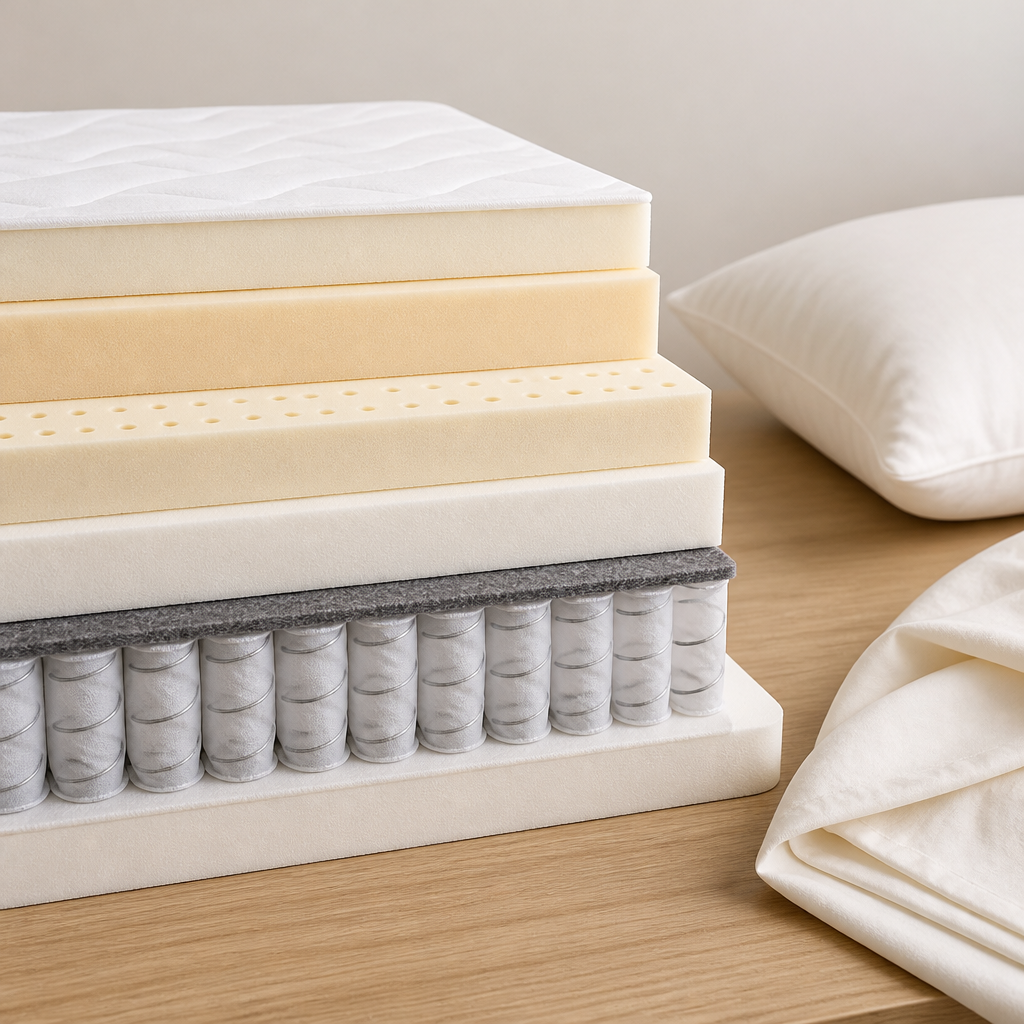
Hybrid mattresses combine a coil or pocketed support core with foam or latex comfort layers. They suit heavier sleepers who want firm support underneath and a cushioned top for the hip. The trap is a thin comfort layer on a firm core, which can feel hard at the hip even when the specifications look generous.
| Mattress Type | Why It Can Help Hip Pain | What to Watch For |
|---|---|---|
| Memory foam | Contours closely and spreads pressure around the hip bone | Can trap heat and feel slow to change positions |
| Latex | Responsive support, easier movement, and better airflow | Can feel firmer at first and is often pricier than basic foam |
| Hybrid | Firm core for lumbar support with a cushioned top layer | A thin top layer can leave the hip feeling hard |
Whichever material you choose, check the comfort layer thickness and the density of the base. A thick comfort layer over a weak base feels soft at first but often sags sooner than expected. A strong base with a modest comfort layer can work better for a hip that needs stability.
Cooling Strategies for Inflammatory Hip Pain
If your hip feels hot or stiff after rest, temperature may be part of the problem. NCOA’s review notes that inflammatory hip pain may respond to a mattress that stays cool at night. A cooler sleep surface is not a medical treatment, but it can make the night more comfortable, and comfort helps you rest.
Why heat builds under a sore hip
A warm body on a hot mattress keeps you in light sleep and makes you shift more often. Each shift briefly relieves pressure but also breaks your sleep. Over a week, that cycle leaves many people more tired and more sensitive to pain. Breathable covers, open-cell foam, and latex cores all help move heat away from the body.
Choosing cooling features that actually work
Cooling claims are easy to make and hard to judge in a showroom. Ask what the mattress does to move heat away from the hip, such as airflow through the core, a breathable cover, or a gel-infused top. Then lie on it for a few minutes with your hand under your hip and notice whether warmth builds. Trust that test more than the label.
Pro tip: If you already sleep hot, avoid a dense all-foam mattress with a thick top layer. Choose a surface with airflow or a cooler core, and use a breathable mattress protector rather than a plastic one.
Choosing and Testing a Mattress Without Pressure
Testing a mattress for hip pain takes longer than the few minutes most stores allow. A bed that feels right on the floor can feel wrong after three nights at home. We encourage customers to test thoroughly and never rush. That is easier to do when no one on staff works on commission, and no one is hovering over your shoulder.
A testing routine that tells you something
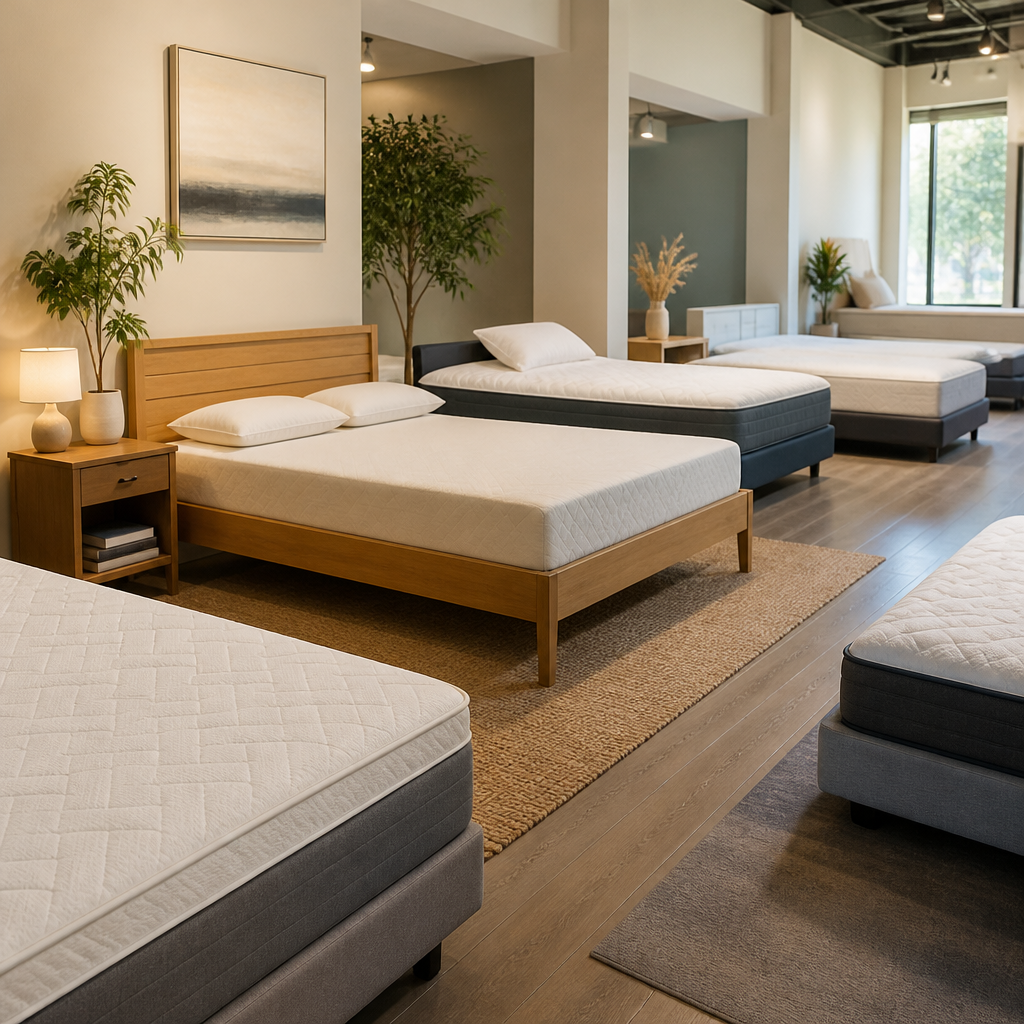
Spend at least ten minutes in each position you use, whether side, back, or stomach. Lie still for two minutes on each side, then sit up and check how your hip and lower back feel. Pay attention to whether you want to shift. Constant shifting in the first minutes usually means the surface is wrong for your body.
How payment plans fit a real budget
Mattresses suited to hip pain span a wide price range. NCOA’s review puts standard queen mattresses in its hip-pain guide at roughly $1,399 to $3,499. Because not everyone can pay that in one step, we offer no-credit-needed payment plans, including a 3-month purchase option available in California. You can choose the firmness your hip needs now instead of settling for a cheaper bed that keeps aggravating the joint.
Our delivery windows are set to the day and time you choose, and most orders are delivered within 24 to 48 hours. That matters with hip pain, because waiting another week on a bed that hurts is the last thing you need. Customers in Orange County and Anaheim can also ask about matching the bedroom around the new mattress through our interior design service.
Pro tip: Ask every seller, in writing, about exchange and comfort policies before you pay. Know exactly what happens if the firmness is wrong after two weeks at home.
Frequently Asked Questions
Is a firm mattress always best for hip pain?
No. A firm mattress tends to help when the pain is orthopedic and the surface keeps the spine supported, but a very firm bed can concentrate pressure on the hip bone, especially for side sleepers. Most people do better with a medium or medium-soft comfort layer over a supportive base.
What firmness is best for side sleepers with hip pain?
For most side sleepers, a medium-soft to medium feel works best. It lets the hip settle slightly while the base keeps the waist from dropping. Test by lying on your side for several minutes and checking whether your hip feels pinched.
Does memory foam help hip pain?
It can. Memory foam contours closely to the hip and spreads pressure, which many side sleepers find helpful. The main risks are heat retention and a base that is too weak to keep the spine supported over time.
Should I use a pillow between my knees?
For side sleepers, yes. A pillow between the knees keeps the top hip from rolling forward and reduces strain on the lower back. It is one of the cheapest changes you can make while you decide on a new mattress.
Can a new mattress fix hip pain completely?
Not on its own. The right mattress can reduce pressure and improve sleep, but it does not treat arthritis, bursitis, or an injury. If pain is severe or getting worse, talk with a doctor or physical therapist before relying on a bed alone.
Can I pay over time if I have limited credit?
Yes. We offer no-credit-needed payment plans, including a 3-month purchase option available in California, so you can choose the firmness that fits your hip rather than the cheapest bed on the floor.
Share with us which side hurts, how you usually lie at night, and what firmness you sleep on now, because those details change the recommendation more than any spec sheet.
We would love your feedback and any insights you would share with others. What perspective would you add?
References
- Expert-tested review of mattresses for hip pain from NCOA
- Guide to choosing a mattress for hip pain by cause and body type
- AARP testing results for mattresses that help hip pain
- Sleep Foundation guide to mattresses for side sleepers