

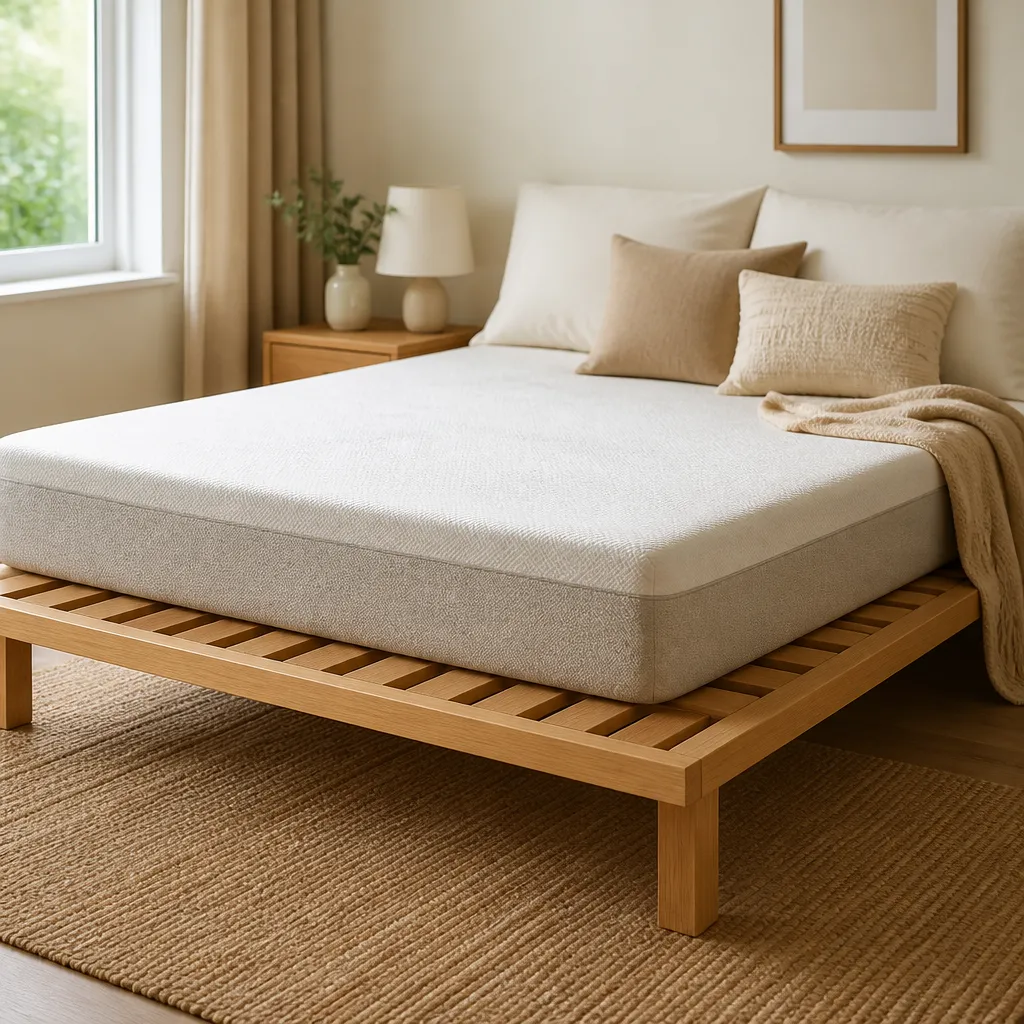
Why Your Mattress Foundation Could Be Keeping You Awake
If you wake up at 3 a.m. with a sore hip, a stiff neck, or the feeling that you never fully settled, the usual suspect is the mattress. In practice, many customers who are sure their mattress is worn out are really sleeping on a tired foundation. The base under the mattress decides how evenly the surface holds your body, how much movement reaches your partner, and whether the center sags into a hollow that rolls you toward the middle all night. If you are searching for a mattress foundation Orange County shoppers can rely on, start with the part of the bed you almost never look at.
Table of Contents
- Quick Takeaways
- What a Mattress Foundation Actually Does
- How a Weak Base Turns Into Nightly Tossing
- Warning Signs Your Foundation Is Failing
- Matching Your Base to Your Mattress Type
- Box Springs, Platforms, and Adjustable Bases Compared
- Shopping for a Base and Mattress Without the Guesswork
- A Weekend Check You Can Do Yourself
- Frequently Asked Questions
- References
Quick Takeaways
| Key Insight | Explanation |
|---|---|
| A sagging base can mimic a bad mattress | A dip in the center pulls your hips and shoulders downward, so you roll toward the middle and shift position several times a night. |
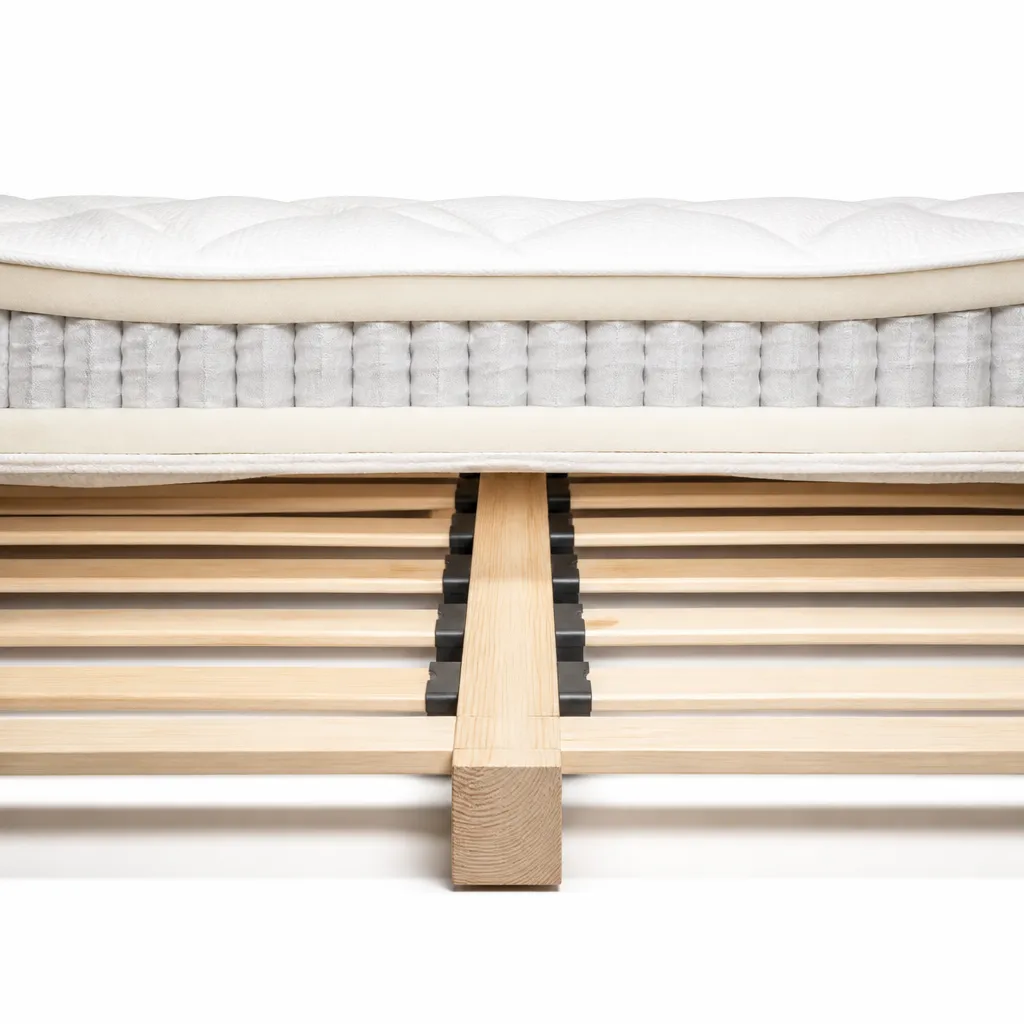
| Check slat spacing before you buy | A common guideline is slats at least about 3 inches wide and no more than about 4 inches apart. Wider gaps let memory foam and latex sink between supports. |
| Every creak is motion | Squeaks and frame movement travel into the mattress and reach a light sleeper, even when the noise seems small. |
| Match the base to the mattress type | Memory foam needs a firm, even surface. Hybrids and latex need a base that does not flex under concentrated weight. |
| Height changes edge support | A very low base can leave the edges feeling unsupported when you sit down or sleep close to the side of the bed. |
| Buy the base and mattress as a set | Matching both parts prevents the common mismatch that leaves sleepers blaming the wrong component of the bed. |
What a Mattress Foundation Actually Does
A mattress foundation is the structure that carries the mattress and supports it from below. Traditional box springs, slatted platforms, solid panels, and adjustable power bases all fall into this category. The job sounds simple, but the foundation controls three things that directly affect your sleep: how flat the sleep surface stays under load, how much the bed moves when someone shifts position, and how high the mattress sits off the floor.
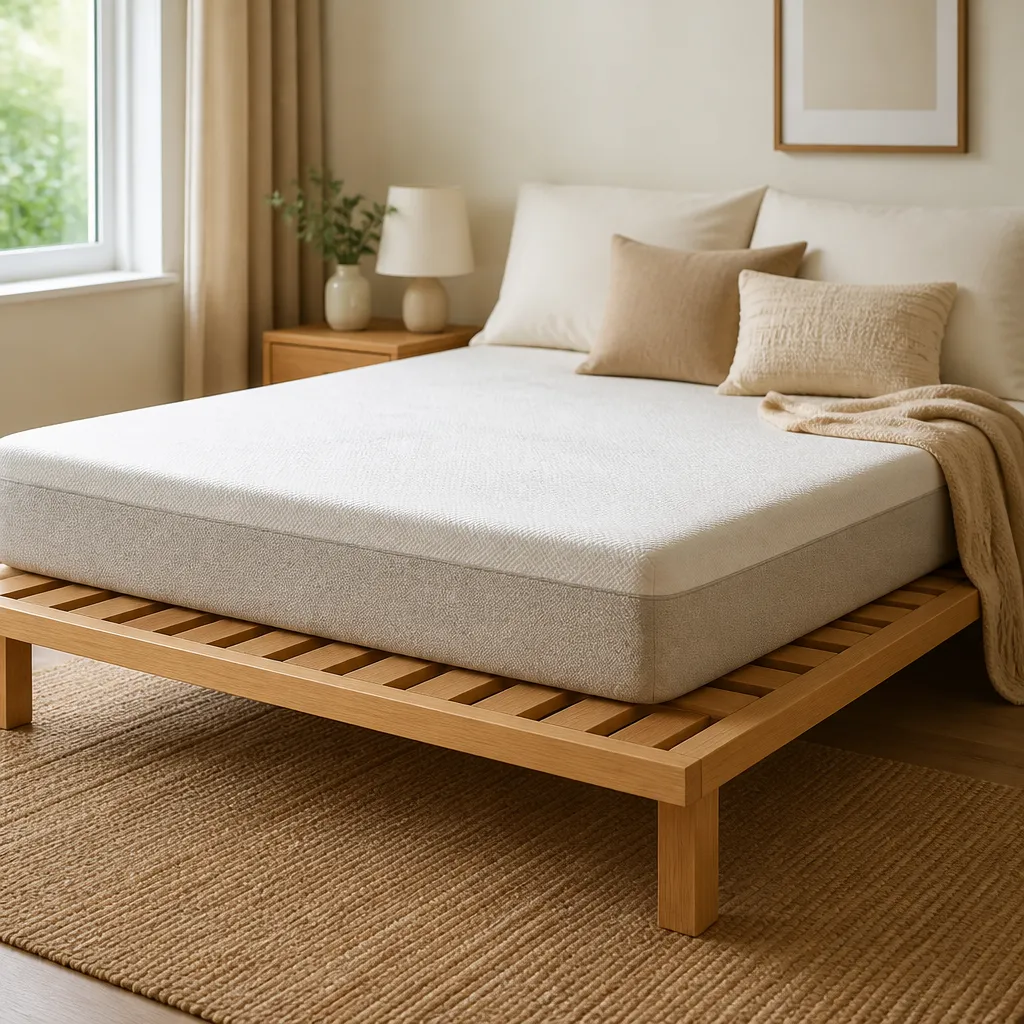
Most shoppers think of the mattress as the comfort layer and the foundation as an invisible box underneath. That split is useful when you are comparing prices, but it hides the fact that the two parts work as one system. A premium mattress placed on a sagging or uneven base will not perform the way the tag promises. We regularly see the mattress blamed for problems that start a few inches lower.
Pro tip: Before you replace a mattress, lift one corner and look at the support underneath. Missing slats, cracked wood, and a dip near the center are common and fixable problems, and they cost far less than a new mattress.
How a Weak Base Turns Into Nightly Tossing
Tossing and turning is rarely random. Most of the time, your body is responding to a surface that is pushing back unevenly, and it keeps searching for a position that feels stable. A failing base is one of the most overlooked reasons this happens.
The Center Sag That Rolls You Inward
When the middle of a base drops, the mattress follows. Your hips and shoulders settle into the hollow, and your body tends to drift toward the lowest point. Many sleepers wake up on the side of the bed closest to the center without remembering that they moved.
The sag usually develops slowly. A base that was level on delivery can lose its shape after years of weight concentrated in the same spots, especially on platforms with too few center supports. Because the change is gradual, the mattress gets blamed first.
Motion Transfer From a Flexing Frame
A foundation that flexes or rattles sends motion straight into the mattress. When your partner turns over, the vibration travels through the frame and across the surface, which is why one person’s restlessness can wake the other. Motion isolation is one of the main reasons couples upgrade their bases, and it depends heavily on how rigid the base is under load.
Pro tip: Sit on the edge of the bed, then shift your weight toward one corner. If you feel the frame rock or hear a knock, the base is moving under load, and that movement will reach your sleep surface every night.
A base that moves when you do will keep someone awake, no matter how expensive the mattress on top of it is.
Warning Signs Your Foundation Is Failing
You do not need special tools to diagnose most base problems. A few minutes of inspection will usually show whether the foundation is contributing to your sleep problems, and it helps to check before you spend money on a new mattress.
Visible Dips and Uneven Surfaces
Stand at the foot of the bed and sight along the top of the mattress as if you were lining up a shelf. A curve or valley in the surface means the support beneath has lost its shape. Compare the middle to the edges, because a center that sits lower than both sides is the classic pattern.
Squeaks, Knocks, and Shifting Frames
Squeaks usually come from joints and fasteners that have loosened over time. Tighten the bolts and brackets, then climb into bed and see whether the frame slides or shifts. If the bed walks across the floor when you get in, the frame is not holding its position, and the mattress will not stay put either.
Waking Up Stiff on One Side
Pay attention to which side of your body feels stiffer in the morning. If the discomfort consistently matches the side of the bed where the sag sits, the base is a strong suspect. Many customers describe neck or hip discomfort that eases after a base is repaired or replaced. Results vary, and persistent pain should be checked by a clinician.
Matching Your Base to Your Mattress Type
Different mattress materials respond to support in different ways. A base that works well for a spring mattress can make a foam or latex layer feel unstable, and a base that suits a memory foam bed may not give a hybrid enough firmness at the edges.
Memory Foam Needs a Firm, Even Surface
Memory foam conforms closely to your body, so any unevenness in the base shows up as pressure points. A gap between slats lets the foam sink into the opening, and that creates a bump you can feel through the night. Solid panels or closely spaced slats keep the surface level, which is why memory foam buyers should inspect the base as carefully as the foam itself.
Latex and Hybrid Layers Need Dependable Support
Latex is responsive and sleeps cool when air moves freely through the bed. An open slatted platform supports that airflow, but only if the slats are spaced correctly and the frame is rigid. Hybrids combine springs and foam layers, so the base has to stay firm under concentrated weight at the hips and shoulders, where most people put the most pressure.
Slat Spacing and Width
Slat width and spacing are simple to measure and easy to overlook. Slats that are too narrow or spaced too far apart leave the mattress without dependable support. Check your mattress manufacturer’s instructions, and if the gap is wider than the guideline, add a center support or replace the slats before you bring the new mattress home.
Box Springs, Platforms, and Adjustable Bases Compared
Each foundation type solves a different problem, and each one has a failure pattern that is worth knowing before you buy. The right choice depends more on how you sleep and what your bedroom looks like than on any single feature.
| Foundation Type | Where It Helps Sleep | Where It Falls Short |
|---|---|---|
| Traditional box spring | Familiar height and a reliable surface for many spring and hybrid mattresses | Springs can sag or loosen with age, and the hidden internal structure is hard to inspect |
| Slatted or solid platform | Rigid, low-profile support that works well with memory foam and latex when slats are correctly spaced | Wide gaps and flexing side rails cause dips, and a weak center support lets the surface drop |
| Adjustable power base | Lets you raise the head or feet to ease pressure and changes the way the mattress conforms to your body | Motor and joint quality vary widely, and extra movement can transfer to a partner if the frame is not stable |
The Sleep Foundation’s testing criteria include edge support, ease of movement, pressure relief, and temperature control, which are the same qualities a base affects. Those criteria are a useful checklist when you compare options. A strong base should keep the edges firm, let you move without disturbing the surface, and allow air to circulate.
Consumer Reports recently lab tested ten popular adjustable bed frames, which shows that build quality varies a lot even among well-known designs. If you are considering an adjustable base, look for a rigid frame, a sturdy motor mount, and clear information about weight limits before you commit.
Shopping for a Base and Mattress Without the Guesswork
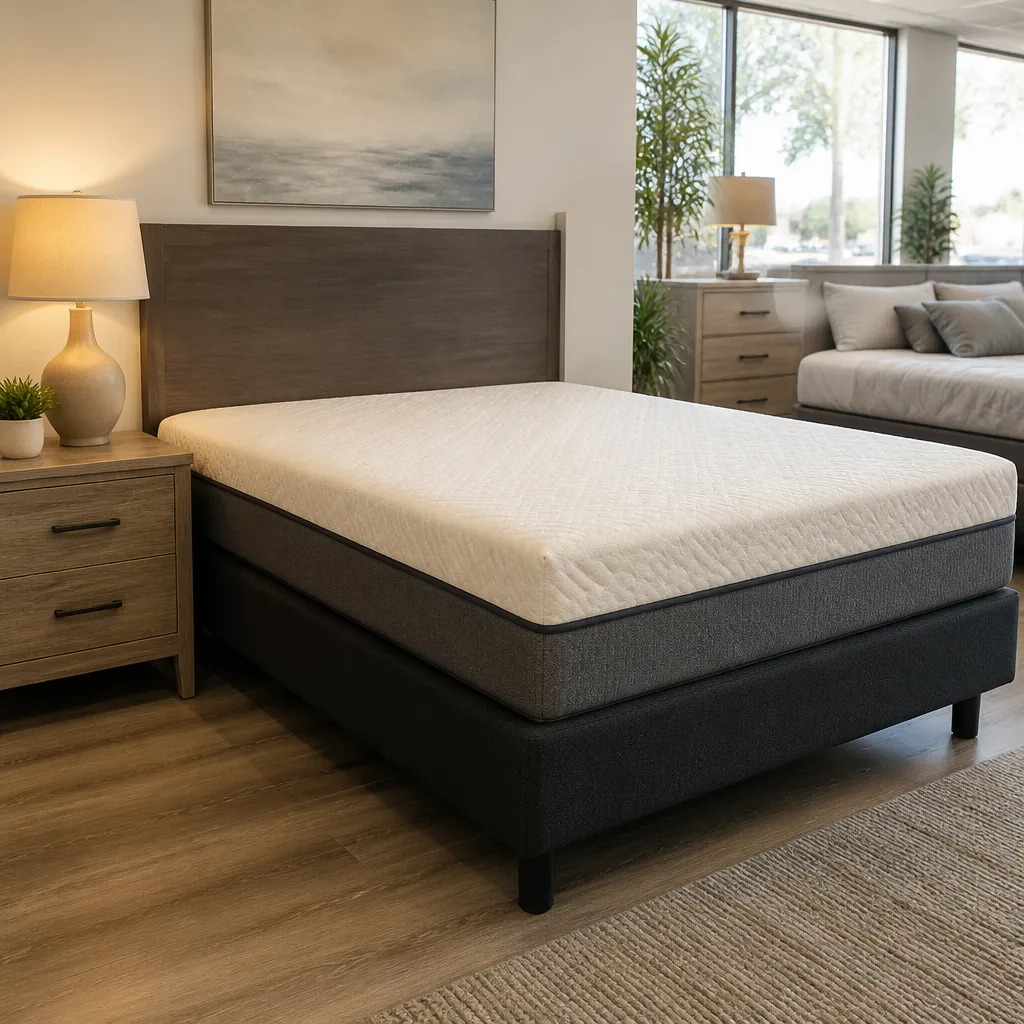
Many shoppers in Orange County and Anaheim buy the mattress first and the base later, and that order is where mismatches begin. Choosing both at the same time lets you confirm that the height, support, and dimensions work together before anything is delivered.
Buy the Base and Mattress as a Matched Set
Our showroom sells the same top-selling mattress and furniture styles that major retailers carry, at a fraction of the cost, and we help customers choose the base and mattress together. There are no commissioned sales associates pushing a particular product, so the conversation stays focused on what your body needs. You get personal attention and product knowledge without pressure to buy.
No-Credit-Needed Payment Plans in California
A complete bedroom setup can be a real expense, and not every household has established credit. We offer no-credit-needed payment plans, including a 3-month purchase option available in California. Ask the team which options apply to your full order, so you can plan your budget before the delivery date is set.
Delivery Windows and Setup
Waiting around for a delivery that never arrives is one of the most frustrating parts of replacing a bed. We schedule exact day-and-time delivery windows, and most orders are typically delivered within 24 to 48 hours. If you are furnishing a bedroom from scratch, our interior design help can plan the layout around the bed so the foundation, mattress, and furniture work together.
A Weekend Check You Can Do Yourself
If you suspect your base is part of the problem, you can run a simple check over a weekend. The goal is to separate a tired foundation from a mattress that truly needs replacing, and that distinction can save you a lot of money.
Strip the Bed and Inspect
Remove the mattress and check every slat, rail, and center support. Look for cracks, loose joints, and any wood that has bowed. Mark the spots where the surface looks lower, because those areas usually line up with the spots where you notice pressure at night.
Test the Frame Under Load
Put the mattress back on the base and lie down on your usual side. Ask a partner to sit at the edge, then move gently across the surface. If the frame rocks, squeaks, or shows a dip that changes your position, the base needs work before the mattress can perform as intended.
Decide Whether to Repair or Replace
Tightening hardware and adding a center support can solve a surprising number of problems. If the frame is cracked, the slats are broken, or the surface has permanently bowed, replacing the base is the more reliable fix. Either way, make the decision based on what you found in the inspection, not on a guess.
Frequently Asked Questions
Can a mattress foundation really cause tossing and turning?
Yes. A base that sags, flexes, or has gaps between supports changes how the mattress holds your body, and that change often pushes you to shift position during the night. Because the problem develops gradually, many sleepers blame the mattress before they check the base.
How do I know if my box spring is the problem?
Look for a visible dip in the center, uneven firmness across the surface, and squeaks or movement when you sit on the edge. If the surface looks level but you still wake up sore on one side, the mattress may be the cause, so it helps to test the base separately.
Do memory foam mattresses need a special foundation?
They need a firm, even surface rather than a particular brand of base. Solid panels or closely spaced slats are the most dependable choices, because wide gaps let foam sink between supports and create pressure points.
Is a box spring still needed with a platform bed?
Not always. A rigid platform with correct slat spacing can support many mattresses without a box spring. Check the mattress manufacturer’s requirements first, because some warranties depend on using a specific type of foundation.
Do you offer payment plans for a foundation and mattress bought together?
We offer no-credit-needed payment plans, including a 3-month purchase option available in California. Ask the team in Orange County or Anaheim which plan fits your full bedroom order before you finalize your choice.
Tell us what you noticed about your own bed, whether a base repair helped your sleep or the problem turned out to be something else entirely.
We would love your feedback and any insights you would share with others. What perspective would you add?
References
- Sleep Foundation guides on sleep quality and mattress testing criteria
- Consumer Reports lab test results for adjustable bed frames
- Community discussion of owner experiences with adjustable bases