

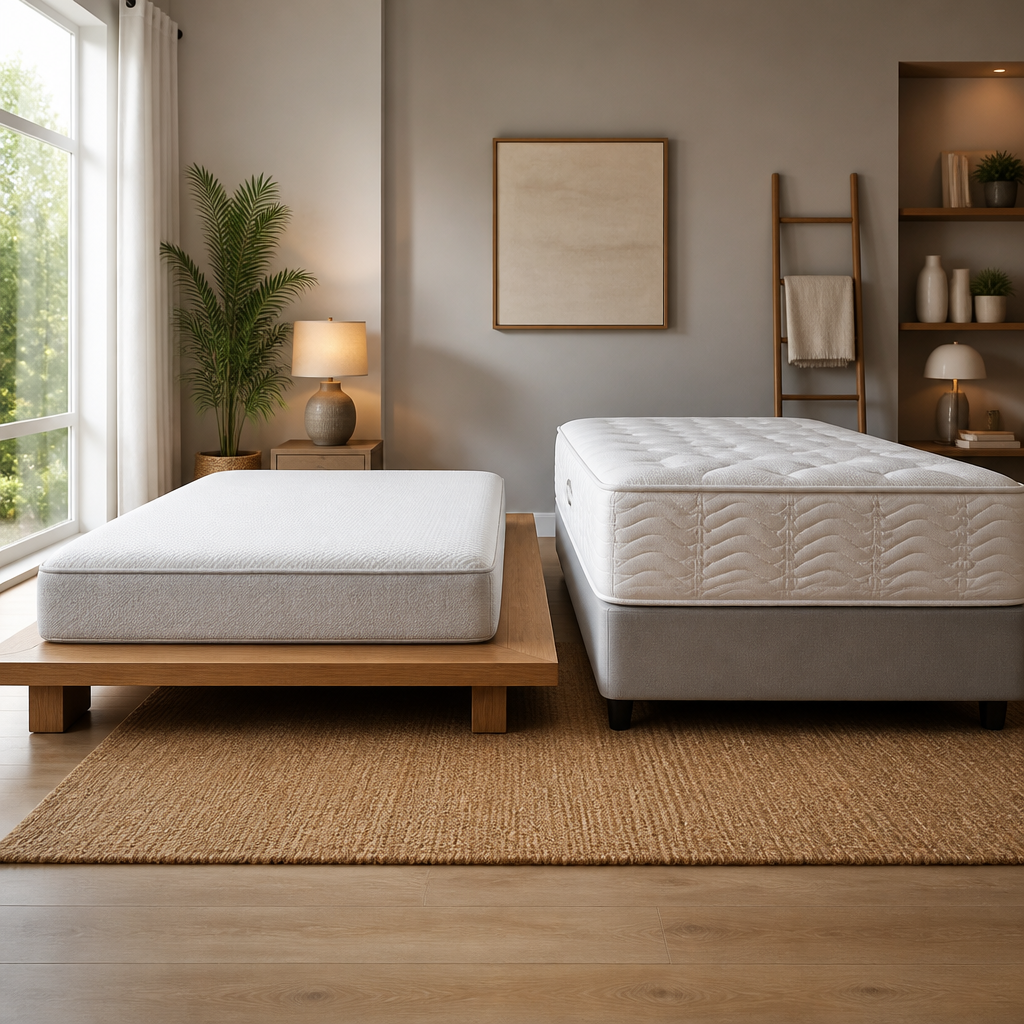
Platform Bed vs Box Spring: Which Base Fits Your Mattress
Your mattress can be excellent and still leave you stiff every morning if the base under it is wrong. That is the core of the platform bed vs box spring question, and it comes up constantly with shoppers in our Anaheim showroom. Both options hold up a mattress, but they do it in very different ways. They change the height of your bed, how the mattress flexes, and whether your warranty stays valid. This guide explains what each base does, where each one fails, and how to match a base to your mattress and bedroom style without overspending.
Table of Contents
- Quick Takeaways
- What a Box Spring Actually Does
- How a Platform Bed Supports a Mattress
- Warranty and Foundation Requirements
- Choosing a Base for Your Bedroom Style
- Side-by-Side Comparison of Bed Bases
- Buying a Base on a Budget in Orange County
- Common Mistakes When Pairing a Base and Mattress
- Frequently Asked Questions
- References
Quick Takeaways
| Key Insight | Explanation |
|---|---|
| Check your mattress warranty first | Many manufacturers specify the foundation they accept. Confirm whether a box spring, a slat system, or a solid deck is allowed before you buy. |
| Measure total bed height | A box spring adds noticeable height. Measure from the floor to the top of the mattress you plan to buy, then add the base height to see where you will land. |
| Slat spacing decides whether a platform works | Wide gaps let the mattress sag between slats. Choose closely spaced slats with a center support rail, or a solid deck for foam and latex. |
| Foam and latex need flat, even support | Both materials perform best on a firm, level surface. A worn box spring with dips will show up in the mattress surface. |
| Match the base to the room, not just the look | A tall box spring suits traditional rooms with a skirt. A low platform suits modern rooms and smaller bedrooms where clearance matters. |
| Replace an old base when you replace the mattress | Bent wires or sagging coils change how the new mattress feels. Budget for a base at the same time so the new mattress is not undermined from day one. |
What a Box Spring Actually Does
A box spring is a foundation built from a wood frame wrapped around a grid of coils or a wire mesh, covered in fabric. Its job is to take weight off the bed frame and give the mattress a slightly flexible surface underneath. For decades it was the default base in American bedrooms, so many people still assume a bed is incomplete without one.
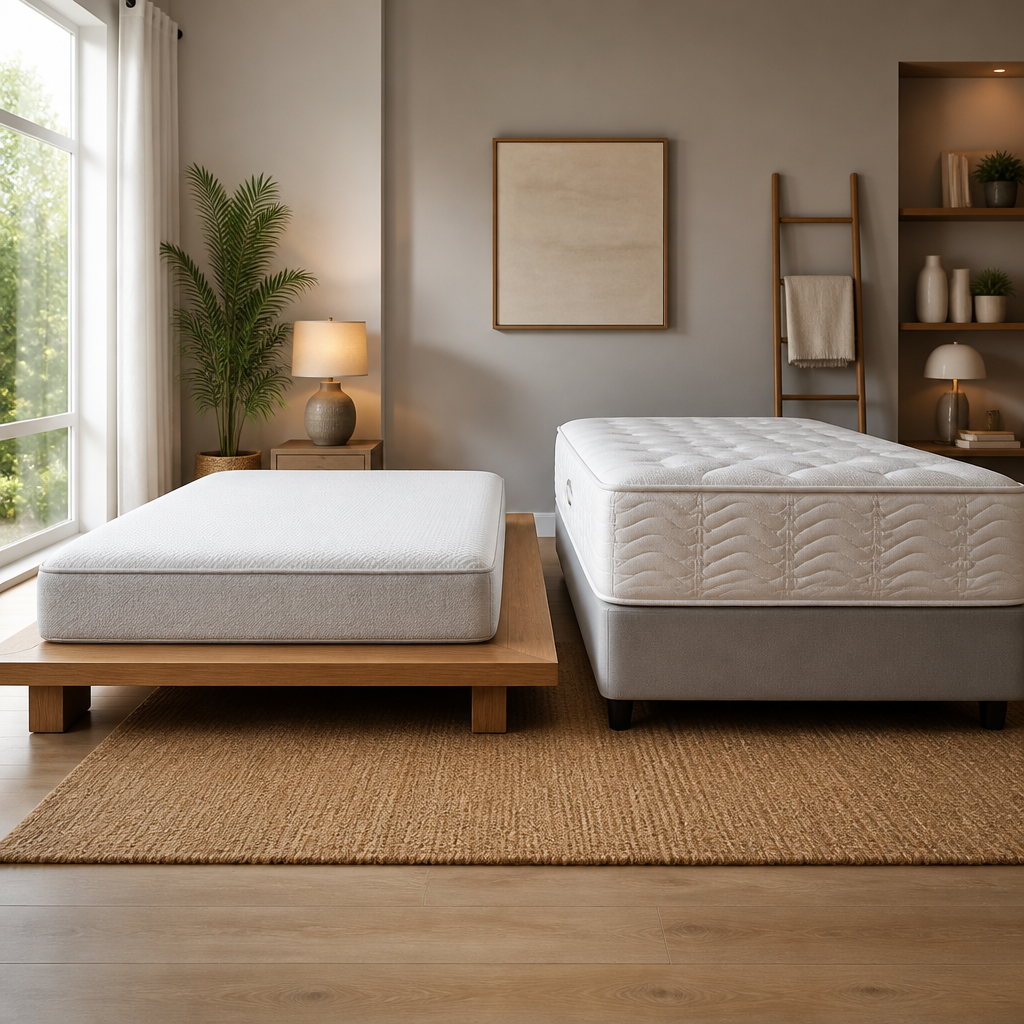
In practice, the box spring does two jobs at once. It cushions the mattress so pressure spreads across more points, and it raises the sleep surface to a comfortable height. That added height is part of why older bedroom sets were designed around it.
How the Coil Layer Absorbs Load
The springs in a box spring compress under body weight and return to shape when you get up. A good unit with a dense, evenly spaced grid feels stable under a memory foam mattress. A worn one, with bent wires or sagging coils, creates a dip in the center that you can feel in your lower back after a few weeks.
A common mistake is treating the box spring as a simple base rather than part of the sleep system. When the springs lose tension, the mattress loses the support it was built to receive, even if the mattress itself is still in good shape.
Where a Box Spring Still Makes Sense
Box springs remain the right call in a few situations. If you own a traditional metal frame with a grid designed for a box spring, or a vintage bed built around a standard foundation height, a matching box spring keeps the frame, mattress, and sleep height in balance. Some sleepers simply prefer the bounce and height they grew up with.
They are also harder to find than many people expect. True spring foundations are less common than they used to be, so finding a matching unit for an older frame can take real searching. Measure the frame before you shop, and bring the dimensions with you.
How a Platform Bed Supports a Mattress
A platform bed replaces the box spring with a flat, rigid surface. That surface is usually a solid panel of wood or engineered board, or a set of slats running across the frame. The mattress sits directly on top, with no springs between the two.
This design appeals to budget shoppers for a practical reason. A platform usually costs less than a frame plus a box spring, and it lowers the overall height of the bed, which can make a bedroom feel more open. The trade-off is that the mattress now depends entirely on the surface beneath it.
Solid Deck Versus Slat Systems
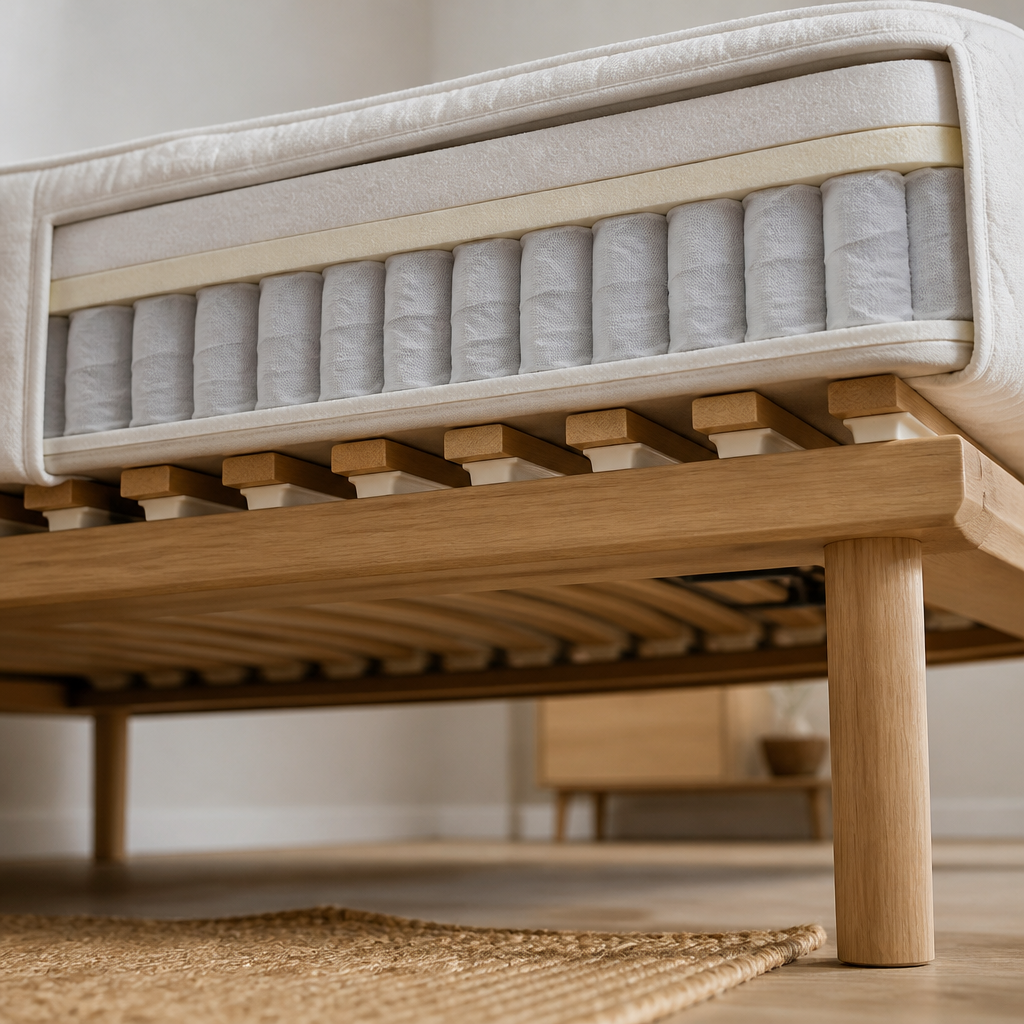
A solid deck gives the most uniform support, which is why foam and latex sleepers often prefer it. There is no gap for the mattress to sink into, and the surface does not flex. Slat systems cost less and let air move under the mattress, which helps with heat, but they only work when the slats are spaced and built correctly.
People who move from a box spring to a platform often notice a firmer feel right away. That firmness is not a flaw in the platform. It is the mattress finally sitting on the flat surface it was designed for.
Why Slat Spacing Decides Your Support
Slat spacing is the detail buyers overlook most often. When slats sit too far apart, the mattress sags between them, and the sag grows over time. Most manufacturers publish a maximum gap, so check it against the mattress you are buying before you order the frame.
Look for slats that sit close together, a center rail for added support, and a frame that stays solid when you sit on the edge. If the frame wobbles under that test, it will not hold a couple’s combined weight for years of nightly use.
Pro tip: Ask the seller to confirm the maximum slat gap in writing before you buy a slat platform. A verbal assurance is easy to forget, and the written spec protects you if the mattress sags later.
Warranty and Foundation Requirements
Many mattress warranties depend on the foundation you use. Manufacturers often describe a required base, such as a solid deck or evenly supported slat system, and sagging caused by an unsupported base may not be covered. Before you buy either option, read the warranty and confirm which base types it accepts.
This is where customers get surprised. A buyer chooses a platform for its look, then discovers the warranty asks for a supportive foundation with a specific spacing. The fix is simple, but it has to happen before delivery, not after the first dip appears.
Reading the Fine Print Before You Buy
Look for wording about “foundation,” “base,” or “support system.” If the warranty names a box spring, a platform with slats, or a solid deck, follow it exactly. Keep a receipt that lists the base you bought, since some claims ask for proof of what was installed underneath.
If the paperwork is unclear, ask the seller in writing which foundation they recommend for that model. A short written answer protects you far more than a comment on the showroom floor.
Foundation Height and Mattress Thickness
Mattress thickness changes how a base feels. A deep memory foam or hybrid mattress sits higher, so pairing it with a tall box spring can make the bed hard to get in and out of. A thinner latex mattress on a low platform may sit closer to the floor than you want.
Independent guides such as the back pain roundup from NAPLab, which says it has tested more than 470 mattresses, are useful for checking how a model is rated before you commit. Pair those ratings with your own measurements of height and frame fit, since a high score does not guarantee the base under it is right.
Choosing a Base for Your Bedroom Style
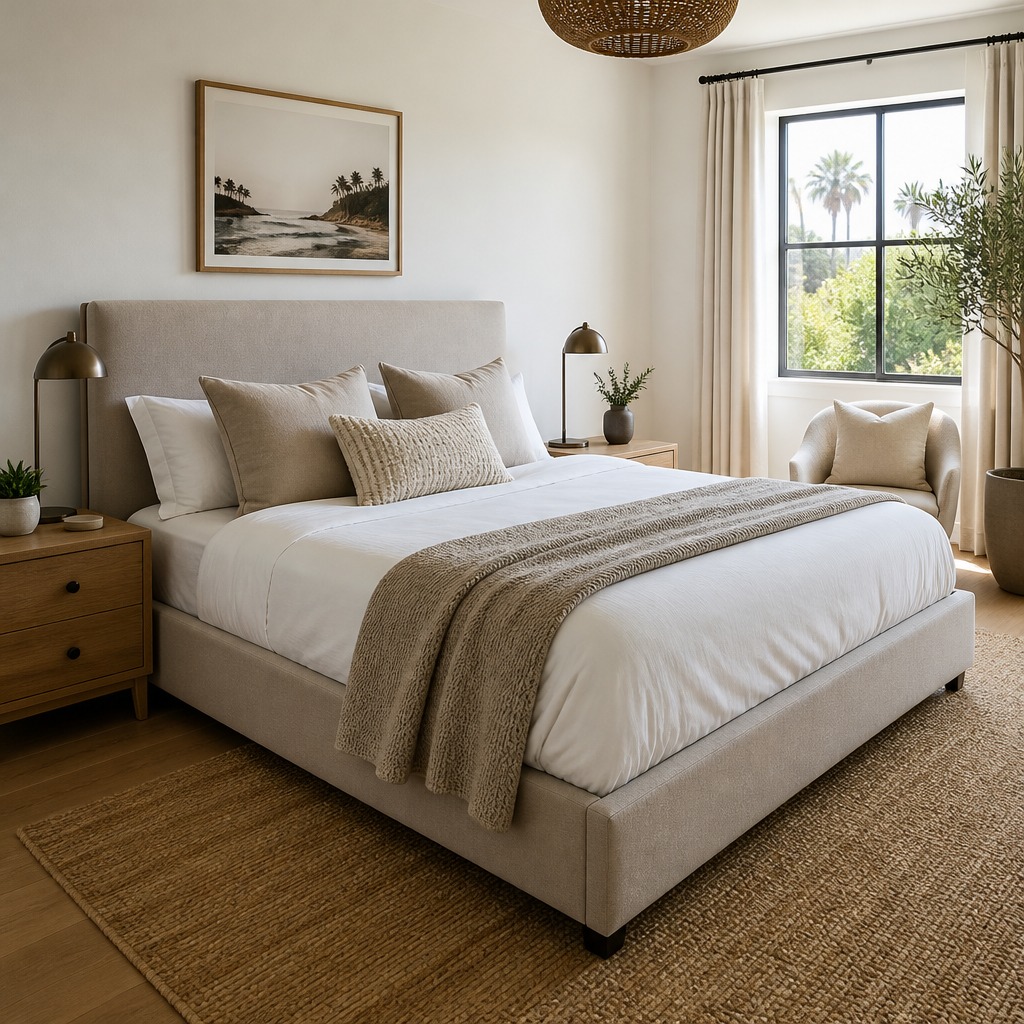
The right base should look like it belongs in the room as well as support the mattress. Bedroom style often changes the answer more than buyers expect. A platform reads clean and modern, while a box spring with a fabric skirt suits a more traditional look.
Start with the headboard and the rest of the bedroom furniture. Low-profile pieces pair well with a platform, while a tall bed with an ornate headboard often needs the extra height a box spring provides.
Modern and Minimal Rooms
In a modern bedroom, a platform with a clean rail and a simple headboard keeps the lines low and uncluttered. Solid wood and upholstered platforms both work here. Pair them with a latex or foam mattress that has a firm, even feel, since the platform makes the mattress surface very visible.
Avoid stacking a platform on top of a box spring in this style. The extra height looks awkward, and the bed loses the grounded profile that makes a minimal room feel calm.
Traditional Rooms With Skirts and Headboards
Traditional bedrooms built around a metal frame or a turned wood headboard usually look right with a foundation that matches the frame height. A skirt hides the base and keeps the room visually balanced. Replacing the foundation on an existing frame is often the cheapest way to refresh the bed without buying a full set.
If the frame was built for a standard foundation, a platform may leave a gap at the rails or make the headboard look too low. Measure the frame before you change anything.
Smaller Bedrooms Where Clearance Matters
In a small bedroom, a low platform helps the room feel bigger because you see more floor and wall. It also makes it easier to walk around the bed in tight spaces, which matters in the compact condos and older apartments common across Orange County and bedroom furniture in Anaheim.
Consider storage too. A platform with drawers or a lift-up deck gives you usable space without adding a separate dresser, which is a real advantage when floor area is limited.
Side-by-Side Comparison of Bed Bases
Before you choose, it helps to see the three common setups next to each other. Each one suits a different mattress and room, and each has a failure point that shows up when it is used in the wrong setting.
| Base Type | Best Fit | Main Drawback |
|---|---|---|
| Traditional box spring on a matching frame | Classic bedrooms, vintage frames, sleepers who want extra height and bounce | Adds height, and worn coils create dips that undermine the mattress |
| Platform bed with closely spaced slats | Modern bedrooms, budget setups, memory foam and hybrid mattresses that need firm support | Wide slat gaps or weak center support lead to sagging and can complicate warranty claims |
| Solid deck platform | Latex mattresses, small rooms, sleepers who want the flattest and most even surface | Less airflow, so warm sleepers may run hotter than on a slat system |
In practice, the slat platform is the workhorse for most budget buyers. It is affordable, easy to move, and supportive when the slats are spaced correctly. Most customers who want a clean look and a reasonable price end up here.
The solid deck wins on feel, and the slat system wins on airflow. If you sleep hot, choose slats with a breathable mattress top. If you want the most even surface for latex, a solid deck is the better match, and it is worth the small difference in cost.
Buying a Base on a Budget in Orange County
Buying the right base does not have to strain your budget. Many shoppers in Orange County and across California think of the base as an afterthought, then overspend on a mattress that sags because the foundation was weak. Plan the base and mattress together so each one supports the other.
If you are furnishing a whole bedroom, our interior design help can match the base to the rest of the room, so the bed, nightstands, and headboard look like they were chosen together.
Using a No-Credit-Needed Payment Plan
Our no-credit-needed payment plans include a 3-month purchase option available in California. That lets you bring home a mattress and a matching base without waiting until you have saved the full amount or qualified for traditional financing.
Use the plan to buy the base and mattress as a pair. Buying a supportive base at the same time as the mattress prevents the common situation where a new mattress is placed on an old, sagging foundation.
Delivery Windows and Assembly
Platform beds often arrive in several pieces, so plan for assembly. Our delivery is set to an exact day and time window, and most orders are typically delivered within 24 to 48 hours. Clear a path to the bedroom before the delivery window opens, and check that the frame will fit through doorways and hallways.
Pro tip: Measure the bedroom doorway, hallway turns, and any stairwell before you order a solid deck platform. A deck that cannot be carried through the entrance is an expensive mistake, and a slat system is easier to move if you are short on space.
Common Mistakes When Pairing a Base and Mattress
Most problems with a bed come from the pairing, not from either part on its own. The same mattress can feel excellent on one base and disappointing on another. Knowing the common mistakes makes it easier to avoid them.
The mattress can only be as supportive as the surface it rests on.
Keeping an Old Base Under a New Mattress
This is the most frequent mistake we see. A customer buys a new mattress, keeps a box spring that has worn coils, and then wonders why the new bed feels soft in the middle. The problem is the foundation, not the mattress. Inspect the base for sagging, broken wires, and loose staples before you put a new mattress on it.
Ignoring Slat Spacing on a Budget Frame
Budget platform frames sometimes come with wide slat gaps that look fine in a showroom but fail after months of use. A frame that flexes when you sit on the edge is a warning sign. Check the spacing, the center rail, and the joinery before you buy, not after the first sag.
Pro tip: Bring a tape measure to the showroom and check the slat gaps against the mattress manufacturer’s guidance. Asking a salesperson to explain the spacing in their own words is a good test of how much they know about the product.
Frequently Asked Questions
Is a platform bed as supportive as a box spring?
It can be, as long as the platform has closely spaced slats or a solid deck and the mattress is designed for that surface. A box spring is only as supportive as the condition of its coils, so an old unit can be worse than a good platform.
Can I put a memory foam mattress on a platform bed?
Yes, and many foam sleepers prefer a firm, even surface. Choose a platform with closely spaced slats or a solid deck, and confirm that the mattress warranty accepts that base.
Do I need a box spring with a platform bed?
Usually not. Many platforms are designed to be used without one, but you should check the frame instructions and the mattress warranty before you decide.
Will a platform bed make me sleep hotter?
It can. A solid deck traps more heat than a slat system, so warm sleepers often do better with slats and a breathable mattress top. Airflow matters more than the base type alone.
Can I pay for a base over time without credit?
Yes. Our no-credit-needed payment plans include a 3-month purchase option available in California, so you can spread the cost of a base and mattress without a traditional credit requirement.
How quickly can a base and mattress be delivered?
Most orders are typically delivered within 24 to 48 hours, and we set delivery to an exact day and time window. Clear the bedroom and check doorway widths before the delivery window opens.
Tell us about your current base, the mattress you are considering, and the bedroom you are furnishing, because real experiences like yours help us give sharper advice to shoppers in Orange County and Anaheim.
References
- Objective mattress testing and back pain buying guide from NAPLab
- National Council on Aging guide to mattresses for back pain