

How to Measure Your Bedroom for Furniture Before You Buy
A common version of this story starts with a delivery crew carrying a dresser up the walk, turning it toward the bedroom door, and finding that it does not fit. Learning how to measure bedroom for furniture before you order takes about thirty minutes and a tape measure, and it prevents the kind of mistake that leads to a return or a rearranged room. In Orange County, where many homes have compact bedrooms and narrow hallways, the margin for error is smaller than most shoppers expect. This guide walks through the room, the doorways, the bed clearance, and the delivery route, so the piece you choose is the piece that actually fits.
Table of Contents
- Quick Takeaways
- Measure the Room Itself
- Doors, Windows, and the Delivery Route
- Bed and Clearance Math
- Dressers, Nightstands, and Storage Pieces
- Measuring Approaches Compared
- Sketching a Floor Plan That Works
- Common Measuring Mistakes
- Payment and Delivery Timing After You Measure
- Frequently Asked Questions
- References
Quick Takeaways
| Key Insight | Explanation |
|---|---|
| Measure walls at floor level | Baseboards and trim change how a wall looks from above. Record each wall corner to corner at the floor line, where furniture actually sits. |
| Use the narrowest point on the route | Check the clear width of the bedroom door, hallway, entry, and any stair or elevator on the way in. The tightest spot decides what gets through. |
| Plan a 36-inch main walkway | A 36-inch path lets you walk through a bedroom without turning sideways, so treat it as the minimum for daily routes. |
| Leave 24 to 30 inches around the bed | This is a practical starting range for clearance on the sides and foot of the bed, so you can make it and move around it. |
| Mark footprints with painter’s tape | Outline the bed, dresser, and door swing on the floor. Walk the gaps with the door open to see what actually fits. |
| Measure open dimensions, not just closed ones | Drawers, wardrobe doors, and lids add depth when they open. Write both numbers down so the open size is never a surprise. |
| Use the real mattress height | A thick memory foam mattress raises the sleeping surface, which changes the right height for a nightstand. Measure the mattress top itself. |
Measure the Room Itself
Start with the room, not the furniture catalog. A tape measure of at least 3 or 5 meters covers most bedrooms in a single pass, and a notepad with one section per wall keeps the numbers from getting mixed up.
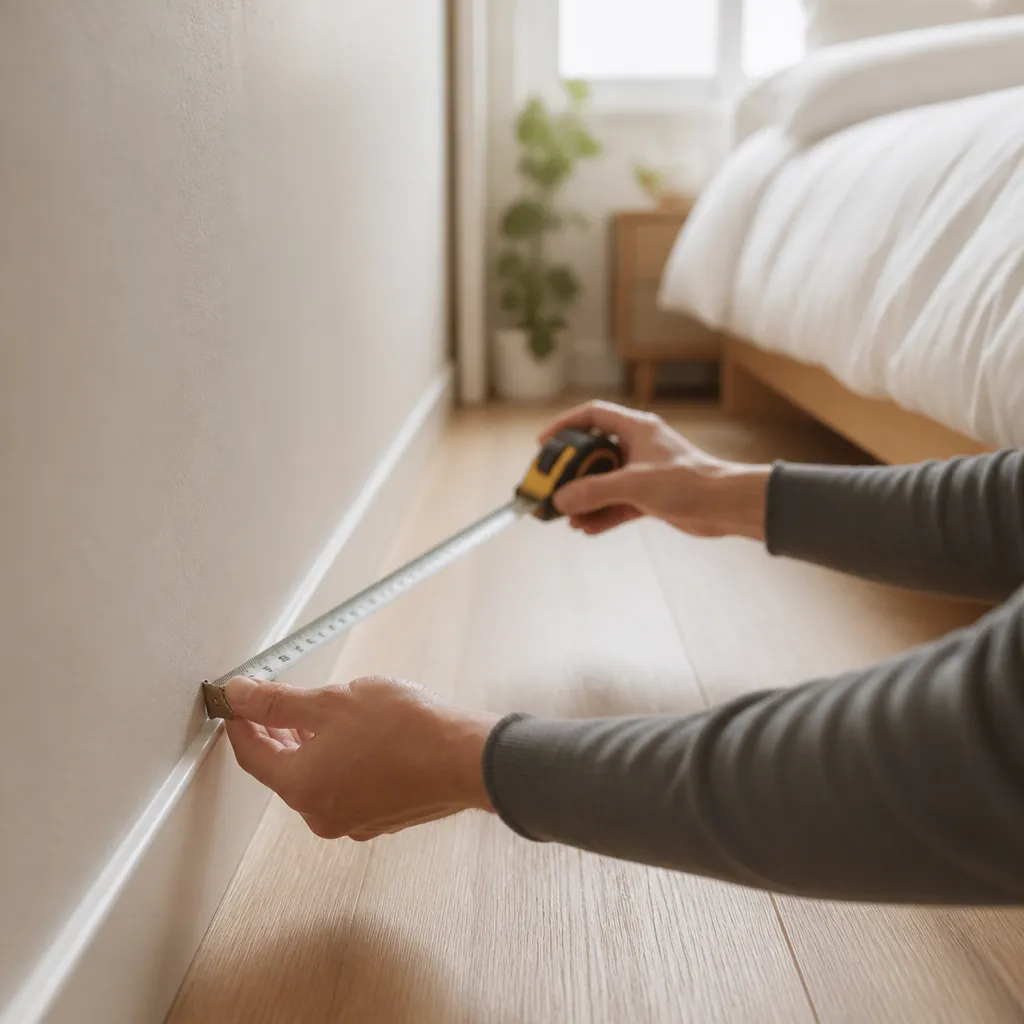
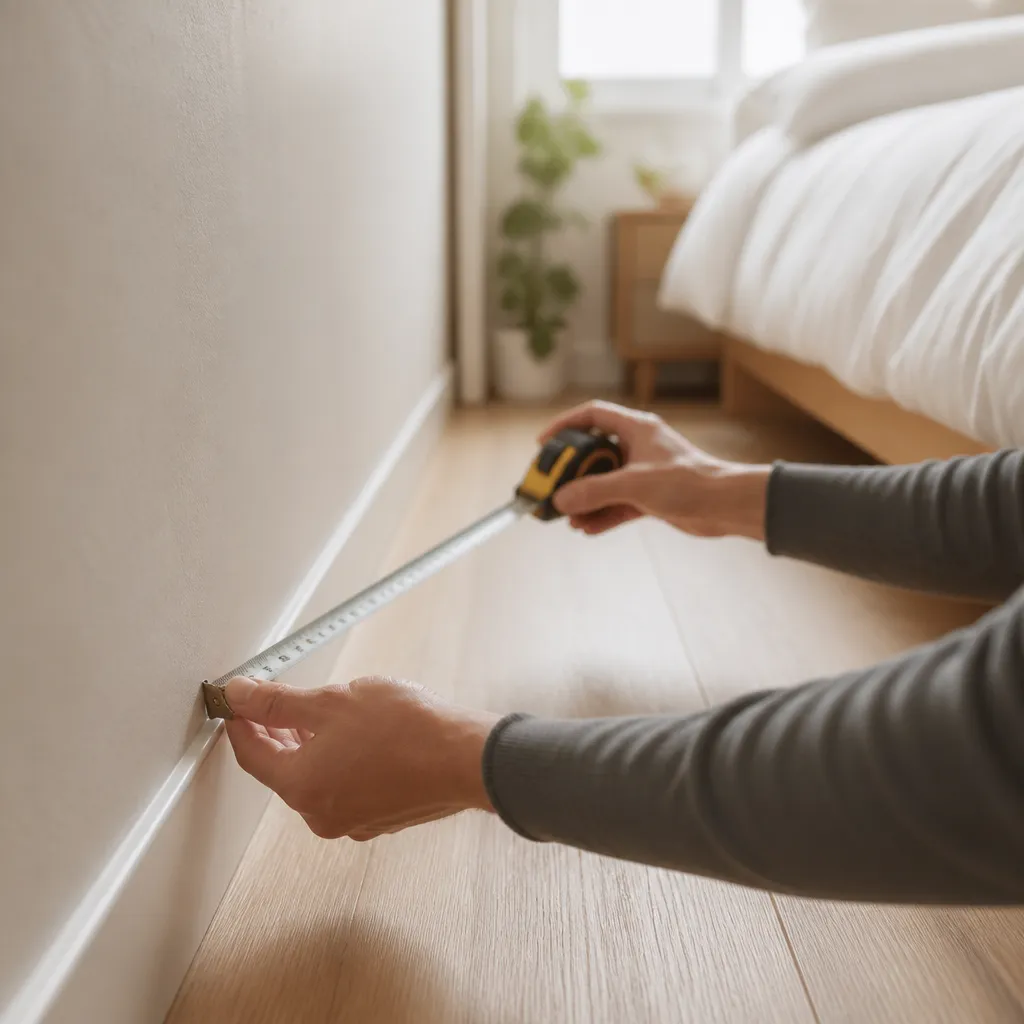
Measure each wall from corner to corner at floor level. Baseboards, window trim, and radiators can make a wall look longer or shorter when you eyeball it from the doorway, and the floor line is the surface your furniture actually sits against.
Wall Lengths and Corners
Walls in many homes are not perfectly straight or square, so measure each wall in two spots and record the shorter figure as your working length. That gives you room to spare rather than a dresser that fits only on paper. Check the corners too, because an out-of-square corner can steal a few inches from a headboard pushed tight against it.
Mark window locations and their sill heights as well. A low window can block a headboard or a nightstand, and a dresser placed under a sill may not clear the trim.
Ceiling Height and Tall Pieces
Measure from the floor to the lowest ceiling point in the room, including ceiling fans, light fixtures, and any beam. Tall headboards, wardrobes, and bookcases need that number, and shoppers often discover a low fixture only after the piece is already standing in the bedroom. Note the height of any hanging lamp over the bed, since that is where a tall headboard will compete for space.
Doors, Windows, and the Delivery Route
The bedroom door is only the last checkpoint. Every piece has to travel through the entry, down the hall, and around any corners on the way in, so measure those openings before you commit to a size. The tightest spot on the route decides what fits, not the room you are furnishing.
Measure the Narrowest Point of Each Opening
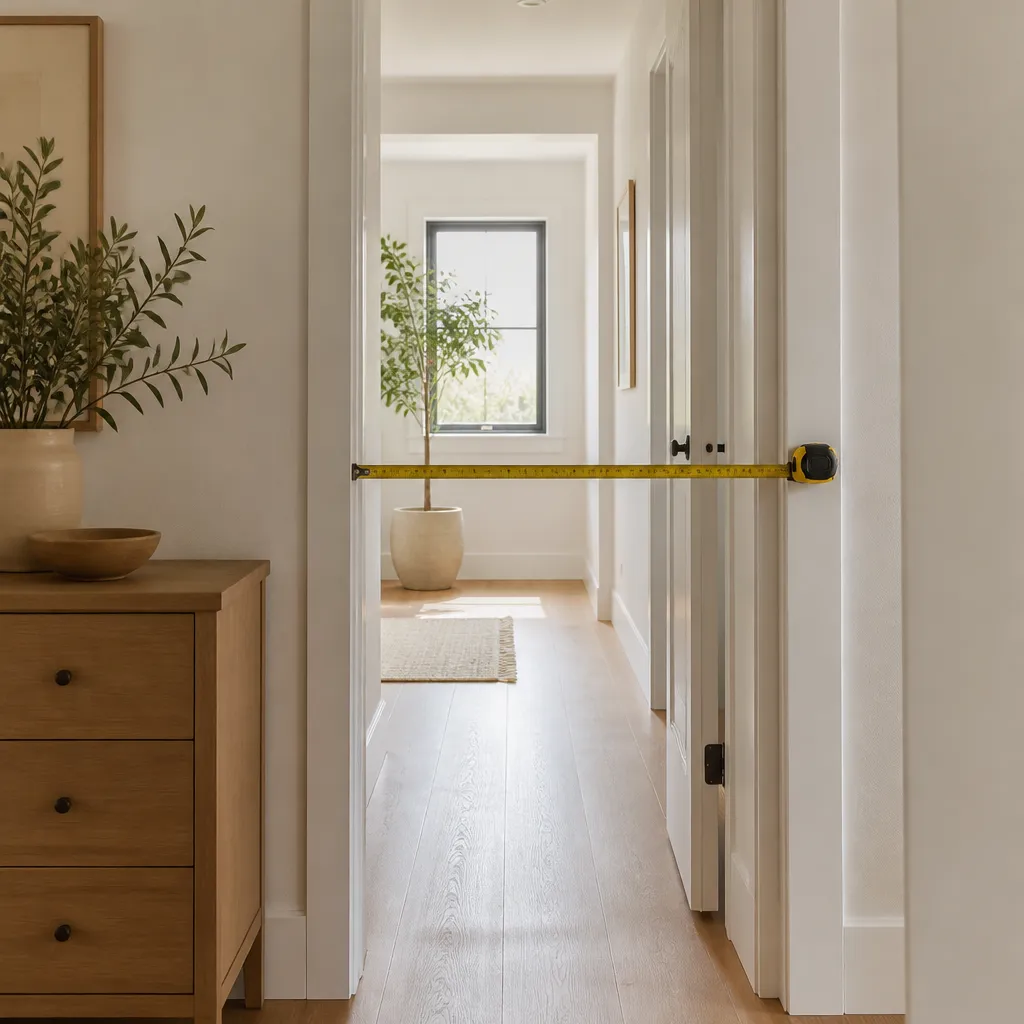
Measure the clear opening of each doorway, from the inside edge of the door stop on one side to the stop on the other. Trim and door stops can cut several inches off the frame width you see from the room, so the number on the wall is not always the number that counts. Repeat the measurement at the hallway, the front entry, and any stair landing the piece must pass.
Check doorway height too if you are buying a tall headboard or a wardrobe. A piece that is narrow enough can still hit the top of a frame when it is tipped on its side.
Door Swing and Blocked Space
Note which way each door swings and how far it opens. A door that swings into the bedroom takes floor space that no dresser can use, and a dresser placed against that wall may block the door once it opens. Mark the full arc on the floor with painter’s tape before you decide where furniture goes.
Closet doors deserve the same check. Sliding doors take less room, but hinged closet doors need clearance to open fully, and a dresser that stops them halfway becomes a daily annoyance.
Pro tip: Walk the delivery route with your tape measure before the truck arrives. Note the turns, stair landings, and elevator dimensions, and compare them to the largest dimension of the piece, not its footprint on the floor.
Bed and Clearance Math
Bedrooms are often smaller than shoppers picture. A typical bedroom is around 10 by 12 feet, or about 120 square feet, and that space has to hold a bed, nightstands, a dresser, and a walkway. Doing the clearance math before you shop tells you which combinations are realistic and which will feel cramped every morning.
Standard Mattress Footprints
Start with the mattress, since it sets the footprint for the whole bed. Common sizes are twin at 38 by 75 inches, full at 54 by 75 inches, queen at 60 by 80 inches, king at 76 by 80 inches, and California king at 72 by 84 inches. Check the exact dimensions of the mattress you plan to buy, because a bed frame or platform adds to the outside measurement.
Memory foam mattresses use the same footprints as standard models, but they often sit taller than innerspring beds. That extra height matters for nightstand choice and for how easily someone gets in and out of bed, so measure the mattress top, not just the floor footprint.
Clearance Around the Bed
Plan for 24 to 30 inches of clearance around the bed so you can move without squeezing past furniture. A 36-inch main walkway is a practical minimum for paths you use every day. If your room cannot hold both, choose a smaller dresser or move the nightstand before you shrink the walkway.
A bed that fits the room on paper can still feel cramped if every side touches a wall. The clearance number is what makes the room livable, not just what makes the bed fit.
Add the clearance to the bed footprint and then mark that rectangle on the floor. If the rectangle plus your walkway leaves no room for a dresser, the dresser belongs on another wall or in another room.
Dressers, Nightstands, and Storage Pieces
Dressers and nightstands are where most bedroom layouts go wrong, because they look modest on a showroom floor and take up more room once their drawers and doors are open. Measure each piece with its moving parts in mind, not just its closed box.
Think of each storage piece as having two footprints: the closed box that sits against the wall, and the open working space in front of it. The closed box fits the wall, but the open space decides whether you can actually use it.
Drawer Clearance in Front of a Dresser
Drawers need room to pull out fully, and you need room to stand in front of them without pressing into the bed. Allow the full drawer depth plus standing space, and keep that space out of the main walkway. A dresser that blocks the side of the bed is a dresser you stop opening.
Low dressers solve many problems in smaller rooms. A low profile keeps sightlines open, and it leaves room for a bench at the foot of the bed if the layout allows one.
Nightstand Height Against the Mattress
Measure the top of the mattress and compare it to the nightstand top. A nightstand that sits close to the mattress top is easier to reach from bed, while one that sits well below it forces you to reach down every night. Use the real mattress height, because a thick memory foam mattress can change that comparison more than the spec sheet suggests.
Measure the distance from the bed to the nightstand as well. A nightstand pushed too far away puts a lamp or phone charger out of reach, which is one more reason to locate outlets before you buy.
Measuring Approaches Compared
Three approaches cover most bedrooms, and each one catches different mistakes. Match the method to the complexity of your room, and do not rely on a single tool for a layout with several doors or built-ins.
| Approach | Best For | Main Drawback |
|---|---|---|
| Tape measure and paper sketch | Simple rooms with few obstacles | Numbers are easy to mislabel when you measure in a hurry |
| Painter’s tape floor outline | Testing exact footprints and door swing | Takes time and needs a mostly empty floor |
| Laser measure | Long walls, ceiling height, and quick cross-checks | Can give off readings if the aim lands on an angled or shiny surface |
Why the Tape Measure Still Wins
A tape measure forces you to touch every wall and corner, which is how you catch trim, baseboards, and outlets that a quick reading might skip. Pair it with a simple sketch and write each measurement next to the wall it came from. Unlabeled numbers cause more confusion at the store than almost any other error.
The tape also handles the narrow point of a doorway behind a door stop, which a laser often cannot reach cleanly. Use it for every opening on the delivery route.
When a Laser Measure Helps
A laser measure is useful for long walls, ceiling height, and quick cross-checks. Take two or three readings on each wall and compare them, since a single reading can be thrown off by an angled or reflective surface. Treat it as a second opinion, not the only record.
Painter’s tape is the tool many shoppers skip, and it tells you the most. Lay out the bed footprint, dresser, and nightstands on the floor, then walk around them with the door open. If you cannot get through the gap, the real piece will not fit either.
Sketching a Floor Plan That Works
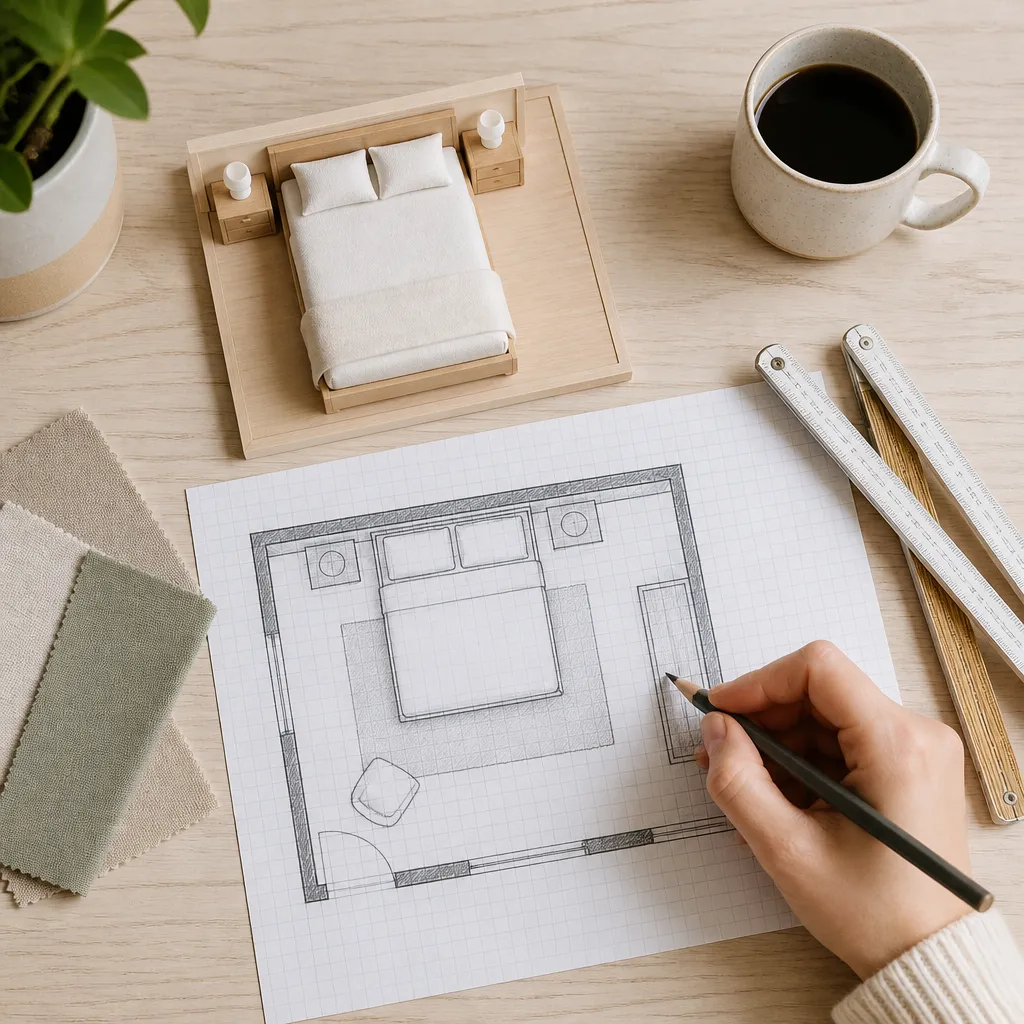
A simple floor plan lets you test layouts before anything is delivered. You do not need drafting skills, only graph paper, a pencil, and your measurements. The drawing becomes the document you bring to the showroom, so the conversation starts from real numbers.
Scale Drawings on Graph Paper
Use a consistent scale, such as one square equals one foot, and draw the walls first. Add doors with their swing arcs, windows with their sill positions, and outlets at their exact spots on the wall. Clear labels matter more than neat lines, because you will refer to this sketch when the numbers are no longer fresh in your head.
Cut small paper rectangles to match each furniture footprint and move them around the sketch. The cutouts are quick to rearrange, and they expose problems a flat drawing hides, like a bed that blocks a dresser door.
Testing Layouts Before You Buy
Try at least three arrangements. Put the bed on the longest clear wall first, then the dresser on the wall with the least door swing, then the nightstands on either side. Compare the walkway width in each version and keep the one that leaves the clearest path between the door and the bed.
Share the final sketch with whoever is helping you choose. A written layout gives a showroom consultant or interior designer the same information you have, which saves time and avoids guesswork.
Common Measuring Mistakes
Most wrong-size purchases come from a few predictable errors, and each one can be prevented with a quick check before you order. These are the ones that come up most often in practice.
Measuring the Product, Not the Path
Looking only at the closed measurements of a product is a frequent error. Expandable tables, sofa beds, wardrobes with swinging doors, and drawer units all need extra room when they are in use, so measure the open dimensions too. A dresser with a drawer pulled out is the size you will live with, not the size on the label.
In a bedroom, open dimensions matter most for dresser drawers, wardrobe doors, and any storage bench with a lid. Write both numbers down so the open size is never a surprise.
Forgetting Outlets, Vents, and Trim
Outlets, vents, radiators, and built-in shelves all affect placement, and none of them appear on a furniture spec sheet. An outlet hidden behind a bed is an outlet you cannot use, and a radiator under a window can block a low dresser. Mark each one on your sketch before you pick the furniture.
Trim and baseboards can also push a piece away from the wall. Measure from the finished wall surface when you need exact clearance, not from the bare surface you assume is behind the trim.
Pro tip: Photograph each wall with a tape measure laid along the floor line. The photo gives you a reference you can check from the showroom, and it catches a number you may have misread.
Payment and Delivery Timing After You Measure
Once your measurements check out, the next decisions are when the piece arrives and how you pay for it. Those choices matter, because a delivery that lands before the room is ready creates a different kind of problem. Settle both steps once the numbers are final.
Choosing a Delivery Window
Our deliveries are scheduled on exact days and time windows, so you can clear the path, move existing furniture, and have someone home to receive the piece. Most of our orders are typically delivered within 24 to 48 hours. Confirm that the entry, hallway, and bedroom are clear before the crew arrives, since a blocked route is often what turns a good delivery into a return.
Spreading the Cost With a 3-Month Purchase Option
We offer no-credit-needed payment plans, including a 3-month purchase option available in California. These plans are built for budget-conscious buyers who want quality mattresses and furniture without a large upfront payment. Ask about the terms and eligibility before you commit, so you know the full cost from the start.
Getting a Second Set of Eyes on the Layout
Our interior design service can review your measurements and sketch before you buy. A second look often catches a clearance problem that is easy to miss after you have studied the same room for weeks. Bring your floor plan, your mattress size, and the list of pieces you want to place.
Frequently Asked Questions
What is the first step in learning how to measure bedroom for furniture?
Measure each wall at floor level from corner to corner, and write each number on a sketch labeled by wall. Include doors, windows, outlets, and fixed features like radiators or built-in shelves. Those measurements give you the room’s real working space before you look at any product.
How much walkway space should I leave in a bedroom?
A 36-inch main walkway is a practical minimum for paths you use every day. Where you have a bed, plan for 24 to 30 inches of clearance around it so you can move without squeezing past furniture.
Should I measure the mattress or the bed frame?
Measure both if you plan to buy a frame. The mattress sets the sleeping footprint, but a platform or frame adds to the outside dimensions, and a thick memory foam mattress changes the height you need for nightstands.
Do I need to measure the delivery route too?
Yes. Measure the narrowest point of the front entry, hallway, stairs, and bedroom door, along with any tight turns. A piece that fits the room can still fail to get there, and the route often decides what you can actually bring in.
How do I know if a dresser will block my door?
Note the door’s swing direction and mark the full arc on the floor with painter’s tape. Then confirm that the dresser stays outside the arc and that its drawers open without touching the bed or the walkway.
Can I buy furniture without good credit?
We offer no-credit-needed payment plans, including a 3-month purchase option available in California. Ask about the terms and eligibility before you order so you know exactly what you will pay.
What measurement did you wish you had taken before your last furniture purchase?
References
- Step-by-step guide to measuring rooms, doors, and passageways before buying furniture
- Bedroom layout guidance on resting, furniture placement, and storage pieces