

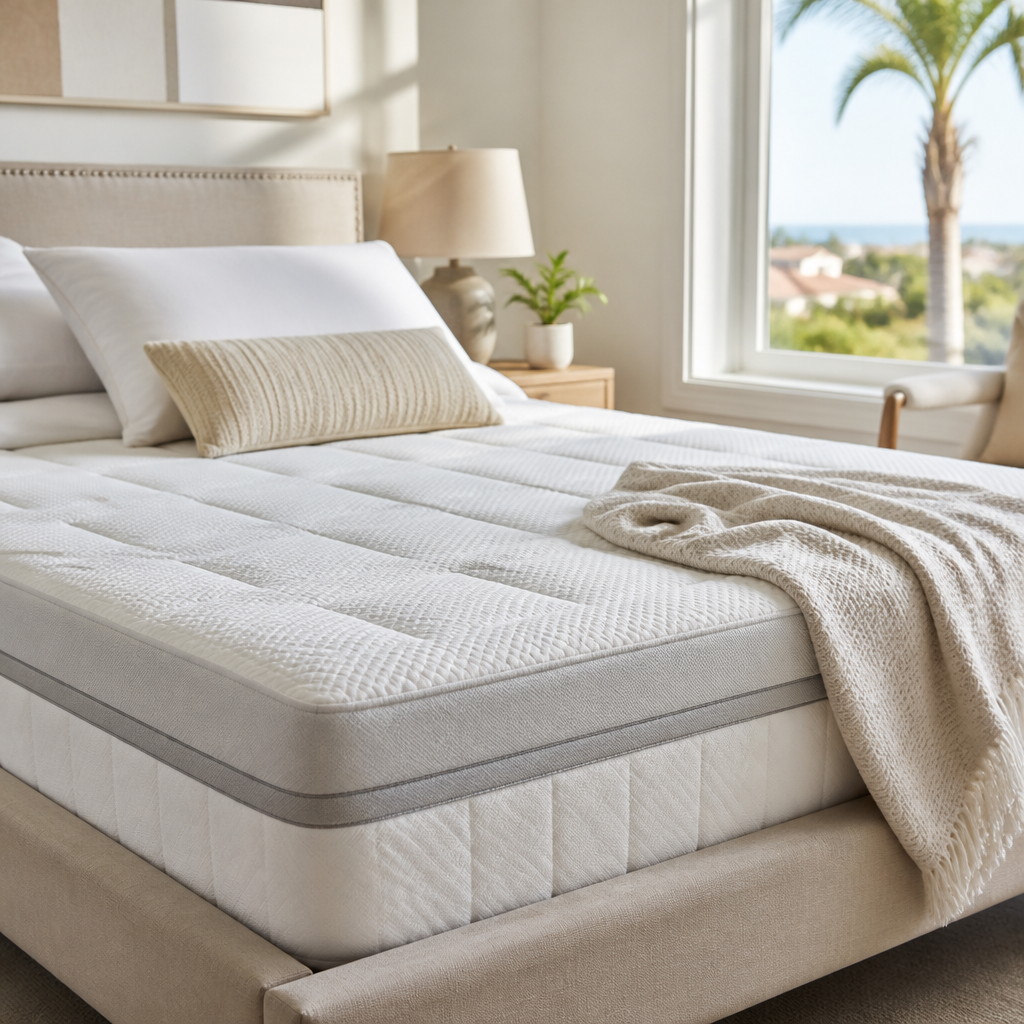
Poor Sleep Health Effects: The Silent Damage and Fixes
Most people blame a stressful week or a long commute for feeling run down. Often the real culprit is the hours spent in bed. Poor sleep health effects rarely arrive as one dramatic symptom. They build quietly, raising blood sugar, straining the heart, dulling your mood, and leaving your neck and back stiff every morning.
The good news is that sleep is one of the few health levers you can adjust at home tonight. This guide looks at what the research says about lost sleep, how your mattress and bedroom can help or hurt, and how to pay for a better setup without a credit check. Our showroom in Orange County regularly meets customers who have slept on tired mattresses for years without realizing it.
Table of Contents
- Quick Takeaways
- How Poor Sleep Quietly Affects Your Body
- What Chronic Sleep Loss Does to Your Mind
- Why Your Spine and Joints Suffer at Night
- Choosing a Mattress for Better Sleep Quality
- Comparing Three Ways to Fix Poor Sleep
- Good Sleep, Good Health: A Practical Routine
- Paying for a Better Mattress Without Credit
- When Poor Sleep Needs a Doctor
- Frequently Asked Questions
- References
Quick Takeaways
| Key Insight | Explanation |
|---|---|
| Blood sugar shifts first | Sleep deficiency can push blood sugar above normal levels, which may raise your risk of diabetes over time. |
| Heart risk adds up slowly | Poor sleep is associated with a higher risk of high blood pressure and heart disease, even when you feel fine day to day. |
| Mood and focus slip before you notice | Sustained poor sleep brings fatigue, poor concentration, and irritability that people often blame on work or stress. |
| Check the mattress, not only your habits | If you wake stiff or sore in the same spot each morning, the surface may be the problem. Medium-firm models often balance comfort and spinal support. |
| Keep the room cool and the wake time fixed | A steady wake time and a cooler bedroom make it easier to fall asleep and stay asleep. |
| Look at payment options before giving up on an upgrade | No-credit-needed payment plans and a 3-month purchase option can make a better mattress affordable now instead of someday. |
| Get medical help for persistent warning signs | Loud snoring with gasping, heavy daytime sleepiness, or insomnia lasting weeks deserves a proper medical evaluation. |
How Poor Sleep Quietly Affects Your Body
Sleep is when your body does much of its repair work. When it gets cut short night after night, the effects spread into systems you would never connect to a bad night. The NIH’s National Heart, Lung, and Blood Institute notes that sleep deficiency results in higher-than-normal blood sugar, which may raise your risk of diabetes.
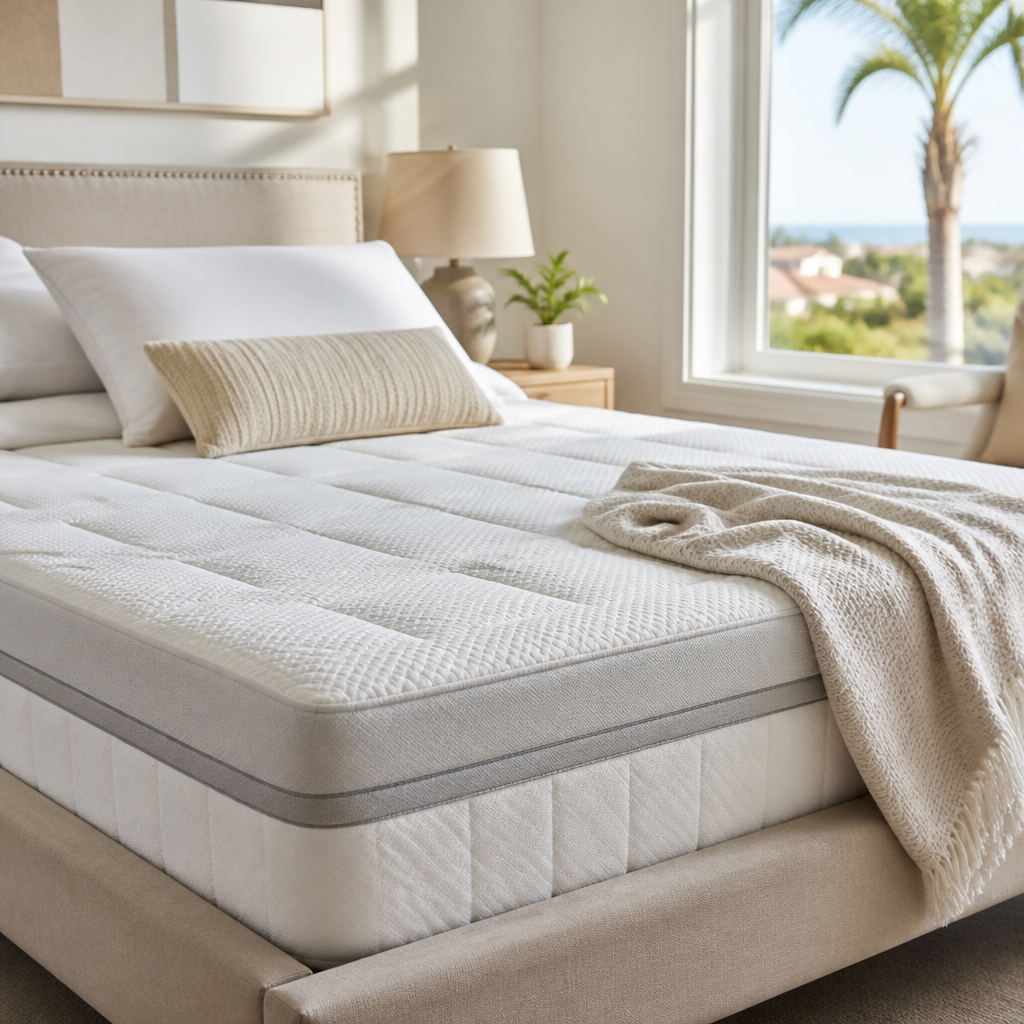
Blood Sugar and Diabetes Risk
Blood sugar regulation is one of the first systems to slip. You will rarely feel the change in a single night, which is exactly why people ignore it. In practice, the pattern appears over months of short or broken sleep, not during one rough week.
If you are already watching your glucose or have a family history of diabetes, treat sleep as part of that plan. Ask your doctor whether your sleep habits should be reviewed alongside your blood work.
Blood Pressure and Heart Strain
The Sleep Foundation reports that poor sleep is associated with a higher risk of high blood pressure, heart disease, and diabetes. An association does not prove that lost sleep causes each condition in every person. The pattern is strong enough, though, that we treat sleep as part of basic heart health.
Pro tip: Keep a simple two-week log with your bedtime, wake time, and how rested you feel by mid-morning. Patterns show up faster than most people expect, and the log gives your doctor something concrete to review.
What Chronic Sleep Loss Does to Your Mind
Anyone who has pulled an all-nighter knows the feeling: a short temper, slow thinking, and a sudden blank when you walk into a room. A 2025 review available through PubMed Central reports that sleep deprivation predicts heightened irritability and reduced attention span. The problem is that these changes creep in gradually, so people rarely connect them to sleep.
Irritability, Focus, and Everyday Mistakes
The Mental Health Foundation describes how poor sleep over a sustained period leads to problems that are immediately recognizable, including fatigue, sleepiness, poor concentration, and lapses. Those lapses are where people get hurt, whether at the wheel, on a job site, or in the kitchen with a sharp knife. Treat a run of small mistakes as a sleep signal, not a character flaw.
The Insomnia and Mood Connection
Stanford Medicine reports that people with insomnia, for example, are 10 times more likely to have depression and 17 times more likely to have anxiety compared with people without the condition. Those figures describe a strong link, not a simple cause and effect. If your nights are broken and your mood is low, address both at the same time instead of waiting for one to fix the other.
Sleep loss rarely announces itself as a health problem. It shows up as a shorter temper, a slower afternoon, and a mattress you keep blaming for something else.
Why Your Spine and Joints Suffer at Night
Your mattress is the one piece of furniture that holds your body still for seven or eight hours. If it keeps your spine out of line, the strain repeats every night. The National Council on Aging’s review of orthopedic mattresses highlights designs built to maximize spinal alignment and ease joint pain.
Keeping Your Spine Neutral
Havencbp’s chiropractic perspective notes that studies suggest a medium-firm mattress provides the best balance between comfort and spinal support, helping maintain a neutral spine. A surface that is too soft lets the hips sink, which bends the lower back. A surface that is too hard leaves the shoulders and hips pressed into the mattress with nowhere to go.
Neck, Shoulder, and Hip Pain
Many shoppers describe neck stiffness, a sore shoulder on one side, or hip pain that wakes them around 3 a.m. Those symptoms often trace back to pressure points. The New York Times Wirecutter back pain guide advises looking for a mattress that promotes spinal alignment and is gentle on your pressure points, while noting that “medium-firm” can be a subjective label.
Pro tip: When you test a mattress, lie in your usual sleep position for several minutes. Sitting on the edge tells you very little about how the surface will support your hips and shoulders through the night.
Choosing a Mattress for Better Sleep Quality
A better mattress will not fix every sleep problem, but a poor one can undermine everything else you try. Start by identifying what hurts or wakes you, then match the surface to that problem. Sleep quality follows support and comfort more than price tags.
Many customers arrive convinced they need the most expensive model in the room. In our experience, a well-built mattress that matches your body type and sleep position will outperform an expensive one that does not.
Firmness Without the Guesswork
Firmness labels vary from brand to brand, so “firm” at one store can feel like “medium” at another. Focus on how the surface supports your shoulders and hips when you lie on your side and on your back. Medium-firm remains a common starting point in the research, but treat it as a guide, not a rule.
Memory Foam and Temperature
Our showroom carries memory foam mattresses, which contour to the body and reduce pressure on hips and shoulders. Heat is the most common complaint about foam. If you sleep hot, look for designs that move air better, and choose breathable bedding so warmth does not get trapped through the night.
Pro tip: Bring the pillow you normally use when you shop. Neck alignment depends as much on pillow height as on the mattress underneath it.
Comparing Three Ways to Fix Poor Sleep
Most sleep problems respond to one of three approaches, and each one fits a different set of symptoms. The table below compares them so you can start with the change that matches what you notice most often. Many people benefit from combining two of them.
| Approach | Best For | Main Limitation |
|---|---|---|
| Replacing an old mattress with a medium-firm or memory foam model | Morning stiffness, shoulder and hip pressure, restless turning at night | Requires an upfront cost and a short adjustment period as your body adapts |
| Adjusting the bedroom with a cooler, darker room and a fixed wake time | Waking up hot, early light disruption, irregular schedules | Helps less if the mattress itself is hurting your spine or pressure points |
| Medical evaluation with a doctor | Loud snoring with gasping, heavy daytime sleepiness, insomnia lasting weeks | Takes time to schedule and may involve testing before a diagnosis |
If you wake up sore and tired even after a good routine, the mattress is the first variable to check. If you wake up gasping or dozing at the wheel, skip the shopping for now and see a doctor. Matching the fix to the symptom saves money and time.
Good Sleep, Good Health: A Practical Routine
Good sleep and good health are built through repeated habits, not one purchase. The routine below is what we suggest to customers who ask where to start. Pick one change at a time so you can tell what is actually working.
Keep a Consistent Wake Time
Choose a wake time you can hold seven days a week, including weekends. Long weekend lie-ins shift your body clock, which makes Monday mornings harder than they need to be. Your bedtime will follow more naturally once the wake time stays put.
Build a Cooler, Darker Bedroom
A cooler room tends to support deeper, more continuous sleep for many people. Use blackout curtains to block early morning light, and keep phones charging outside the bedroom. Simple changes like these cost little and remove common sleep interruptions.
Paying for a Better Mattress Without Credit
Many people delay a mattress upgrade because they assume it requires good credit or a large cash payment. That delay can cost you years of poor sleep. Our payment plans do not require credit, which gives budget-conscious shoppers a practical route to a better bed.

No-Credit Payment Plans
Our no-credit-needed payment plans let you spread the cost of a mattress or furniture set over time. Ask for the full terms before you agree, including the total amount you will pay and the schedule of each payment. Clear numbers protect any buyer, whatever the price.
The 3-Month Purchase Option in California
California customers can use our 3-month purchase option, which suits people who want a short, defined timeline rather than an open-ended plan. It works well when your current mattress is failing and you need a replacement soon. Confirm the details with our team so the timeline fits your budget.
Delivery Windows That Fit Your Schedule
Most orders are typically delivered within 24 to 48 hours, and we set exact day-and-time delivery windows so you do not lose a workday waiting. For a shopper in Anaheim or anywhere else in Orange County, that predictability matters more than most people expect.
When Poor Sleep Needs a Doctor
A better mattress cannot treat every sleep problem. Some conditions need medical care, and catching them early protects against the health effects covered above. Think of your mattress as one part of the plan, not the whole plan.
Warning Signs to Take Seriously
Loud snoring with pauses in breathing, waking up gasping, or extreme daytime sleepiness deserves a medical evaluation. Insomnia lasting several weeks, especially alongside low mood, is also worth raising with your doctor. Do not wait for these signs to become routine.
Bring your sleep log to the appointment. It gives your provider a clearer picture than memory alone, and it helps separate a mattress problem from a medical one.
Frequently Asked Questions
How does poor sleep affect long-term health?
Repeated short or broken sleep is associated with a higher risk of high blood pressure, heart disease, and diabetes, and it can raise blood sugar over time. The effects usually build slowly, which is why they are easy to miss until they show up on a checkup.
Can a new mattress really improve sleep quality?
A new mattress can improve sleep quality if your current one causes pressure points, poor spinal alignment, or overheating. It will not treat sleep apnea, chronic insomnia, or a schedule that keeps you up late, so pair the upgrade with the habits described above.
How do I know if my mattress is the problem?
Notice whether you wake stiff or sore in the same area each morning, whether you toss and turn to find a comfortable position, and whether the pain eases during the day. If those patterns repeat, the surface is likely part of the issue.
Is a medium-firm mattress always the right choice?
No. Medium-firm is a common starting point because research suggests it balances comfort and spinal support, but body weight, sleep position, and personal preference matter too. Test any model in your usual position before you commit.
Can I buy a mattress without a credit check?
Yes, our payment plans do not require credit, and we offer a 3-month purchase option in California. Ask our team for the full terms before you agree to anything so you know the total cost up front.
We would love to hear how poor sleep has shown up in your own life, so tell us what you noticed and what helped.
References
- NIH guidance on how sleep deficiency affects blood sugar and diabetes risk
- Stanford Medicine overview of the connection between sleep and mental health
- Review of how sleep deprivation affects physical and mental health
- Mental Health Foundation report on sleep, health, and wellbeing
- Sleep Foundation guide to how sleep affects physical health