

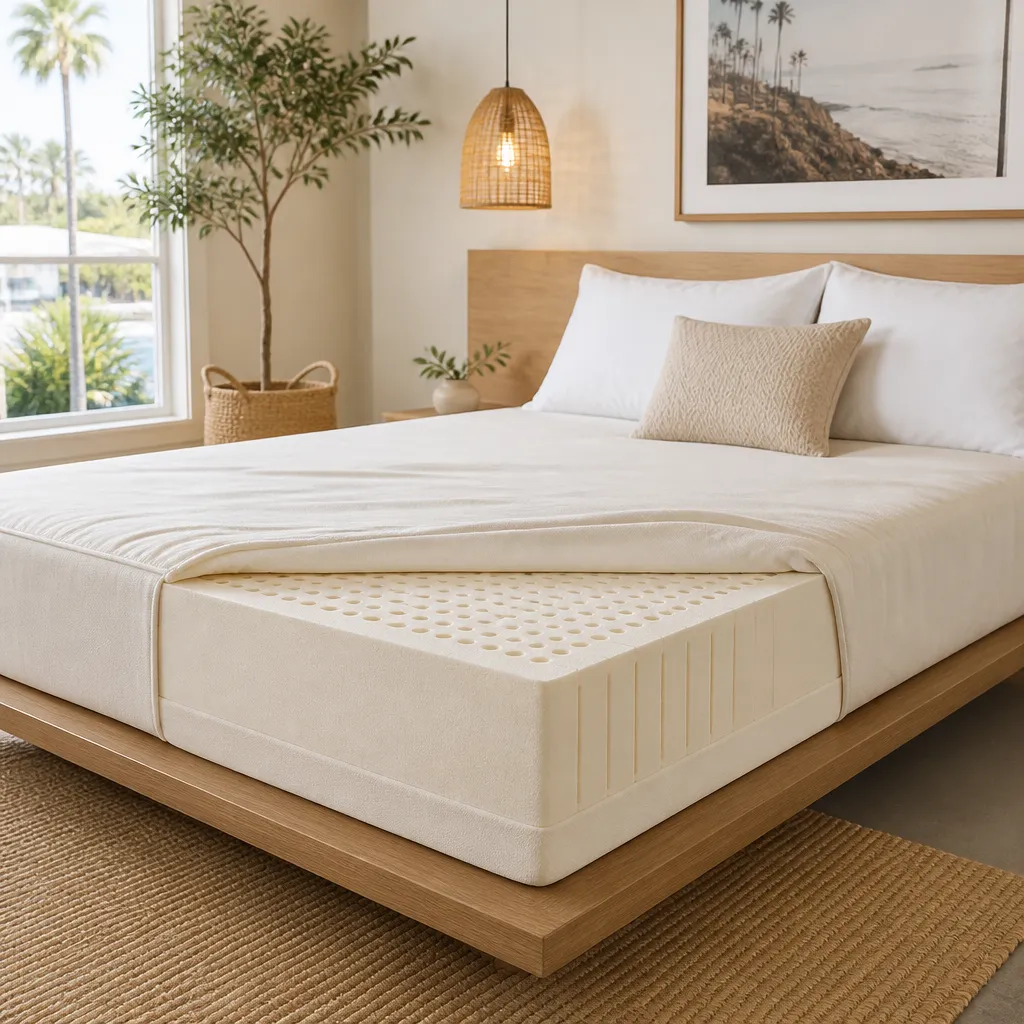
Latex Mattress Guide: Spine Alignment and Cool Sleep
If you wake up with a stiff neck, a sore hip, or a shoulder that aches every time you roll over, your mattress is a likely suspect. A latex mattress is one of the few options that addresses spinal alignment and sleeping temperature at the same time, which is why so many back and side sleepers ask about it when they visit our Orange County showroom. This guide explains what latex is, how it keeps your spine in line, why it often sleeps cooler than foam, and how to tell whether a natural latex mattress belongs in your bedroom.
Table of Contents
- Quick Takeaways
- What Latex Is and Where It Comes From
- How Latex Supports Your Spine
- Why Latex Sleeps Cooler
- Latex Compared With Memory Foam and Hybrids
- Durability, Care, and Long-Term Value
- Who Should Think Twice About Latex
- Buying Latex in Orange County Without Overpaying
- Frequently Asked Questions
- References
Quick Takeaways
| Key Insight | Explanation |
|---|---|
| Latex is plant-derived | Natural latex is tapped from the Hevea brasiliensis tree and processed into foam. Synthetic and blended latex are different products, so check the label. |
| Spine support comes from the core | A latex core that compresses at the shoulders and hips while pushing back at the lower back keeps the spine level through the night. |
| Firmness depends on your position | Side sleepers usually need more give at the shoulder and hip. Back sleepers generally do best on medium to medium-firm, and stomach sleepers need firmer support. |
| Latex usually sleeps cooler than dense foam | An open cell structure lets air move through the core. Cover fabric and base construction can either help or undo that benefit. |
| Test for ten minutes, not ten seconds | Lie in your usual sleep position for at least ten minutes and check whether your hips and shoulders sit level with the rest of your body. |
| Ask for the core specification in writing | Get the latex type, processing method, and layer densities on paper before you pay, so you know what you are actually buying. |
| Price should match the construction | Compare layer thickness, density, and certifications rather than the sticker price alone. |
What Latex Is and Where It Comes From
Latex is sap tapped from the Hevea brasiliensis tree, better known as the rubber tree. The tree grows in tropical and sub-tropical climates, including the Amazon basin, Malaysia, Indonesia, and Thailand, and the sap is collected from cuts made in its bark.
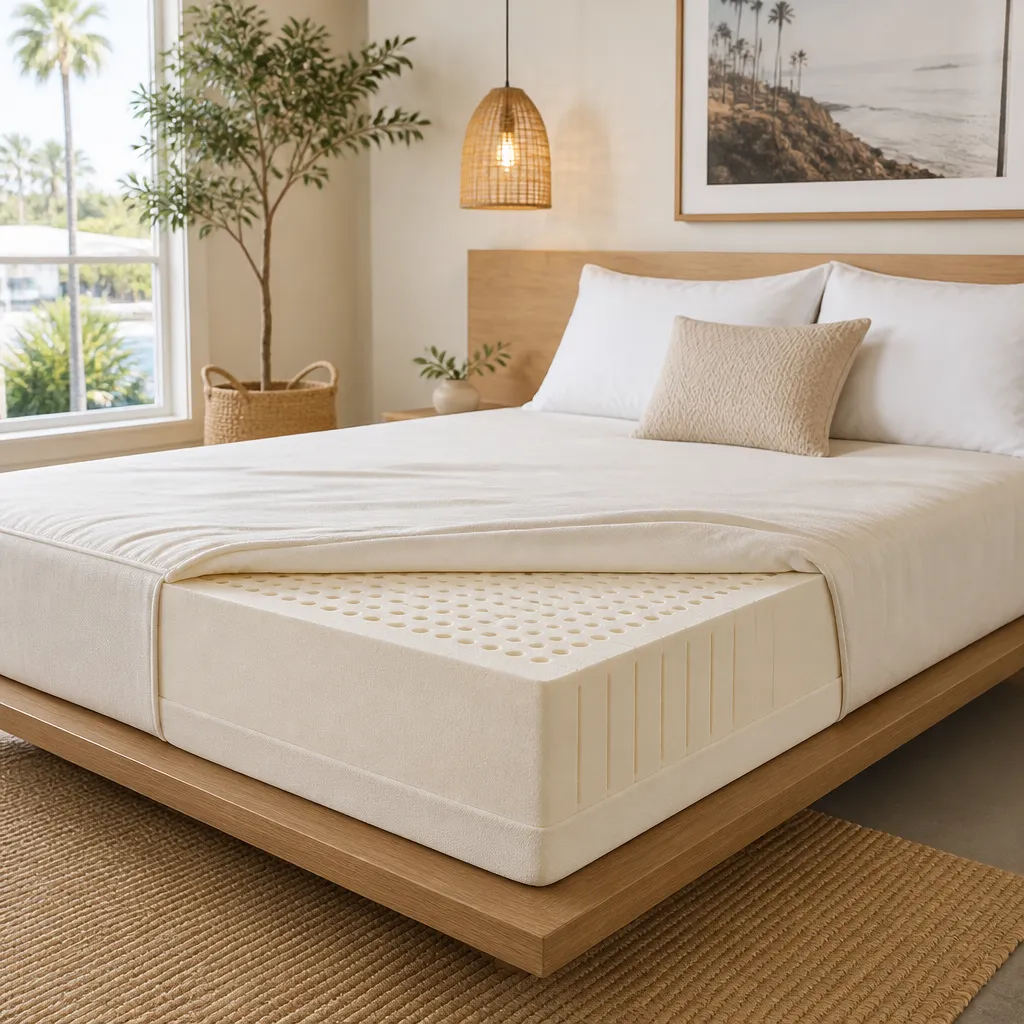
Once collected, the sap is whipped into a foam, poured into molds, and cured into solid blocks or cores. The manufacturing method changes the feel. In practice, Dunlop latex tends to be denser at the base, while Talalay latex is usually lighter and more uniform from top to bottom.
Natural latex mattresses are known for fast responsiveness, resiliency, durability, and a noticeable bounce. Those traits matter for spinal support because a core that springs back quickly keeps your body from sinking into a hollow the way low-density foam can.
Natural Versus Synthetic Latex
Not every product labeled latex is made the same way. Some cores are fully natural, some are synthetic latex made from petroleum-based compounds, and some are blends. A blend can still carry the latex label while containing a large share of synthetic material, so the word on the tag tells you less than you might expect.
Ask for the core composition in writing before you pay. A reputable seller should be able to name the latex type, the processing method, and the density of each layer, and should tell you which parts are natural and which are not.
Pro tip: Ask whether the latex in the core is fully natural or a blend, and get the answer on the receipt or the spec sheet. Verbal assurances are hard to hold a seller to after delivery.
Shoppers often choose natural latex for its plant origin, but natural does not automatically mean certified. Look for independent third-party certifications for organic or low-emission materials, and read what each one actually covers, since the labels do not all test the same things.
How Latex Supports Your Spine
Spinal alignment depends on whether your hips and shoulders sink to roughly the same depth as the rest of your body. A mattress that is too soft lets the heavier parts of your body drop too far, and the spine bends out of line. A surface that is too firm stops the hips and shoulders from settling, which can leave the lower back arched.
Latex helps because its response is quick and even. Many sleepers find that it cushions pressure points while still holding the body up, which can reduce the tossing and turning that comes from uncomfortable pressure.
Where Pressure Builds in Side Sleepers
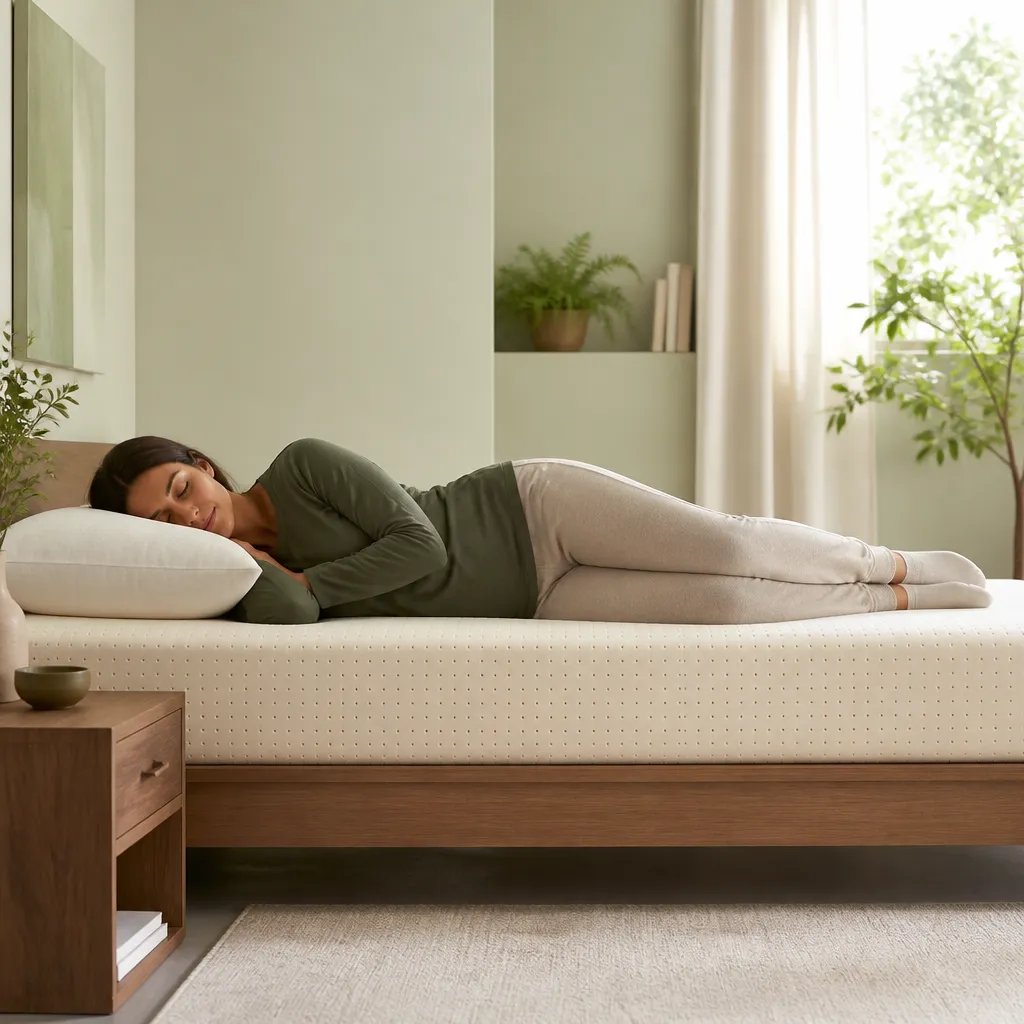
Side sleepers put most of their weight on the shoulder and hip, the two points most likely to wake them with an ache. A latex comfort layer that yields gently at those spots lets the shoulder sink just enough to keep the neck in line with the spine. A firm surface often does the opposite, and a sore shoulder or a tingling arm by morning is a common sign that the mattress is not yielding enough.
Pro tip: If you sleep on your side, check the shoulder and hip depth first. Your neck should not bend up or down when you lie there, so look for a surface that lets the shoulder settle without letting the hip drop.
Matching Firmness to Your Sleep Position
Back sleepers usually do best on a medium to medium-firm surface that supports the natural curve of the lower back without letting the hips drop. Stomach sleepers generally need firmer support so the midsection does not sag. Side sleepers need enough give at the shoulder and hip, which usually points to a softer comfort layer over a supportive base.
A common mistake is judging firmness after ten seconds in a showroom. Lie in your normal sleep position for at least ten minutes, and ask someone to check whether your hips and shoulders look level.
Alignment is not about how firm a mattress feels in the first minute. It is about how your body settles over a full night.
Why Latex Sleeps Cooler
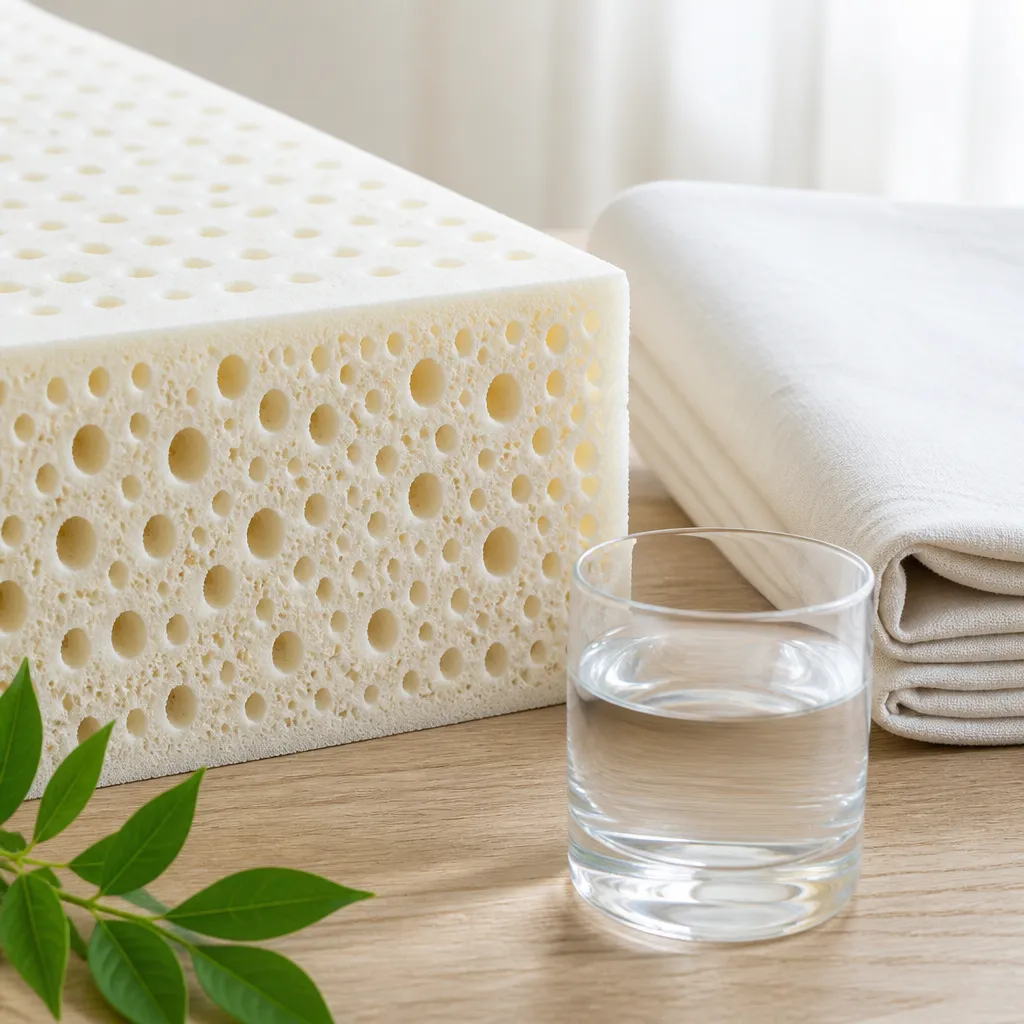
Heat gets trapped in beds that hug the body too closely, and that is the main reason many people wake up sweaty on dense foam. Natural latex is more open in structure than most memory foam, which lets air move through the core instead of holding warmth around you. Sleep Foundation’s testing has found that several latex mattresses perform well on temperature control.
Open Cell Structure and Airflow
The cell structure inside latex determines how much air can pass through it. Many latex cores are made with an open or pinhole pattern that carries heat away from the body. The difference shows most on warm nights, when a dense foam bed keeps warmth around the hips and shoulders long after you fall asleep.
What the Cover and Base Change
A cool core cannot do all the work alone. A breathable cover made from natural fibers, such as wool or cotton, helps moisture escape, and a base with open airflow keeps warm air from pooling underneath. A common mistake is paying for a breathable core and then placing it on a solid platform that traps heat from below.
Hybrid designs add a coil layer that also improves airflow. If you sleep hot, a hybrid with a latex comfort layer over coils is often a better fit than an all-foam bed.
Latex Compared With Memory Foam and Hybrids
Most shoppers in Orange County end up choosing between three kinds of bed: all-natural latex, memory foam, and latex hybrids. Each one answers a different set of needs, so the right choice depends on what is keeping you up at night. In practice, people who sleep hot tend to choose differently than people who want a deep, hugging feel.
| Approach | Strengths | Watch Out For |
|---|---|---|
| All-natural latex | Quick response, bounce, durability, and a cooler feel from the open cell structure | Heavier to move, usually higher cost, and less of the sink-in hug some people want |
| Latex hybrid | Coil support adds airflow and edge strength, with latex comfort over the top | Coils can feel firmer, and the latex layer may be thinner than the label suggests |
| Memory foam | Deep contouring, strong pressure relief, and very little motion transfer | Retains more heat, responds more slowly, and can feel stuck to some sleepers |
Memory foam deserves a fair hearing. If you want the body to sink deeply and you do not sleep hot, it can be a comfortable choice. The trade-off is that you give up the springy support and airflow that latex provides.
A latex hybrid sits between the two. It suits couples who want a responsive surface, sleepers who need edge support for getting in and out of bed, and anyone who wants airflow without giving up a bit of contour. Check the comfort layer thickness, because a thin latex top over firm coils can feel very different from a thick one.
Durability, Care, and Long-Term Value
Latex is known for durability, but how well a particular mattress holds up depends on its density, the thickness of each layer, and the quality of the base beneath it. A thin comfort layer over weak support will show sag sooner than a well-built core. Read the warranty terms before you buy, and make sure the seller tells you what the warranty actually covers.
What Affects How Long Latex Lasts
Density matters more than most shoppers realize. A low-density core can feel fine at first and then lose its shape in the hip area, especially under a heavier sleeper. Ask about density and layer thickness in addition to the firmness rating, since the firmness number alone does not tell you how the mattress will age.
Cleaning and Rotation Habits
Rotate the mattress every few months if the manufacturer allows it, which spreads wear more evenly across the surface. Use a breathable mattress protector so moisture and skin oils do not build up in the core. Vacuum the surface regularly, and avoid harsh cleaners that can break down the cover fabric.
The price gap between latex options usually comes from the amount of natural material, the number of layers, and any third-party certifications. A higher price does not guarantee a better bed, but a very low price usually means a simpler build or a thinner core.
Who Should Think Twice About Latex
Latex is a strong choice for many sleepers, but it is not the right fit for everyone. Knowing the limits up front saves you a return, and it saves you from waking up sore in a bed that was never built for your body. The three groups below are the ones we most often advise to slow down.
Latex Allergies and Sensitivities
Natural latex can trigger reactions in some people who are sensitive to latex proteins. If you have a known latex allergy, talk with your doctor before buying, and do not rely on the word natural to mean safe for you. Some sleepers with sensitivities do better on a fully synthetic or carefully checked alternative.
Heavier Body Weights and Density
Heavier sleepers need higher-density latex or a firmer support layer, or the core can feel soft in the hip area and lose its shape faster than expected. Lighter sleepers often find a lower-density core feels more responsive and comfortable. Ask the seller which density range is recommended for your body weight and sleep position, and expect a straight answer.
Pro tip: If you are a heavier sleeper or share the bed with someone much heavier, ask for a firmer base layer and a higher-density core before you commit. Mismatched weight is one of the most common reasons latex beds feel wrong after a few weeks.
Buying Latex in Orange County Without Overpaying
Our business runs on a tiny profit margin, low overhead, and no commissioned sales associates, which lets us sell top-selling mattress styles at a fraction of what large chains charge. Customers get personal, one-on-one attention with no pressure to buy, and that matters when you are comparing latex cores that look similar on paper but feel very different at night. Most orders are delivered within 24 to 48 hours, and we schedule exact day-and-time delivery windows so you are not waiting around for a half-day arrival.
What to Ask Before You Buy
Before you sign anything, ask for the core composition, the layer densities, the firmness of each layer, and the warranty terms in writing. Confirm the delivery window and whether the bed will be set up in the room where it will live. If you are furnishing an entire bedroom, our interior design help can tie the mattress to the rest of the room.
No-Credit-Needed Payment Plans
Many people who want a quality bed do not have a strong credit history, and that should not keep them on a worn-out mattress. We offer no-credit-needed payment plans, including a 3-month purchase option available in California. Ask us to walk you through the terms in plain language so you know exactly what each payment covers before you commit.
Frequently Asked Questions
Is a latex mattress good for back pain?
Many sleepers find that latex supports spinal alignment while cushioning pressure points, which can reduce tossing and turning. No mattress cures back pain on its own, though, and the right firmness for your position matters more than the material alone.
Does a latex mattress sleep cooler than memory foam?
Generally, yes, especially with a natural latex core that has an open cell structure. The cover fabric and base also affect how warm you feel, so check the full construction rather than the core alone.
Is natural latex the same as organic latex?
No. Natural means the latex comes from a plant source, while organic claims usually require independent third-party certification. Check the paperwork before you pay for an organic label.
How long does a latex mattress last?
Latex is durable, but lifespan depends on density, layer thickness, base quality, and how well you care for the bed. Ask about the warranty and the core specification so you can compare options on construction rather than marketing claims.
Can I buy a latex mattress without a credit check?
Yes, our store offers no-credit-needed payment plans, including a 3-month purchase option available in California. Ask our team to explain the terms so you know what you are agreeing to before you commit.
Who should avoid latex mattresses?
People with a latex allergy should speak with a doctor before buying. Very heavy sleepers may need a higher-density core, and anyone who wants a deep, hugging sink-in feel may prefer memory foam.
Have you slept on a latex mattress, and did it change how you wake up? We would love to hear about your experience in the comments or when you stop by our Orange County showroom.
References
- Guide to natural latex mattress types, performance, and testing methods
- Expert-tested overview of the best latex mattresses for 2026
- Article on whether natural latex is better for health and the environment
- Overview of latex benefits for spinal alignment and sleep comfort
- Expert-tested picks for the best latex mattresses of 2026